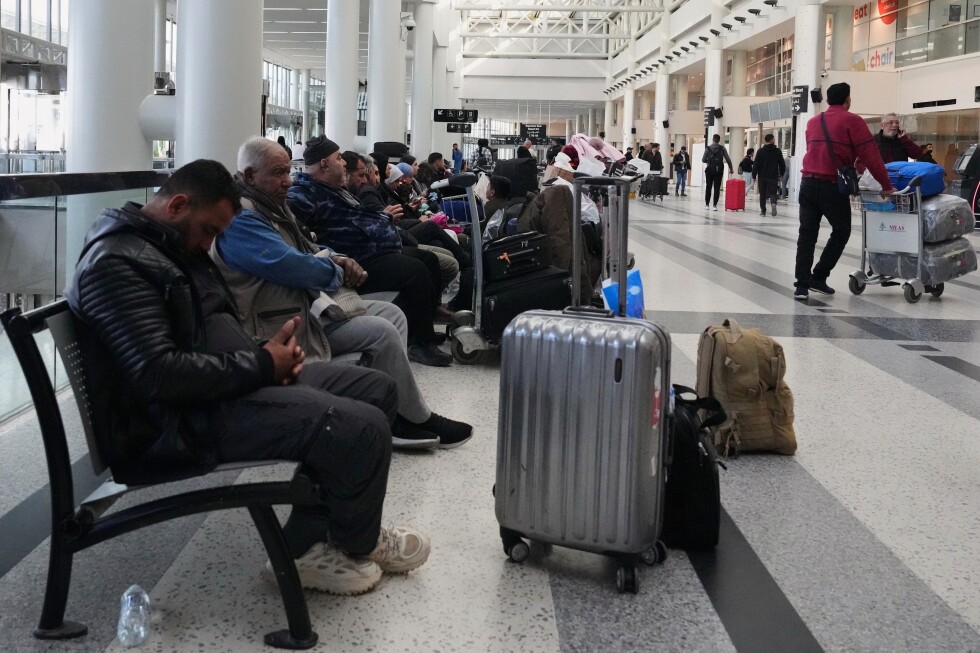
A severe aviation crisis has gripped the Middle East following military strikes by the United States and Israel against Iranian targets, triggering unprecedented regional airspace closures that have stranded hundreds of thousands of travelers worldwide.
The coordinated offensive, launched Saturday, prompted immediate shutdowns of airspace across Iran, Israel, Qatar, Syria, Iraq, Kuwait, and Bahrain. The United Arab Emirates implemented a partial airspace closure while Dubai’s Emirates Airlines suspended all operations until at least Sunday afternoon. Qatar Airways extended its closure through Monday morning, creating massive disruptions at three of the world’s busiest aviation hubs in Dubai, Abu Dhabi, and Doha.
According to aviation analytics firm Cirium, these airports typically handle approximately 90,000 daily passengers through Emirates, Qatar Airways, and Etihad. The conflict has resulted in the cancellation of over 1,800 flights, with major carriers including Air India, Turkish Airlines, Lufthansa, and Air France suspending regional operations through the weekend.
The aviation chaos extended beyond cancellations as at least 145 aircraft en route to Middle Eastern destinations were diverted to alternative airports in Athens, Istanbul, and Rome. One transatlantic flight from Philadelphia spent nearly 15 hours airborne before returning to its origin point after reaching Spanish airspace.
Aviation experts warn travelers to expect prolonged disruptions. ‘There’s no way to sugarcoat this,’ said Henry Harteveldt, president of Atmosphere Research Group. ‘Prepare for delays or cancellations for the next few days as these attacks evolve.’
The crisis has also produced tragic consequences on the ground. Dubai International Airport reported four injuries from attacks, while Abu Dhabi’s Zayed International Airport confirmed one fatality and seven injuries from a drone strike. Kuwait International Airport also experienced strikes, though Iran hasn’t publicly claimed responsibility for these specific incidents.
Airlines now face substantial operational challenges, having to reroute flights south over Saudi Arabia—adding hours to travel time and significantly increasing fuel consumption. These added costs may quickly translate to higher ticket prices if the conflict persists.
Mike McCormick, former FAA air traffic control official and current Embry-Riddle Aeronautical University professor, suggested partial airspace reopenings might occur within 24-36 hours as military operations become more defined and Iran’s missile capabilities diminish. However, the situation remains highly volatile, with the previous June 2025 conflict between Israel and Iran having lasted 12 days.
Travelers like Jonathan Escott, whose Emirates flight from Newcastle to Dubai was canceled, expressed widespread frustration: ‘No one knows what’s going on with the conflict. Not Emirates, Emirates don’t have a clue. No one has a clue.’
With India’s civil aviation agency designating most Middle Eastern airspace as high-risk and numerous airlines suspending operations indefinitely, aviation authorities recommend passengers verify flight statuses directly with carriers and explore flexible rebooking options during this unprecedented regional aviation crisis.