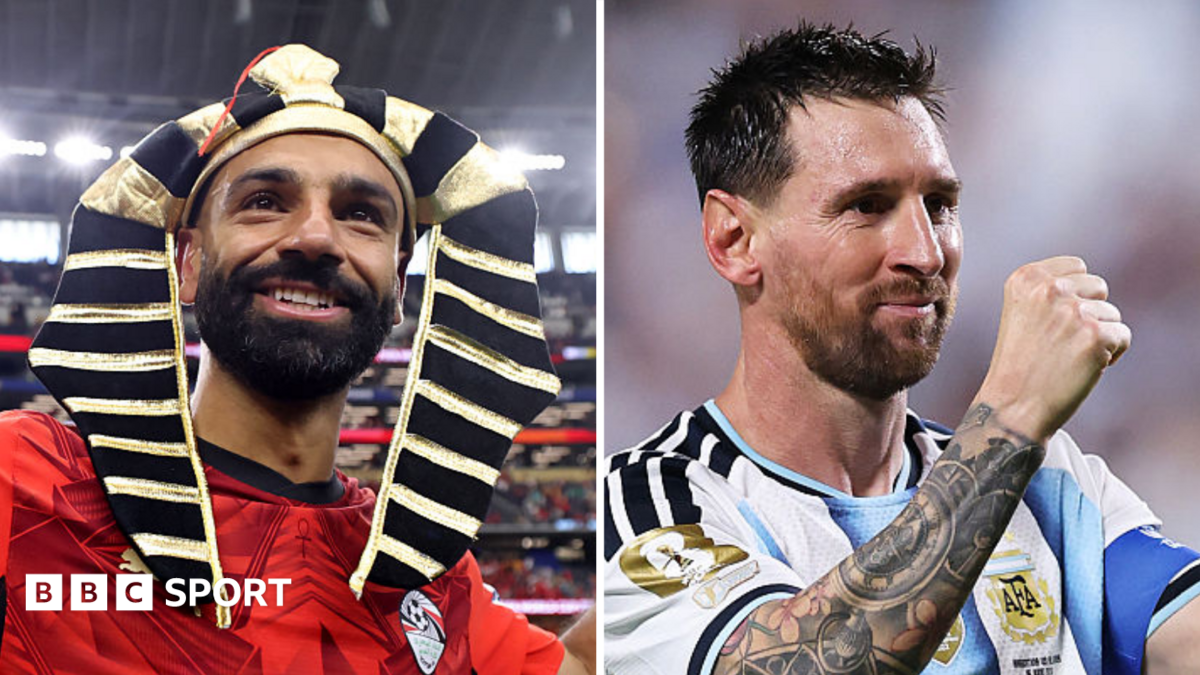
As the 2026 FIFA World Cup knockout stage heats up, football fans across the globe are turning their full attention to a blockbuster last-16 showdown in Atlanta, where two of the greatest players of this generation will lead their nations into battle for a spot in the quarter-finals. On Tuesday at 17:00 BST, Argentina, the defending 2022 champions, will face off against Egypt, with the match pitting Argentine legend Lionel Messi against Egyptian icon Mohamed Salah – two global superstars whose paths have never crossed at this decisive a stage in World Cup history.
At 39 years old, Messi is widely expected to take the pitch for his final World Cup, having already hinted that this tournament will wrap up his decades-long run with Argentina’s national team. For the 34-year-old Salah, this match marks a historic first: after two prior World Cup appearances without advancing past the group stage, this is his and Egypt’s first ever trip to the World Cup knockout round. While Salah has not ruled out featuring in the 2030 tournament, the stakes of this encounter are unmatched for the Egyptian captain.
The two stars carry vastly different World Cup legacies into Tuesday’s clash. Messi is already the most decorated player in tournament history: he holds records for the most all-time goals, most appearances, and currently sits as one of the top scorers in this summer’s tournament. He already has a 2022 World Cup title to his name, and Argentina is one win away from chasing an unprecedented third consecutive major international trophy, with the entire nation dreaming of becoming only the third country in history to win back-to-back World Cup titles – a feat only Italy (1934, 1938) and Brazil (1958, 1962) have ever pulled off.
Across Argentina, the word “bicampeonato” (back-to-back World Cup victory) is on every fan’s lips, but an unspoken question hangs over every match the team plays: what will happen when Messi finally retires from international football? Despite his age, Messi is turning back the clock in this tournament, netting seven goals to date and breaking new records including becoming the first player to compete in six World Cups and score in eight consecutive World Cup matches. His form has been so stunning that fans across the country have been able to push thoughts of his retirement to the background, focusing instead on savoring every moment they get to watch him wear the iconic albiceleste jersey.
Still, local sports journalists have highlighted a familiar trend in this tournament: Argentina has once again become heavily dependent on their captain. Before current manager Lionel Scaloni took charge, the national side was defined by its over-reliance on Messi, a pattern that led to a string of crushing final defeats: a 2014 World Cup final loss to Germany, and back-to-back Copa America final penalty losses to Chile in 2015 and 2016. Scaloni was lauded for building a balanced squad that complemented Messi rather than revolving entirely around him, but that dynamic has shifted in this 2026 tournament. Only four of Argentina’s 11 goals so far have come from players other than Messi; star strikers Lautaro Martinez and Julian Alvarez have primarily operated as support for the captain, while creative midfield standouts Enzo Fernandez and Alexis Mac Allister have prioritized defensive work over attacking output. As many local observers put it, the closer the nation gets to Messi’s departure, the more the team leans on the icon that has defined a generation of Argentine football.
For Egypt and its people, Salah occupies a similar unmatched place in the national consciousness – far beyond his contributions on the pitch. As one Egyptian fan shared, Salah is more than a star forward: he is a symbol of national pride, hope, and possibility. Born in the small village of Nagrig, his journey from humble beginnings to the top of global football serves as an inspiration to millions of Egyptians, proving that hard work and self-belief can open any door. Off the pitch, his humility and unwavering connection to his home country have earned him deep admiration across the nation, with fans noting he has never forgotten his roots even as he became one of the most famous athletes on the planet.
Salah’s path to this knockout stage has not been without struggle. During his international career, Egypt fell short in the 2017 and 2021 Africa Cup of Nations finals, and he has had multiple high-profile public disagreements with the Egyptian Football Association over issues ranging from image rights to team management and travel arrangements. But his calm, iconic Panenka penalty in the round of 32 penalty shootout against Australia delivered Egypt’s historic first knockout round qualification, uniting the entire country in celebration. For Salah, Tuesday’s match against Argentina represents the chance to create the biggest, most memorable moment of his World Cup career so far.
As kickoff approaches, fans across the world are preparing to watch two living legends of the sport go head-to-head, one chasing a final historic title, the other chasing the biggest upset of his nation’s World Cup history.