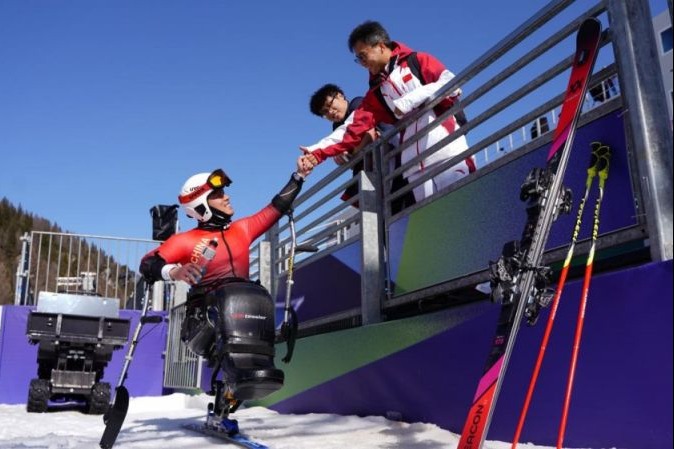
At the Milano Cortina 2026 Winter Paralympics, while spectators marveled at athletes conquering formidable slopes, a dedicated medical team worked tirelessly behind the scenes to ensure China’s para skiers could compete safely at their peak performance.
Dr. Wang Tianhong, a sports rehabilitation therapist with two decades of experience, and his colleague Xi Zhipeng, a traditional Chinese medicine specialist, formed the core medical support for China’s para alpine skiing team. Their approach combined cutting-edge sports medicine with ancient healing techniques, creating a comprehensive care system tailored to athletes with disabilities.
Each day began at 7:30 AM with mountain preparations before athletes even arrived, continuing well past 11:00 PM with rehabilitation therapies and medication distribution at the Paralympic Village. Dr. Wang’s responsibilities spanned from pre-race taping and bandaging to acute injury management during competitions and accompanying athletes through post-event drug testing.
Xi Zhipeng, who has limited vision in his left eye, brought over twenty years of medicinal tuina expertise—a traditional Chinese massage technique that addresses muscle soreness, joint pain, and sports-related conditions. His unique perspective as someone with visual impairment created special rapport with the athletes.
Liang Chen, chief medical officer of the Chinese delegation, emphasized the specialized approach required for para athletes. “We must be exceptionally mindful of their specific impairments, protect skin around residual limbs, and prevent secondary complications,” he explained. “Their extraordinary mental toughness means they often hesitate to report pain, requiring us to be exceptionally proactive in monitoring their condition.”
The medical team’s commitment extended beyond physical care. Xi’s voice grew hoarse from constantly cheering on the team, reflecting their emotional investment. “The greatest victory we can wish for them is to be safe always,” he expressed, highlighting their philosophy that athlete welfare trumped competitive achievement.
Their work demonstrated how specialized medical support enables para athletes to push boundaries while maintaining health—a critical factor in one of winter sports’ most demanding disciplines where speed, fearlessness, and tenacity intersect.