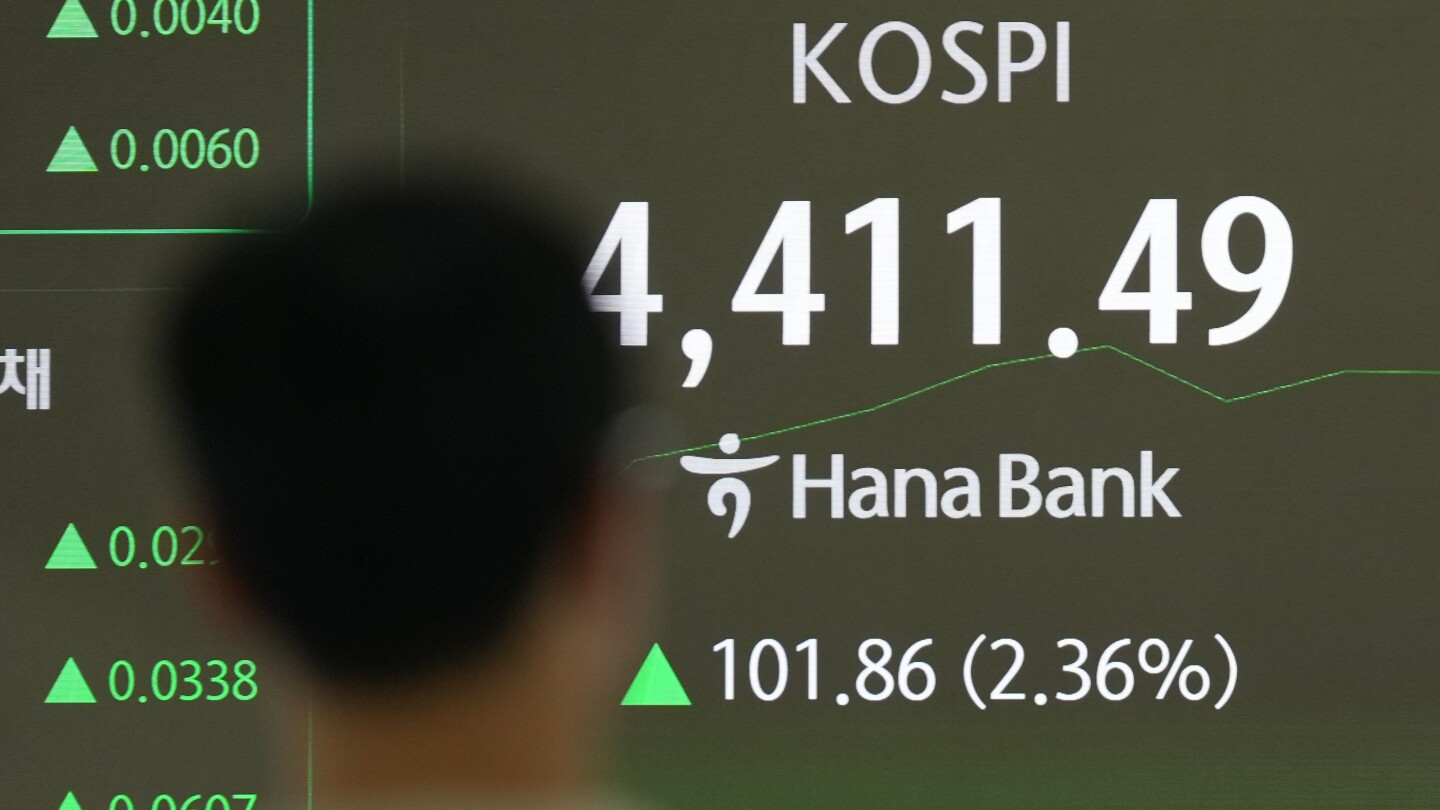
Financial markets exhibited a divergent response early Monday following the U.S. military operation that resulted in the capture of Venezuelan President Nicolas Maduro. While Asian equity benchmarks soared to unprecedented heights, precious metals witnessed substantial gains as investors sought safe-haven assets amid geopolitical uncertainty.
Commodity markets displayed particular sensitivity to the developments. Brent crude oil advanced by 14 cents to reach $60.89 per barrel, while U.S. benchmark crude increased 12 cents to $57.44. The petroleum sector’s attention remains focused on Venezuela’s crippled oil industry, which despite years of neglect and international sanctions, could potentially double or triple its current output of approximately 1.1 million barrels daily with sufficient investment and political stabilization.
Precious metals demonstrated the most dramatic movement, with silver and platinum both surging 6% while gold climbed 2%. This robust performance underscores investor tendency toward traditional safe-haven assets during periods of geopolitical turmoil.
Asian equity markets registered impressive gains, with Japan’s Nikkei 225 jumping 2.9% to 51,777.99—achieving a year-end high for 2025. South Korea’s Kospi surged 2.3% to 4,406.55, establishing another record close. More modest advances were seen in Australia’s S&P/ASX 200, which gained 0.1%, and Taiwan’s benchmark, which climbed 2.1%.
Currency markets showed limited movement, with the dollar rising 0.2% against the yen to 157.15, while the euro slipped 0.2% to $1.1702.
The trading week follows a mixed session on Wall Street, where U.S. stocks posted modest gains on Friday. The S&P 500 advanced 0.2% to 6,858.47, building on its 16%+ gain throughout 2025. The Dow Jones Industrial Average rose 0.7%, while the Nasdaq composite experienced a slight decline of less than 0.1%, pressured by significant losses in Microsoft (2.2%) and Tesla (2.6%) following reports of continued sales declines.
Several furniture companies recorded substantial gains after President Trump’s decision to delay increased tariffs on upholstered furniture, with RH advancing 8% and Wayfair rising 6.1%.
Market participants now turn their attention to the first full week of the new year, which promises critical economic updates including private reports on the services sector, consumer sentiment data, and government employment reports. These indicators are expected to provide crucial insight into the U.S. economy’s performance at the close of 2025 and its trajectory for 2026, potentially influencing Federal Reserve policy decisions at its late January meeting.