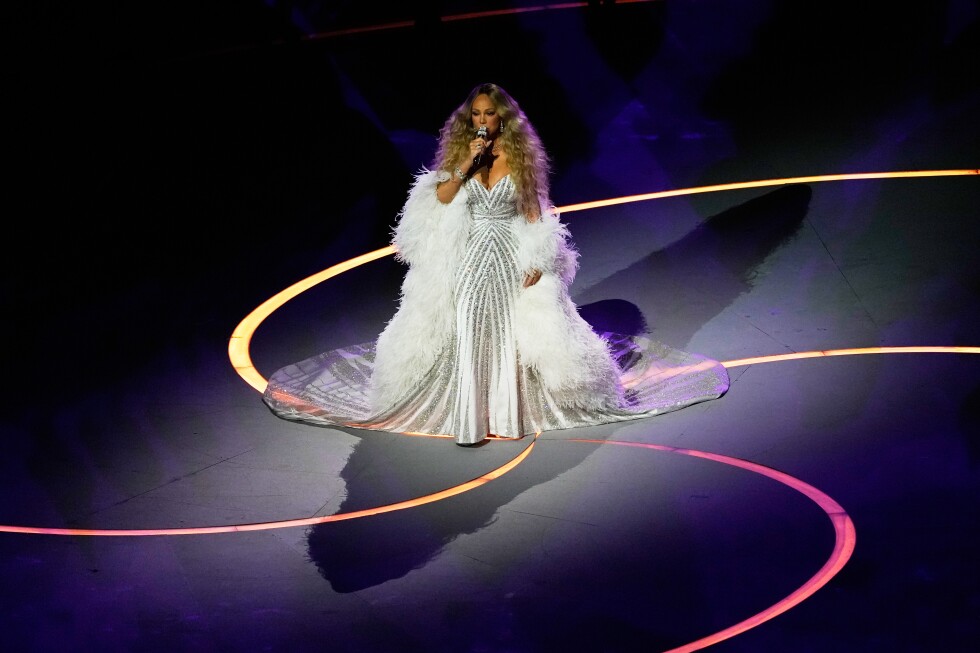
MILAN — The 2026 Winter Olympics opening ceremony in Milan became an instant talking point worldwide following Mariah Carey’s controversial performance of the Italian classic “Nel Blu Dipinto di Blu” (commonly known as “Volare”). While the pop icon’s appearance was touted as a major achievement by organizers, it simultaneously ignited heated discussions across digital platforms regarding cultural authenticity and performance integrity.
The American singer, despite her non-Italian heritage, delivered what ceremony director Maria Laura Iascone described as a “magic moment” during the 3.5-hour spectacle at San Siro stadium. Carey herself expressed excitement about performing in Italian via Instagram, calling it a “dream come true.” However, social media quickly became divided between admirers praising her vocal prowess and critics questioning why an Italian artist wasn’t selected for the honor.
Scrutiny intensified when spectators noticed an extensive teleprompter providing phonetic guidance for the Italian lyrics (displaying “Voh-lah-reh” for “Volare” and “Nell blue Dee-peen-toe D blue” for the full title). Additionally, online commentators raised suspicions about potential lip-syncing, noting the singer’s occasionally stiff delivery in the foreign language.
When pressed during Saturday’s press conference, organizers declined to directly address the lip-syncing allegations. Iascone acknowledged the teleprompter’s presence as necessary support for artists performing in non-native languages, emphasizing that pre-recorded backups are standard practice for globally televised events. She confirmed Carey performed without compensation and maintained that organizers were “satisfied with the result.
The performance controversy contrasted with appearances by authentic Italian voices including tenor Andrea Bocelli, singer-songwriter Laura Pausini, and mezzosoprano Cecilia Bartoli. Carey’s personal connection to the song—she told Vogue it had long been a favorite—added complexity to the discussion about cultural representation versus artistic choice in international ceremonies.