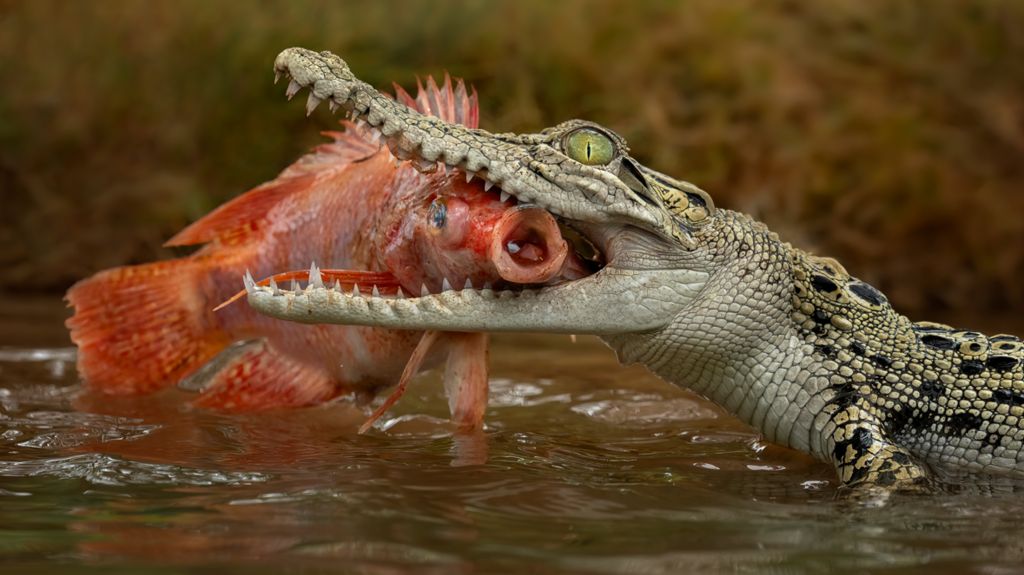
A high-profile case involving disinformation generated through artificial intelligence has made headlines in Singapore, after a Myanmar national was officially charged by local police for spreading a fake image of a dangerous saltwater crocodile at one of the city-state’s most popular outdoor recreation spots.
According to official police allegations, 38-year-old Ye Lin created the deceptive image of an estuarine crocodile at Pandan Reservoir using AI tools, before sharing the fabricated photograph with a colleague. The image eventually made its way to Singapore’s national water agency, which received an official report of a crocodile sighting at the reservoir on August 20.
Pandan Reservoir, located west of Singapore’s central business district, is a beloved destination for local joggers, kayakers, and rowing athletes, drawing hundreds of visitors weekly for outdoor activity. Following the sighting alert, the water agency immediately activated its emergency response protocol: agency personnel and staff from the National Parks Board launched a full-scale search and capture operation across the reservoir’s shoreline and surrounding green spaces. The Singapore Rowing Association and Singapore Canoe Federation were also ordered to suspend all scheduled activities at the site immediately, halting all public and competitive access.
As public anxiety over the potential predator grew, the water agency confirmed the next day that the crocodile image circulating online and reported to officials had been verified as a fabrication, and formally referred the incident to the Singapore Police Force for investigation. In the aftermath of the false report, the reservoir’s operations were suspended for two full working days, bringing all recreational activities and agency maintenance work to a standstill.
Authorities further allege that after creating and sharing the fake image, Ye Lin attempted to cover up his actions by deleting both the fabricated photograph and the AI application he used to generate it, resulting in an additional charge of obstructing the course of justice.
Local media reports indicate that Ye Lin indicated through a court interpreter that he intends to enter a guilty plea when the case proceeds. The case has been adjourned for a further hearing in November. If convicted on both charges, Ye Lin faces severe legal penalties: under Singaporean law, the charge of communicating a false message carries a maximum penalty of three years imprisonment, a fine of up to S$10,000 (approximately US$7,800), or both. The charge of obstructing justice carries an even harsher maximum penalty of up to seven years in prison, in addition to a fine.
As of this reporting, it remains unclear exactly how the fake image that Ye Lin shared privately with a colleague was ultimately escalated to the national water agency to trigger the full emergency response. The incident has sparked fresh public discussion in Singapore around the risks of AI-generated disinformation and the potential for harmless-seeming fabrications to trigger costly, disruptive public responses.