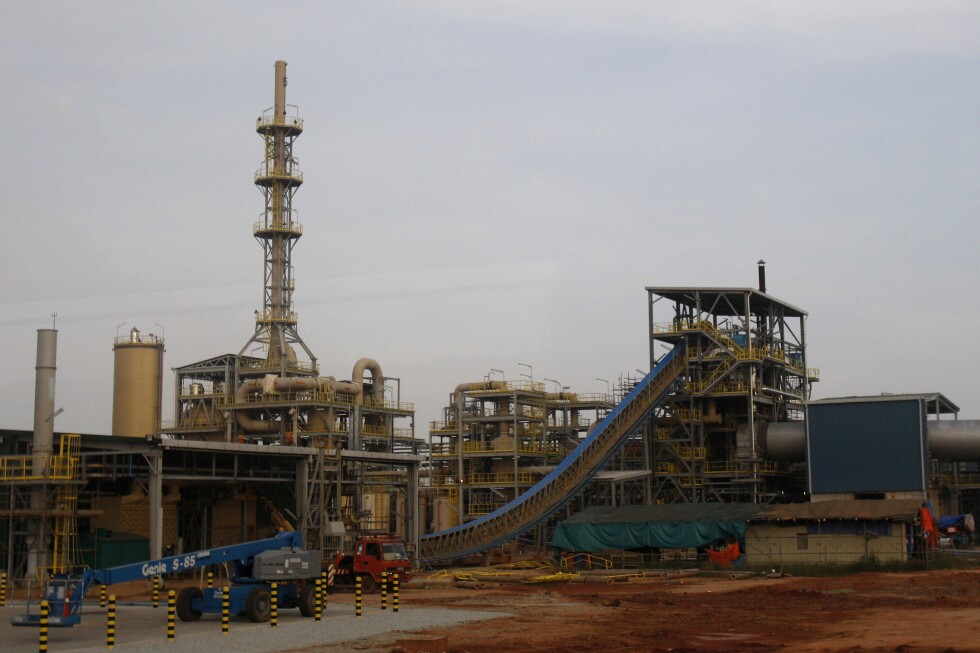
KUALA LUMPUR, Malaysia — In a decisive move balancing economic interests with environmental concerns, the Malaysian government has extended Australian mining giant Lynas Rare Earths’ operational license for a decade while imposing stringent conditions requiring complete cessation of radioactive waste production by 2031.
The Lynas refinery, strategically significant as the first major rare earths processing facility outside China, has operated in Pahang state since 2012. The facility has faced sustained opposition from environmental groups concerned about accumulated radioactive byproducts.
Science Minister Chang Lih Kang announced the conditional renewal Monday, emphasizing that all radioactive waste generated within the next five years must undergo thorough treatment and neutralization through thorium extraction or equivalent methodologies. The minister explicitly prohibited establishment of new permanent disposal facilities beyond the one currently under construction, scheduled for completion by year-end.
The license validity extends until March 2036, subject to mandatory review after five years. Minister Chang clarified that violation of any conditions would result in immediate revocation of operating privileges.
Environmental organizations have persistently advocated for exportation of radioactive waste, arguing that mechanically and chemically processed thorium and uranium compounds present heightened hazards compared to their natural states.
Lynas has been allocated a five-year period to retrofit existing infrastructure and scale operations under what officials describe as an accelerated yet firm timeline. Laboratory testing has demonstrated promising results in radiation neutralization through thorium extraction, though industrial-scale implementation typically requires seven to ten years of development.
“We remain steadfast in our commitment to prevent radioactive waste accumulation in Malaysia. This license renewal establishes a clear pathway to achieve complete compliance by 2031,” Minister Chang stated.
The approval followed comprehensive technical evaluation that incorporated Malaysia’s strategic economic interests and binding commitments from Lynas. Rare earth minerals—17 elements critical for manufacturing electric vehicles, defense systems, electronics, and green technologies—are predominantly controlled by China, which holds near-monopoly status despite possessing only one-third of global reserves.
Lynas estimates its Malaysian operations could supply nearly 30% of worldwide rare earth demand excluding China. The shadow of Malaysia’s previous rare earth facility looms large—Mitsubishi Group’s Perak state refinery, closed in 1992 after being linked to birth defects and leukemia cases, remains one of Asia’s most extensive radioactive cleanup sites.