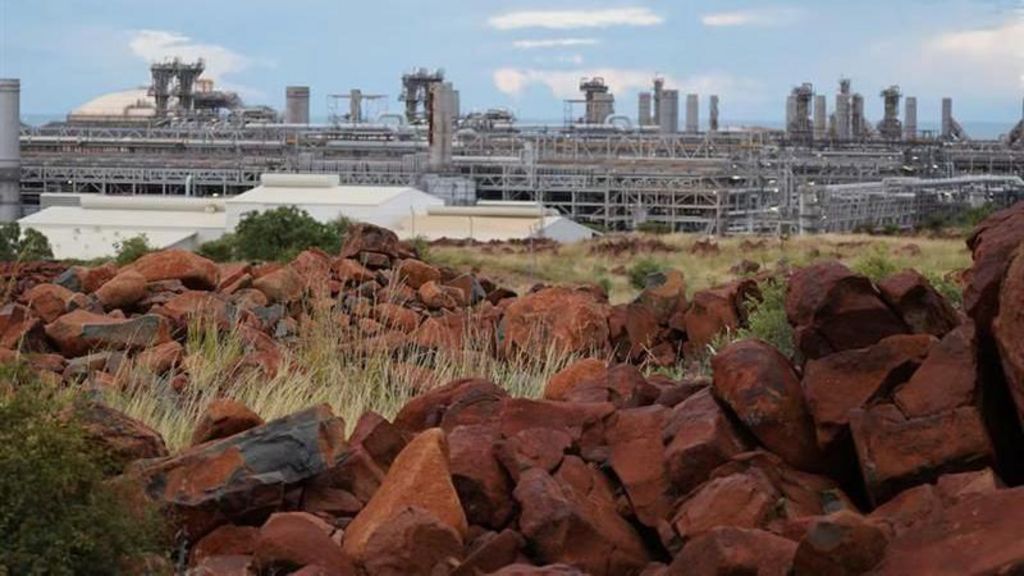
The Australian government has officially extended the operational lifespan of the North West Shelf, one of the nation’s largest fossil fuel projects, by four decades to 2070. This decision comes just days before the federal government is set to announce its 2035 emissions reduction targets. Australia, one of the world’s highest per capita polluters, has committed to reducing emissions by 43% by 2030 but faces criticism for its continued reliance on fossil fuels. Critics argue that the extension undermines global climate goals, while Environment Minister Murray Watt defended the decision, citing 48 new strict conditions imposed on oil and gas giant Woodside Energy. These conditions mandate the reduction of specific gas emissions by 2030 and achieving net zero by 2050. Additionally, safeguards have been introduced to protect the ancient Indigenous rock art in Western Australia’s Pilbara region. Woodside Energy’s Chief Operating Officer, Liz Westcott, welcomed the extension, emphasizing the company’s commitment to providing reliable energy. The North West Shelf project, which includes a processing and export plant in Karratha, is located near the 60,000-year-old World Heritage-listed Murujuga rock art. Watt highlighted that the new conditions would prevent unacceptable impacts on the heritage site, including restrictions on air emissions that could accelerate damage. The decision also includes legal requirements for industry consultation with Indigenous communities and a robust monitoring system to ensure compliance with emissions limits. Further protections for the heritage site were announced under a ‘partial declaration.’ Peter Hicks, chair of the Murujuga Aboriginal Corporation, praised the additional protections for an area of great cultural significance. However, climate groups, including the Australian Conservation Foundation, condemned the extension, labeling the project a ‘carbon bomb’ that jeopardizes global efforts to combat rising temperatures. Australian Greens leader Larissa Waters described the decision as a ‘betrayal and disastrous for the planet’s future.’ Australia has faced successive natural disasters in recent years, with climate experts warning of more crises unless significant emissions reductions are achieved. Prime Minister Anthony Albanese, who came to power in 2022 promising stronger climate action, has been criticized for his government’s continued support of coal and gas projects.