In a significant escalation of maritime security concerns, global shipping giant Maersk has suspended all vessel transits through the strategically vital Strait of Hormuz and the Bab el-Mandeb Strait leading to the Suez Canal. The Danish container shipping company announced the precautionary measure Sunday following declarations from Iran’s Revolutionary Guards that the strait was closed and multiple security incidents reported in the region.
The decision comes as part of a broader industry response to heightened risks, with Maersk stating that ‘the safety of our crews, vessels and customers’ cargo remains our key priority.’ The company has implemented rerouting strategies that will send vessels around the Cape of Good Hope at Africa’s southern tip, adding substantial distance and time to traditional shipping routes between Europe and Asia.
Simultaneously, Maersk has temporarily closed its regional offices in the United Arab Emirates, Qatar, and Oman as a security precaution. The shipping conglomerate joins other major industry players including MSC, Hapag-Lloyd, and CMA CGM in implementing similar safety measures across the affected waterways.
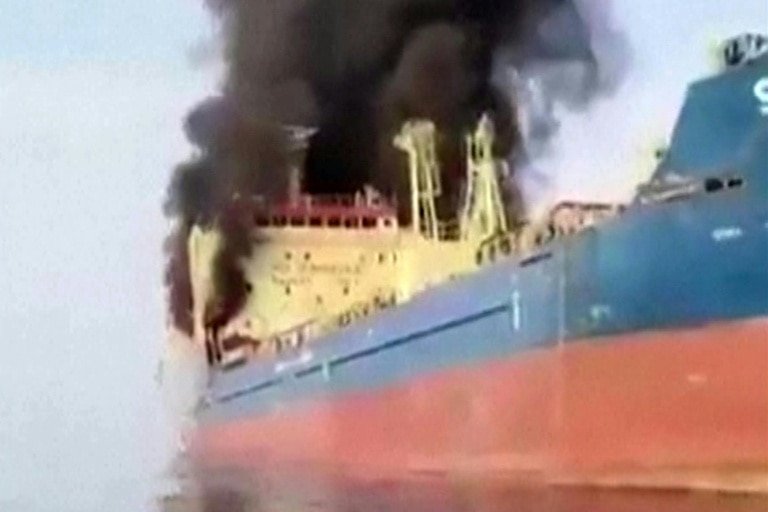
The security situation intensified Sunday with reports from Omani state media indicating an oil tanker off its coast had been targeted, resulting in injuries to four crew members. Separately, the United Kingdom Maritime Trade Operations Centre documented another vessel near the UAE coast reporting impact ‘by an unknown projectile causing a fire.’
International Maritime Organization Secretary-General Arsenio Dominguez issued a statement urging ‘maximum caution’ among shipping companies and recommending vessels avoid the affected region ‘until conditions improve.’ The collective industry response underscores the critical nature of these waterways, with the Strait of Hormuz alone facilitating nearly a quarter of global seaborne oil shipments alongside substantial commercial cargo volumes.