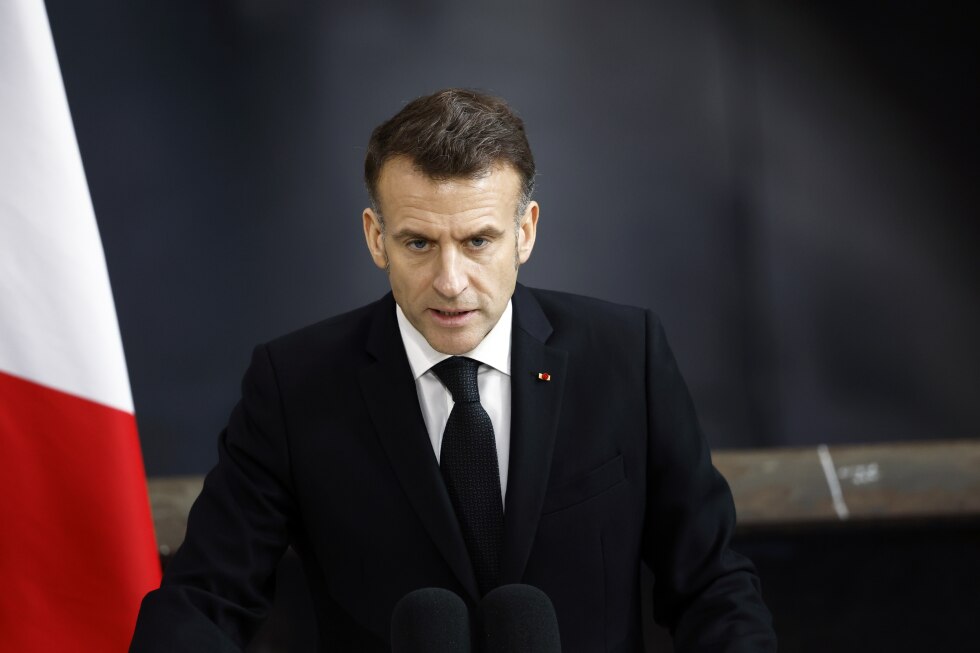
In a significant shift in nuclear policy, French President Emmanuel Macron declared on Monday that France would permit the temporary stationing of its nuclear-capable aircraft at allied nations’ facilities. The announcement, made during a strategic address at the L’Ile Longue ballistic missile submarine base in northwestern France, marks a recalibration of Europe’s security architecture amid growing continental uncertainties.
Macron emphasized that while elements of France’s strategic air forces might be deployed to partner nations, ultimate authority over nuclear weapon deployment would remain exclusively with the French presidency. This distinction maintains France’s sovereign control while extending deterrence capabilities to allies.
The French leader confirmed ongoing discussions with multiple European partners including Britain, Germany, Poland, the Netherlands, Belgium, Greece, Sweden, and Denmark regarding these arrangements. In a parallel development, Macron revealed plans to expand France’s nuclear arsenal by increasing warhead numbers above the current level of approximately 300—the first such augmentation since at least 1992, though specific quantities remain unspecified.
This doctrinal evolution responds to mounting European security concerns, particularly regarding the reliability of American nuclear guarantees under NATO’s umbrella policy. Macron’s speech positioned French nuclear capabilities as a stabilizing force within the European Union, where France remains the sole nuclear power since Britain’s EU departure.
The president articulated the deterrence philosophy underpinning these changes: ‘My responsibility is to ensure that our deterrence maintains—and will maintain in the future—its assured destructive power. If we had to use our arsenal, no state, however powerful, could shield itself from it.’
Several nations have already engaged with France’s year-old offer to discuss nuclear deterrence cooperation, including German Chancellor Friedrich Merz’s acknowledgment of preliminary talks regarding potential German aircraft carrying French nuclear ordnance. Additionally, France and Britain recently established a framework for coordinated though independent nuclear forces, reinforcing trans-European security coordination.