PARIS – French President Emmanuel Macron is convening a critical summit with Ukrainian President Volodymyr Zelensky and leaders from over 30 allied nations to solidify long-term security guarantees for Kyiv. The high-stakes Paris meeting, involving the ‘Coalition of the Willing,’ aims to establish a framework for Ukraine’s defense in the event of a future ceasefire with Russia, even as Moscow escalates its offensive against Ukrainian energy infrastructure.
The discussions are anchored in a peace proposal reportedly 90% finalized following Zelensky’s recent engagement with former U.S. President Donald Trump. The outstanding 10% of the agreement, which remains highly contentious, centers on potential territorial concessions. Russia currently occupies approximately 75% of the Donetsk region and 99% of Luhansk, collectively known as the Donbas industrial heartland—a primary objective of the Kremlin’s ongoing invasion launched in February 2022.
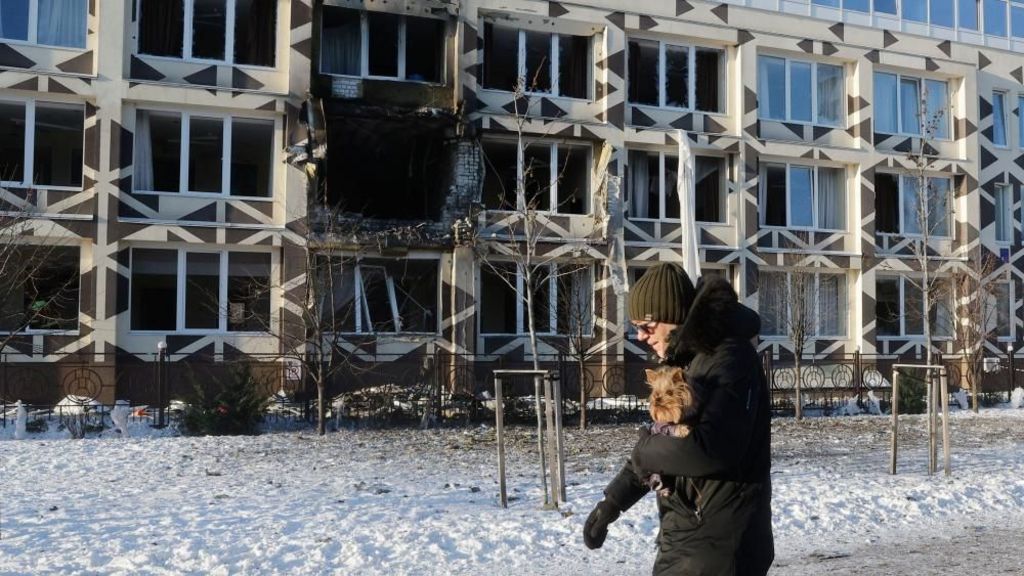
Despite diplomatic efforts, Russia has consistently rejected temporary ceasefire notions and intensified military strikes, deliberately targeting Ukraine’s power grid during severe winter conditions. In response, Ukrainian forces have conducted drone operations against Russian infrastructure, including a recent attack on an oil depot in Lipetsk.
The Paris agenda includes forming a multinational force to deter future aggression, defining concrete security pledges should Russia violate any peace deal, and outlining sustained support for Ukraine’s military and economy. A central element, termed the ‘backstop,’ involves securing a definitive U.S. commitment to lead a collective response against any Russian violations. While Zelensky indicated Washington offered 15-year security guarantees after his Florida talks, implementation details remain unspecified.
The Ukraine-focused dialogue is occurring against a backdrop of heightened global tensions triggered by recent U.S. actions. The military operation in Venezuela, which resulted in the capture of President Nicolás Maduro, and subsequent statements by Trump regarding U.S. supremacy in the Western Hemisphere have raised concerns among European allies. Further complicating the summit is Trump’s reiterated interest in annexing Greenland, a semi-autonomous Danish territory. Danish Prime Minister Mette Frederiksen warned such a move would effectively terminate the trans-Atlantic alliance.
European leaders, including UK Prime Minister Keir Starmer and NATO Secretary General Mark Rutte—both present in Paris—have expressed support for Denmark regarding Greenland while remaining measured in their criticism of U.S. actions in Venezuela. President Macron, as host, is tasked with maintaining the coalition’s focus on Ukraine amidst these divergent geopolitical challenges.