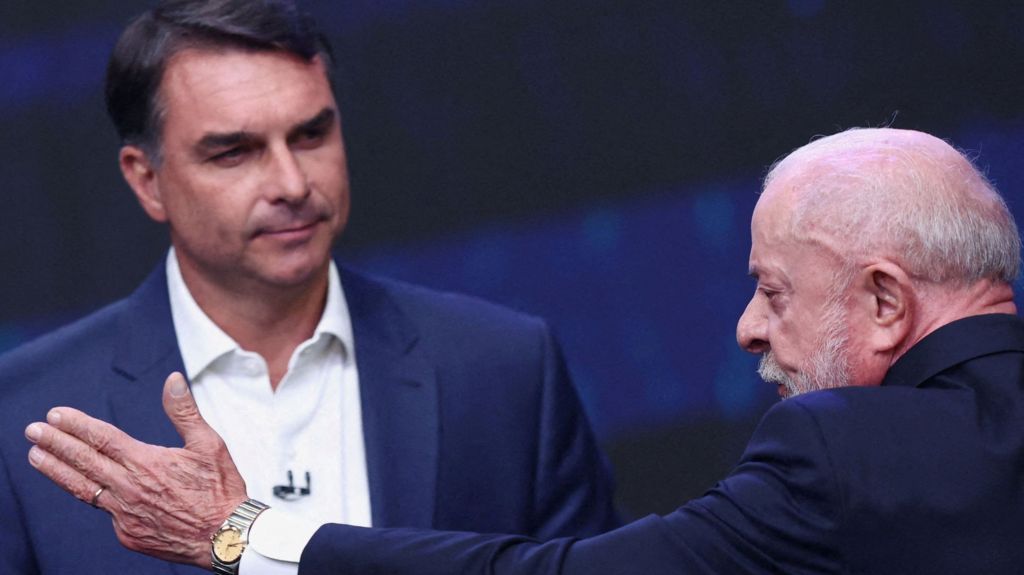
Brazil’s high-stakes presidential run-off is set to take place this Sunday, but the lead-up to the vote has been engulfed in escalating controversy over alleged unequal treatment on Meta’s social media platforms, with both leading candidates filing last-minute petitions calling for each other’s disqualification from the ballot.
Left-wing incumbent Luiz Inácio Lula da Silva, who is seeking a fourth presidential term, was the first to submit a formal request to Brazil’s top judicial body for elections, the Superior Electoral Court (TSE), on Wednesday. In the filing, Lula’s campaign argues that Meta — the U.S. tech giant that owns widely used Brazilian platforms WhatsApp, Instagram, and Facebook — has intentionally restricted Lula-aligned content to amplify the campaign of his right-wing challenger, Flávio Bolsonaro, son of former Brazilian president Jair Bolsonaro. The petition calls for an investigation into claims of abuse of economic power and improper social media manipulation, and asks the court to bar Bolsonaro from holding office for eight years after the 2026 election if the allegations are proven.
Flávio Bolsonaro quickly pushed back with a counter-petition of his own, also filed Wednesday with the TSE. He accuses Lula’s campaign of abusing political and economic power, claiming the incumbent administration has leveraged personal voter data pulled from official government databases to send mass promotional WhatsApp messages touting Lula’s social programs to millions of Brazilian voters.
The dispute over Meta’s role in the election emerged earlier this month, when pro-Lula demonstrators gathered outside the company’s São Paulo headquarters on Monday to protest what they called illegal interference in Brazil’s democratic process. Users across the country have also reported anomalous behavior on Meta platforms, including the company’s AI image generation tools failing to produce output related to Lula, and disproportionate reach for Bolsonaro-aligned content.
These on-the-ground claims were bolstered this week by a statement from United Nations experts, who released a public assessment Wednesday raising formal concerns about unequal access to voters across Meta’s platforms ahead of the run-off. The report, led by the UN Special Rapporteur on freedom of expression, called on Meta to guarantee a fair level playing field for all candidates during the final voting period. It documented multiple reported irregularities, including temporary suspensions of one candidate’s campaign account, inconsistent performance in user feeds, view counts and overall audience reach, and unnecessary content restrictions on one campaign’s Instagram posts. The report added that even information from Meta employees has pointed to disproportionate content limitations for accounts linked to one of the two presidential tickets.
Meta has repeatedly pushed back against all claims of bias. The company has issued multiple public denials that it has taken any action to favor either candidate in the election, and has stated it will fully comply with any court order requiring equal treatment for both Lula and Bolsonaro’s campaigns.
The run-off comes after an unexpectedly tight first round of voting held on October 4. Flávio Bolsonaro secured a narrow lead over Lula in the first round, but neither candidate crossed the 50% threshold of valid votes required to win the presidency outright, forcing the head-to-head second round this Sunday. With 159 million registered Brazilian voters eligible to cast ballots, pre-election opinion polls show the two candidates are virtually neck-and-neck, making the outcome of Sunday’s vote too close to call.