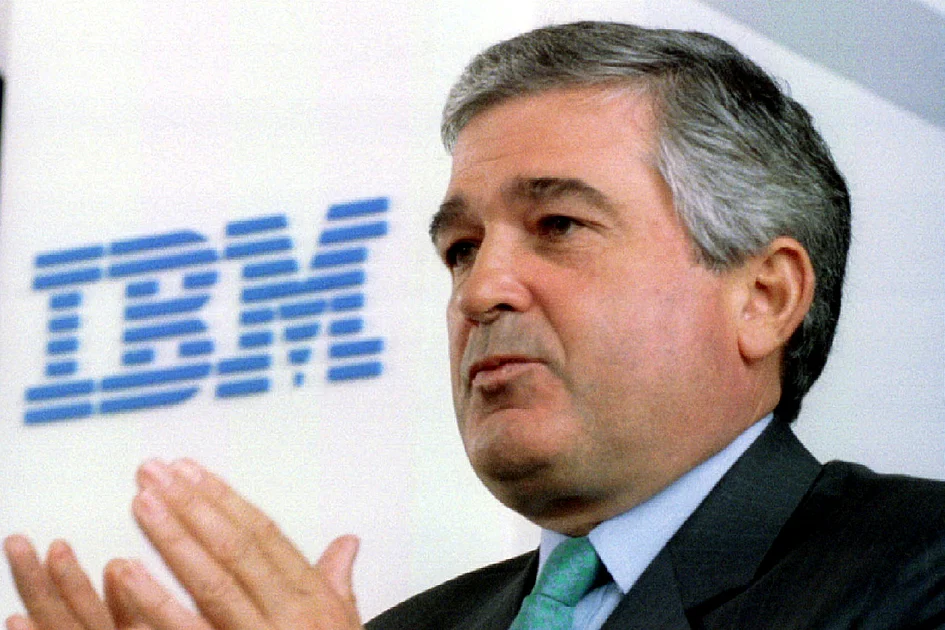
Louis V. Gerstner, Jr., the visionary leader who orchestrated one of corporate America’s most remarkable turnarounds at IBM, passed away on Saturday at the age of 83. The announcement came from current IBM Chairman and CEO Arvind Krishna, who informed employees of Gerstner’s passing via corporate email on Sunday, though no specific cause of death was disclosed.
Gerstner’s arrival at IBM in April 1993 marked a historic moment for the computing giant, as he became the first external appointee to lead the company known affectionately as ‘Big Blue.’ He joined IBM following his tenure as CEO of RJR Nabisco, with previous executive roles at American Express and management consultancy McKinsey & Company.
When Gerstner assumed leadership, IBM faced existential threats with potential bankruptcy looming. His transformative strategy involved radically pivoting the company’s focus from hardware manufacturing to integrated business services and solutions. Through decisive cost-cutting measures, strategic asset sales, and aggressive stock repurchases, Gerstner fundamentally reshaped IBM’s corporate culture and operational direction.
Under his nine-year stewardship, IBM’s stock valuation soared approximately 800%, cementing his legacy as the architect who rescued an American institution. Following his retirement as CEO in 2002, Gerstner assumed the chairman role at private equity firm Carlyle Group until his full retirement in 2008.
Beyond corporate leadership, Gerstner made significant contributions as an author, penning the acclaimed business memoir ‘Who Says Elephants Can’t Dance’ and co-authoring ‘Reinventing Education: Entrepreneurship in America’s Public Schools.’ His board service spanned major corporations including The New York Times Company, American Express, AT&T, Bristol-Myers Squibb, and Caterpillar.
Gerstner’s philanthropic impact was equally substantial. He established Gerstner Philanthropies in 1989, encompassing the Gerstner Family Foundation which directed substantial resources toward biomedical research, environmental conservation, educational initiatives, and social services across New York City, Boston, and Palm Beach County, Florida. His particular passion for education reform led to IBM initiatives integrating company technology into classroom learning environments.