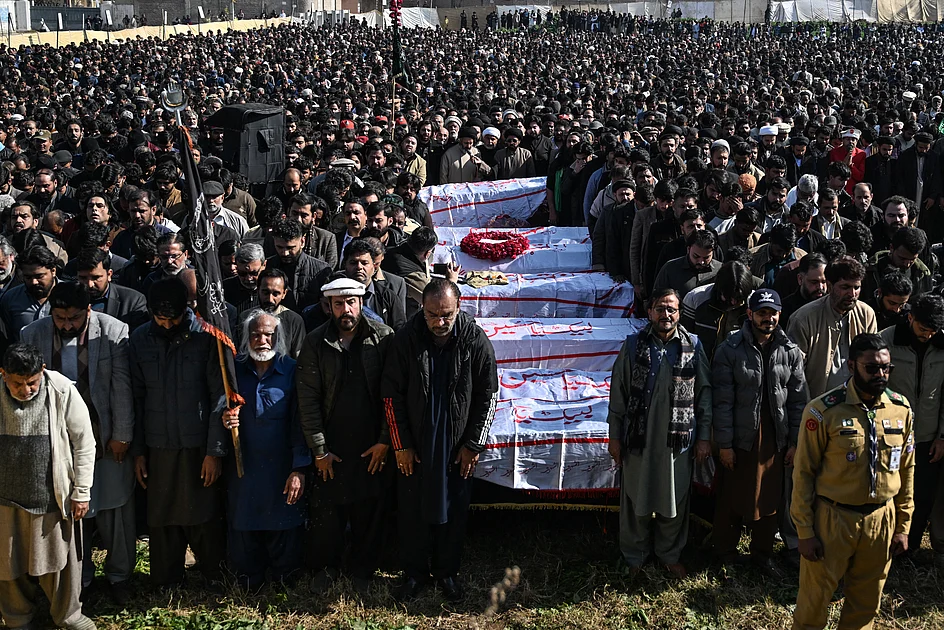
Pakistan observed a day of collective mourning on Saturday as thousands gathered to bury victims of a devastating suicide attack that struck a Shiite mosque during Friday prayers. The assault, which killed 31 worshippers and injured 169 others, represents the deadliest violence to hit Islamabad since the 2008 Marriott hotel bombing.
The Imam Bargah Qasr-e-Khadijatul Kubra mosque, located on the capital’s outskirts, became the scene of tragedy when an attacker detonated explosives after being confronted at the entrance. Eyewitness accounts describe a brief gunfight between the bomber and volunteer security personnel preceding the detonation that filled the prayer hall with chaos and devastation.
Islamic State’s regional affiliate (Daesh) has claimed responsibility for the assault that left pools of blood across the red-carpeted prayer area. AFP journalists documented harrowing scenes at local hospitals where medics and bystanders rushed to assist victims with blood-soaked clothing, including several children among the casualties.
Security officials reported making multiple arrests in connection with the attack, including taking the bomber’s mother into custody from an upscale Islamabad neighborhood. Anonymous officials revealed the attacker originated from Peshawar in the violence-plagued Khyber Pakhtunkhwa province, with relatives having resided in Nowshera for several years.
Prime Minister Shehbaz Sharif condemned the blast as a ‘heinous crime against humanity’ and vowed to bring perpetrators to justice. The attack occurs amid escalating insurgencies in Pakistan’s southern and northern border regions with Afghanistan, highlighting ongoing security challenges facing the nation.
This tragedy marks the second major security incident in Islamabad since November’s court complex bombing that killed 12 people, ending a nearly three-year period of relative calm in the capital. Pakistan’s Shiite minority, comprising 10-15% of the predominantly Sunni population, has frequently been targeted by extremist groups throughout the region.