In a significant achievement for cultural preservation, the United Arab Emirates has secured international recognition for five historically significant sites through their inscription on the Islamic World Educational, Scientific and Cultural Organization’s (ICESCO) List of Islamic World Tangible Heritage. The announcement came during the 13th session of the Islamic World Heritage Committee convened in Uzbekistan.
The newly designated locations span the emirates of Dubai and Sharjah, representing diverse aspects of the region’s rich historical tapestry. The recognition underscores the UAE’s commitment to safeguarding its cultural legacy while promoting global awareness of its archaeological wealth.
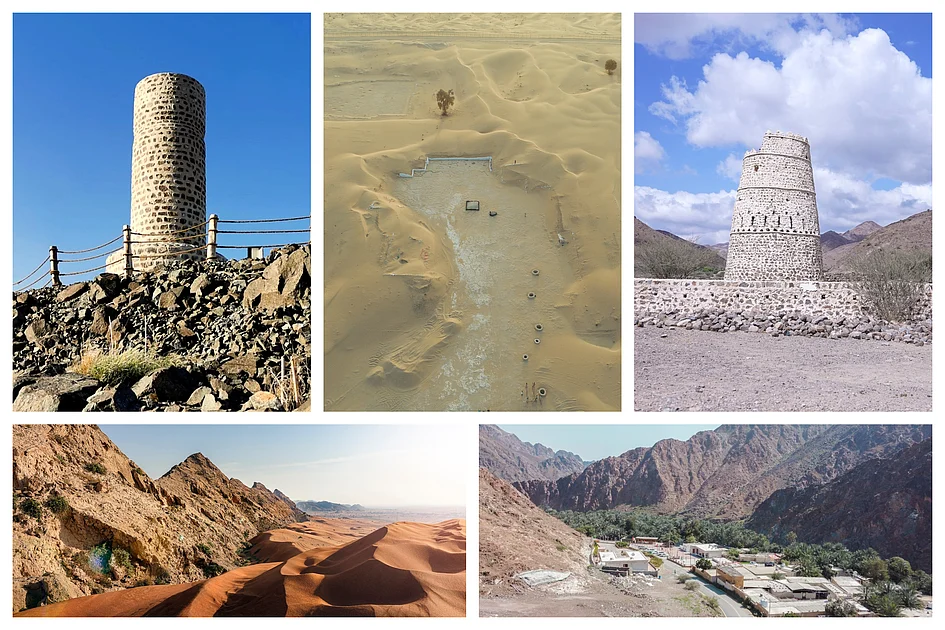
Among the honored sites is Saruq Al Hadid, an archaeological marvel located approximately 95 kilometers from Dubai. Discovered in 2002 following aerial observations by His Highness Sheikh Mohammed bin Rashid Al Maktoum, Ruler of Dubai, the site features distinctive dark patches subsequently identified as metallurgical slag from ancient smelting operations. Research indicates continuous human activity from the Early Bronze Age (2600 BCE) through the Late Iron Age (550 BCE), with excavations yielding bronze artifacts, pottery, stone tools, weaponry, and exquisite gold and silver ornaments.
The historic defensive structures of Khor Fakkan, including the Portuguese Fort and Al Adwani Tower, received recognition for their role in coastal protection from the 14th to the 20th centuries. The Portuguese Fort stands as the sole surviving triangular-shaped fortification in the eastern Arabian Peninsula.
Al Nahwa, situated south of Khor Fakkan, earned inclusion for its remarkable collection of rock carvings spanning from the Bronze Age to contemporary times. Preservation efforts have employed advanced three-dimensional digital technologies to document these artistic expressions.
Sharjah’s Faya Palaeolandscape gained recognition as a critical record of early human settlement patterns, containing archaeological evidence that documents human presence across multiple historical epochs.
Wadi Al Helo in the Eastern Region was honored for its evidence of copper mining activities during the Neolithic transition period. The valley features remnants of copper extraction technological development, Bronze Age rock art, and historic village remains, illustrating the enduring relationship between inhabitants and their environment.
Sheikh Salem bin Khalid Al Qassimi, Minister of Culture and Chairperson of the National Commission for Education, Culture and Science, described the inscriptions as “a significant milestone that reflects the depth and richness of the UAE’s cultural heritage.” The minister further emphasized the nation’s ongoing commitment to “strengthening the presence of Emirati heritage on international heritage lists” through comprehensive documentation and sustainable preservation initiatives for future generations.