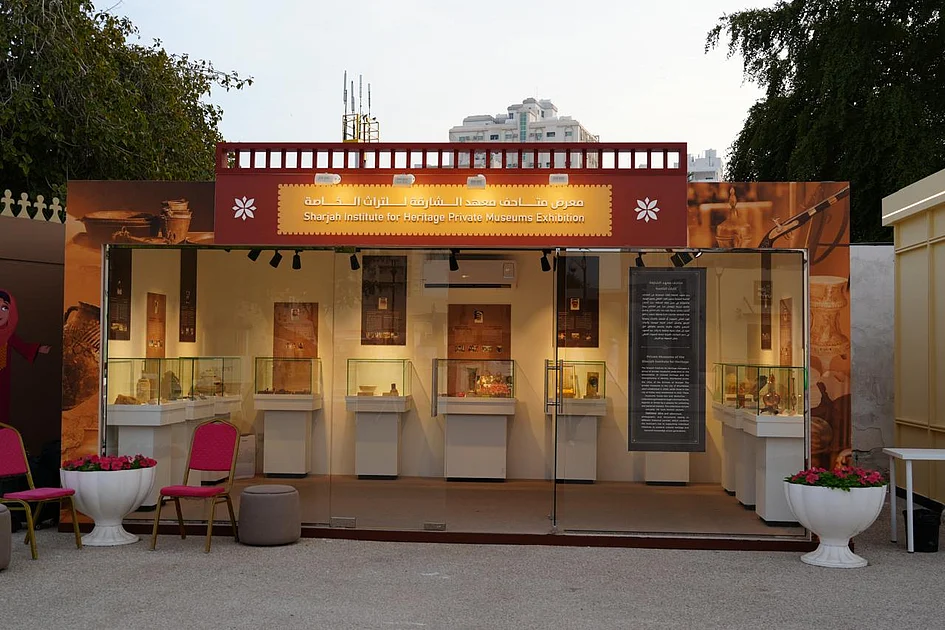
A remarkable collection of historical artifacts spanning more than a century is currently captivating visitors at the Sharjah Heritage Days festival in the United Arab Emirates. The exhibition, intriguingly titled ‘Heard of It, Never Seen It’ (known in Arabic as ‘Samait wa Ma Shuft’), showcases rare technological marvels from a private Emirati collection that many have only encountered through stories or historical accounts.
The display features extraordinary items including a 130-year-old kerosene-powered fan, a Braille-adapted radio from the early 20th century, and Thomas Edison’s pioneering 1877 phonograph—one of the first devices capable of recording and reproducing sound. Other notable exhibits include a 1956 aircraft black box, manual calculators, telegraph telex machines, vintage music cartridges, and one of the earliest portable computers dating back to 1981.
Collector Hassan Ahmed Bu Sabar, whose childhood passion evolved into this comprehensive collection, explained the exhibition’s profound purpose: “Most people have heard of these devices from their parents or in books, but they have never actually seen them. When visitors walk into this hall, I want them to feel surprise—and then connection. These objects demonstrate the step-by-step evolution of human intelligence.”
The current festival display represents merely a fraction of Bu Sabar’s complete collection, which he has organized into a 20-section private museum featuring themed rooms that recreate historical settings including a traditional coffee majlis, vintage grocery shop, barber’s corner, and pearl merchant’s section. His collecting journey began at age 12 with coins from the pre-Union era, gradually expanding to include Indian swords, stamps, and black-and-white cameras.
This exhibition forms part of a broader cultural preservation effort supported by the Sharjah Institute for Heritage, which has nurtured numerous private museums across the emirate since the early 2000s. These collections, often built through family inheritance and personal passion, serve as vital bridges between generations—transforming individual memories into shared cultural knowledge and ensuring that heritage remains accessible beyond formal institutions.