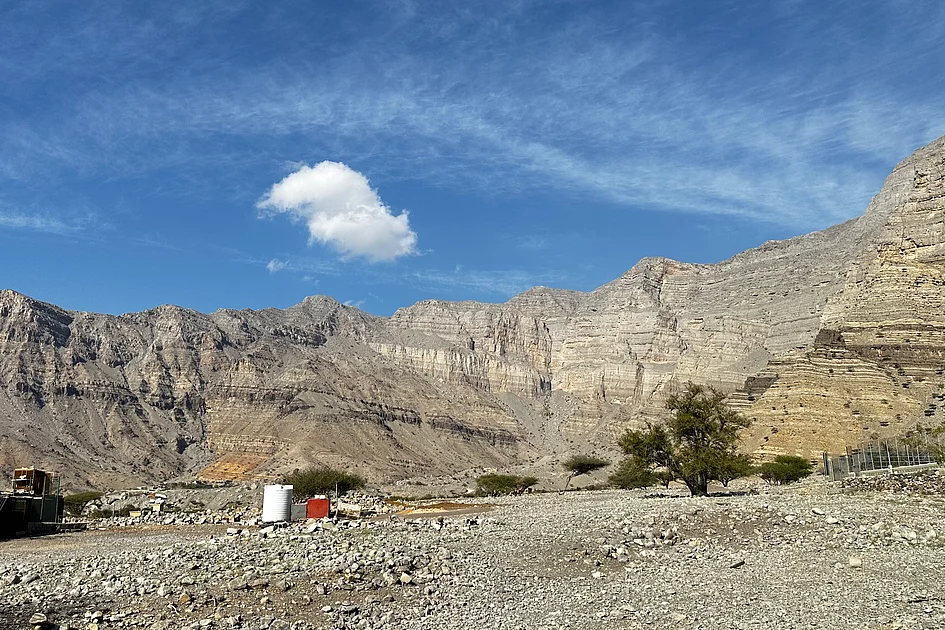
Nestled within the formidable peaks of Ras Al Khaimah, the villages of Wadi Shaam stand as living monuments to an era defined by communal resilience and profound connection to the natural world. Through the recollections of native elder Saeed Abdullah Al-Zahouri, 60, we gain unprecedented insight into a vanishing way of life that thrived on collective resourcefulness and intergenerational wisdom.
These remote settlements, including the modest Ahbabbt area with its ten households and the historic Al-Ghashbah with structures predating the 1940s, exemplified self-sufficient existence. Families cultivated wheat, raised livestock, and constructed dwellings from indigenous materials—mountain gravel, wood, and a specialized clay known as Al-Jass. Their architectural ingenuity manifested in Bayt Al-Qofl (houses of locks), designed with layered roofs of wood and Al-Sakhbar plants to withstand extreme weather.
Survival hinged on sophisticated water management systems. Communities excavated reservoirs, lining them with kiln-baked clay discs and connecting them via intricate channel networks called Al-Maseelah to harvest rainwater. Filter basins purified runoff, providing safe water for consumption and agriculture despite the arid environment.
Seasonal migration shaped annual rhythms. During scorching summers, families journeyed for days to cooler regions like Al-Arshan or Fujairah, transporting supplies on donkey and camel caravans. Winters brought communal gatherings in mountain caves, where elders shared stories while baking traditional bread in stone ovens—a testament to enduring social bonds.
The 1970s marked a transformational period following the UAE’s formation. Under Sheikh Zayed’s visionary leadership, mountain families transitioned to planned communities with modern amenities while preserving cultural traditions. This carefully managed evolution allowed Wadi Shaam’s residents to embrace progress without sacrificing the heritage that defined their identity for generations.