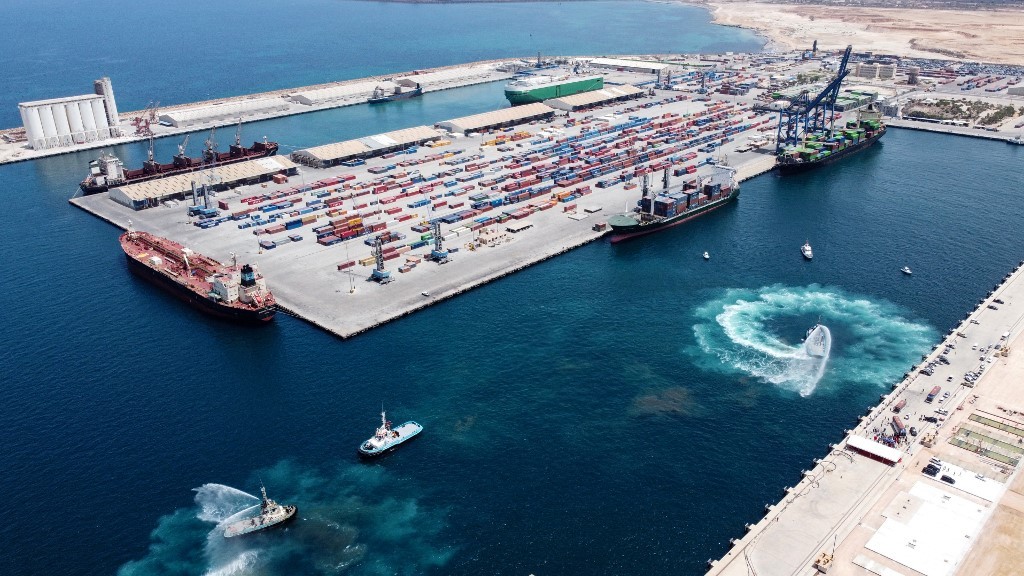
In a significant economic development, Libya’s Government of National Unity has finalized a landmark strategic partnership with international firms to dramatically expand the Misurata Free Zone. Prime Minister Abdulhamid Dbeibah announced the agreements on Sunday, revealing the project is projected to attract approximately $2.7 billion in foreign investment—a crucial step toward diversifying the nation’s oil-dependent economy.
The partnership brings together Terminal Investment Limited and Doha-based Maha Capital Partners, combining operational expertise with long-term capital investment. According to government projections, the expanded zone is expected to generate annual operating revenues of around $500 million while transforming the port into a competitive logistics hub connecting Africa, Europe, and the Middle East.
Prime Minister Dbeibah emphasized the strategic importance of the project in a statement on social media platform X, noting that it “enhances Libya’s position among the region’s largest ports in terms of size and capacity” while relying on “direct foreign investment within a comprehensive international partnership.”
The expansion represents a conscious effort to reduce Libya’s overwhelming dependence on hydrocarbons, which currently account for more than 95% of economic output. Officials envision the project as a catalyst for broadening the country’s economic base through modernized infrastructure and transformed state assets.
Substantial employment benefits are anticipated, with the project expected to create approximately 8,400 direct jobs and roughly 60,000 indirect positions. The terminal’s capacity will be increased to handle four million containers annually, up from its current 190-hectare footprint.
The signing ceremony at the Misurata Free Zone was attended by high-profile figures including Sheikh Mohammed bin Abdulrahman al-Thani and Antonio Tajani. Muhsin Sigutri, the free zone’s chairman, stated that the partnership reflects “Misurata’s determination to build modern, internationally competitive infrastructure that can unlock new industries, support local employment, and strengthen Libya’s position within regional and global supply chains.”
This development occurs against the backdrop of prolonged instability following the 2011 NATO-backed uprising, which led to rival administrations emerging in eastern and western Libya in 2014, significantly complicating economic recovery efforts.