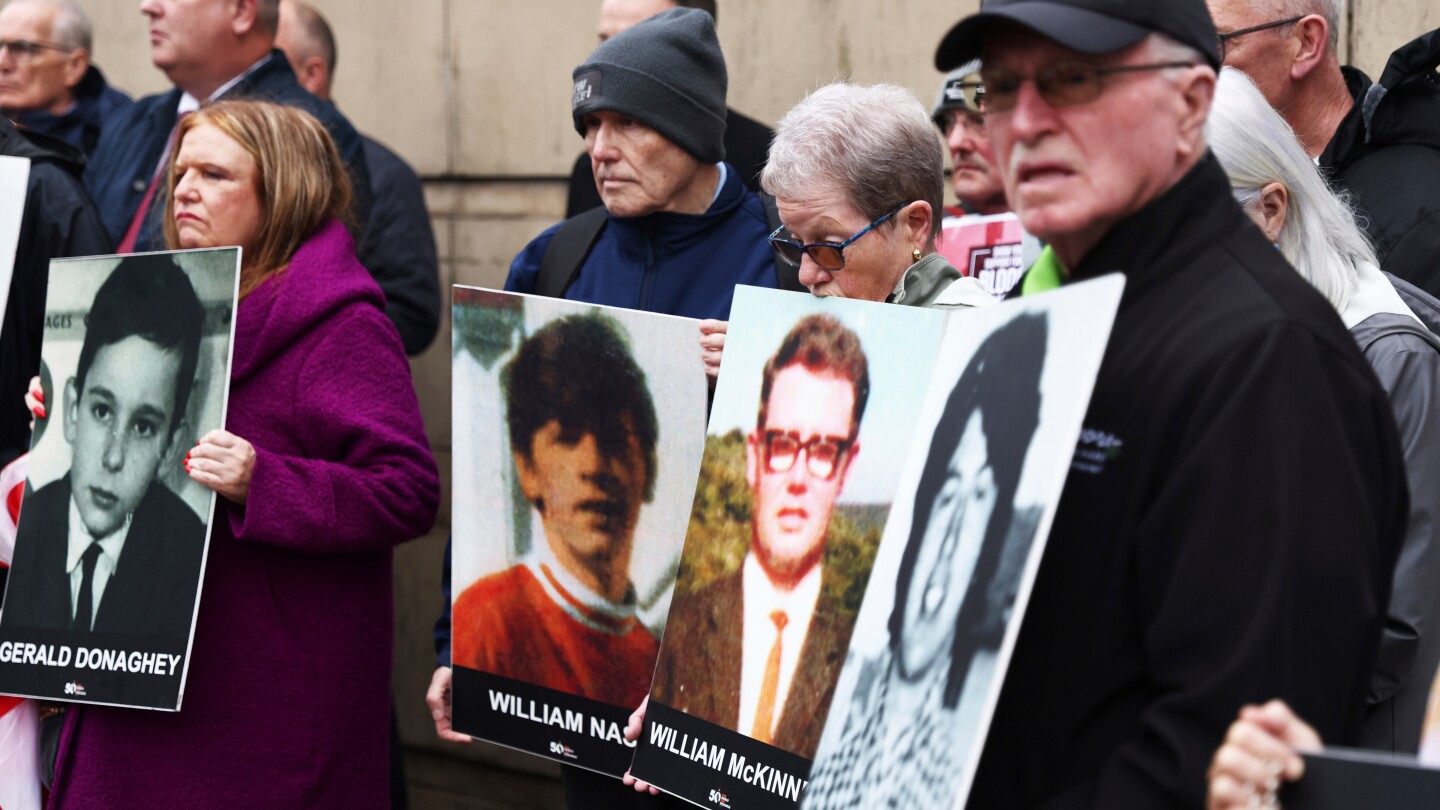
In a dramatic closing argument, defense lawyer Mark Mulholland urged a judge to acquit Soldier F, the only British soldier charged in the 1972 Bloody Sunday massacre. Mulholland asserted that the prosecution’s case was ‘fundamentally flawed and weak,’ relying on unreliable evidence from ‘fabricators and liars.’ The former lance corporal, whose identity remains protected, faces two counts of murder and five counts of attempted murder for his alleged role in the Jan. 20, 1972, shooting in Londonderry, also known as Derry, which left 13 dead and 15 wounded. The incident marked one of the darkest chapters in the sectarian violence known as ‘The Troubles.’ Mulholland rested his case without presenting evidence or calling his client to testify, instead challenging the credibility of inconsistent statements from fellow soldiers and fading memories of witnesses. Judge Patrick Lynch denied the defense’s request to dismiss the charges and is set to deliver his verdict on Oct. 23. The trial, held at Belfast Crown Court, has reignited tensions over accountability for the massacre. Families of the victims continue to seek justice, while supporters of army veterans argue that soldiers have been unfairly targeted. The prosecution, led by Louis Mably, contends that Soldier F and his fellow troops opened fire on unarmed civilians fleeing the scene. A 2010 inquiry overturned an earlier exoneration of the soldiers, leading to the eventual prosecution of Soldier F. The defense unsuccessfully sought to exclude hearsay statements from deceased Soldier G and Soldier H, who refused to testify. Soldier F, who pleaded not guilty, maintains he has no ‘reliable recollection’ of the events but insists he acted properly. The case underscores the lingering scars of Northern Ireland’s troubled history, even decades after the 1998 Good Friday peace accord.
Lawyer urges judge to acquit British ex-soldier in 1972 Bloody Sunday killings in Northern Ireland