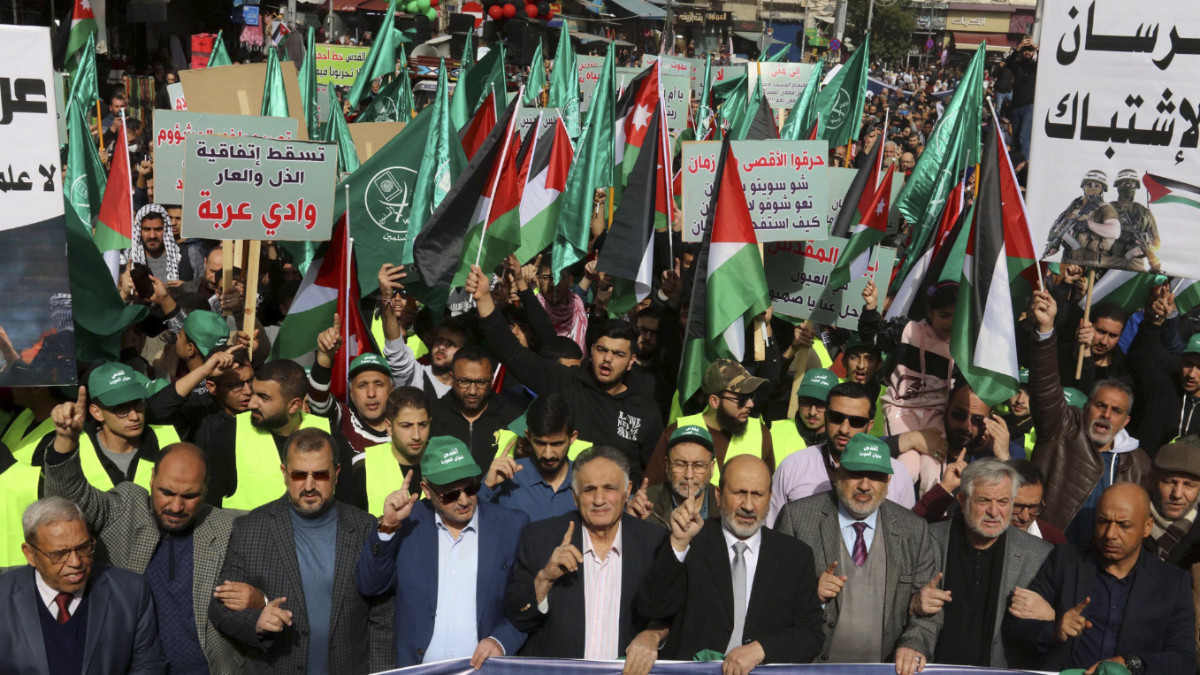
In a significant bipartisan move, the US House Foreign Affairs Committee has approved legislation that would formally designate all groups affiliated with the Muslim Brotherhood as terrorist organizations. The Wednesday vote saw six Democratic representatives—Cherfilus-McCormick, Stanton, Moskowitz, Costa, Latimer, and Schneider—join all Republican committee members in advancing the measure.
The proposed legislation, which must still pass both the full House and Senate to become law, employs notably broader language than former President Donald Trump’s recent executive order on the same subject. While Trump’s order initiated a review process for designating Brotherhood affiliates in specific countries, this bill would implement a comprehensive designation across all affiliated groups.
Committee Chairman Brian Mast, a strong Israel supporter who lost both legs in Afghanistan and later volunteered with the Israeli military, has been instrumental in pushing the legislation forward. The move has drawn criticism from various quarters, including ranking Democrat Gregory Meeks, who warned that such designation would severely hamper US diplomatic engagement with regional partners and distort understanding of the Brotherhood’s diverse functions.
The Muslim Brotherhood itself condemned Trump’s earlier executive order as “politically motivated” and “detached from reality,” warning that designation would set a dangerous precedent while undermining US national security and regional stability. Experts like Rose Kelanic of Defense Priorities note that the Brotherhood poses no direct terror threat to the US, though some argue it could represent a threat to Israeli interests.
This legislative effort revives an initiative first floated by Trump in 2017, during a period of regional turmoil following the Arab Spring. At that time, Middle Eastern powers were deeply divided in their response to populist Islamist movements, culminating in the Saudi-Emirati blockade of Qatar. However, regional dynamics have since evolved significantly, with key nations restoring diplomatic ties through the 2021 Al Ula agreement.
According to Gulf expert Kristian Coates Ulrichsen, “The battles have been fought, and the region has moved on to a point,” suggesting the current push appears driven more by domestic political considerations than regional geopolitics.