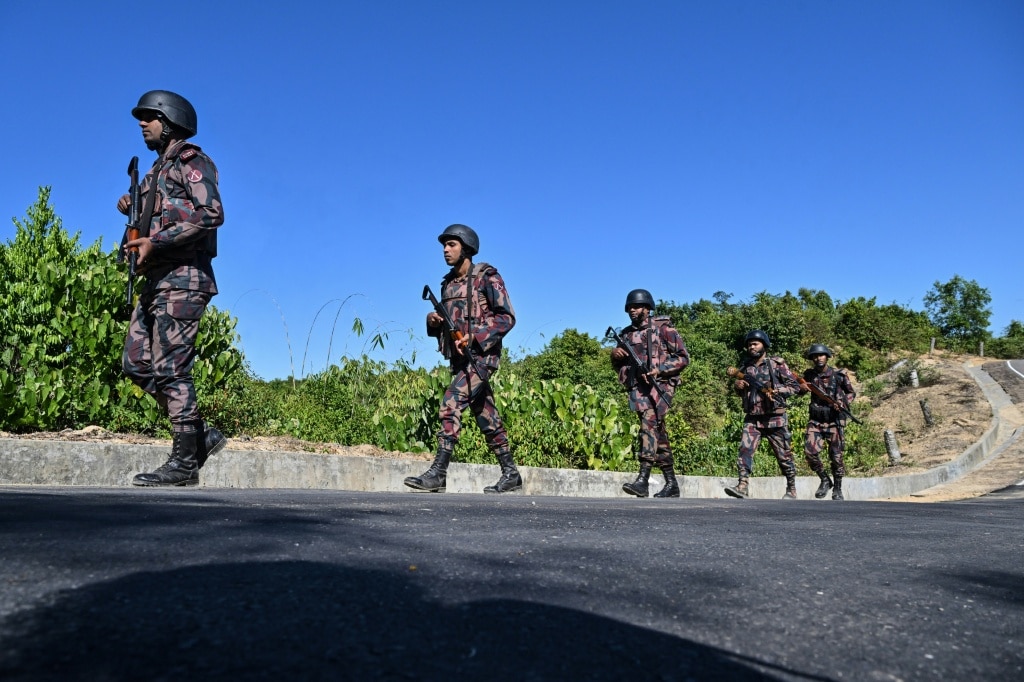
Along the densely forested Bangladesh-Myanmar frontier, civilian populations face an escalating humanitarian crisis as landmine explosions inflict life-altering injuries and economic devastation. This volatile border region has become a deadly contamination zone where villagers routinely fall victim to explosive remnants of foreign conflicts.
The human toll is embodied by individuals like Ali Hossain, a 40-year-old who lost his leg to a landmine explosion while gathering firewood in early 2025. His account of the traumatic incident—the sudden blast, severed limb, and desperate race to medical care—represents countless similar tragedies occurring throughout the Bandarban district. Despite receiving prosthetic assistance, Hossain remains unable to resume his rubber plantation work, forcing his young sons into the same dangerous wood-collecting activities that cost him his limb.
Medical infrastructure struggles to address the complex needs of blast survivors. Mohammad Abu Taleb, 47, described how his accidental crossing into Myanmar territory resulted in catastrophic injury and subsequent financial ruin. With prosthetic maintenance costing approximately $80 per visit—an insurmountable expense for families surviving on minimal income—many victims face impossible choices between medical care and basic subsistence.
International monitoring organizations classify Myanmar as the world’s most perilous nation for landmine casualties. The International Campaign to Ban Landmines documented over 2,000 incidents during 2024 alone, representing a doubling from previous years. Their Landmine Monitor report specifically highlighted intensified weapon deployment throughout 2024-2025, with particular concentration along the Bangladeshi border region.
Bangladeshi authorities attribute mine placement to both Myanmar’s military junta and opposition armed factions, including the guerrilla Arakan Army that controls substantial border jungle territories. The situation compounds existing humanitarian challenges, including the presence of over one million Rohingya refugees in border zones caught between conflicting military forces.
Border Guard Bangladesh has implemented warning systems and demining operations, but Lieutenant Colonel Kafil Uddin Kayes acknowledges the fundamental injustice of the situation: ‘This cruelty cannot be legitimized.’ The November 2025 death of a border guard who lost both legs to mine explosion underscores the persistent danger.
Local communities emphasize that survival necessities override safety concerns. As farmer Dudu Mia, 42, explains, ‘The population is increasing, and people are moving closer to the border, as we have farmlands there.’ This tragic reality leaves Bangladeshi civilians paying the ultimate price for a conflict beyond their control, with limited solutions visible on the horizon.