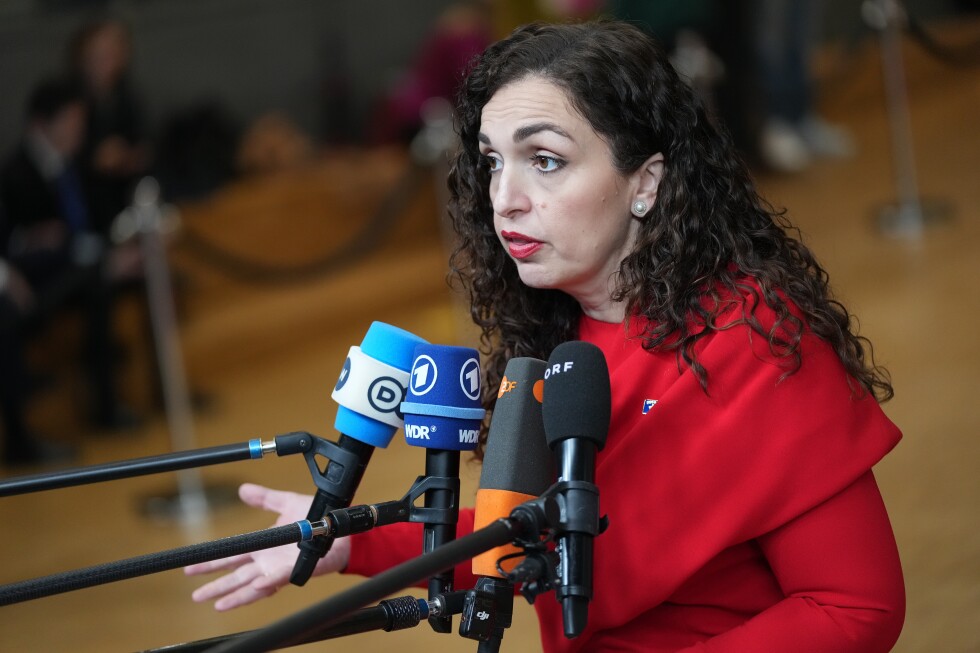
PRISTINA, Kosovo – Kosovo has been plunged into a fresh political crisis as President Vjosa Osmani formally dissolved the national Parliament on Friday, setting the stage for yet another early election. This decisive action comes after legislators failed to elect a new head of state before a constitutional deadline, exacerbating an already protracted period of political instability in the young Balkan nation.
The immediate catalyst was the assembly’s inability to achieve a quorum during a critical session late Thursday, which was boycotted by opposition parties. This prevented a vote to select a successor to President Osmani, whose term began in 2021. The midnight Thursday deadline for the election process passed without a resolution.
In a national address, President Osmani expressed profound disappointment, characterizing the political impasse as a ‘completely avoidable’ situation and a ‘great misfortune’ for the Republic of Kosovo. She asserted that lawmakers had been afforded ample time to fulfill their constitutional duty and prioritize national interests. By issuing the decree for dissolution, she stated she was acting in accordance with her clearly defined constitutional obligations.
Prime Minister Albin Kurti, leader of the ruling Vetëvendosje (Self-Determination) party, attributed the parliamentary failure directly to the opposition’s boycott. His administration has subsequently petitioned the Constitutional Court to issue a temporary suspension of the election deadline, potentially allowing the process to resume. The court’s timeline for a ruling and its potential impact on the dissolution decree remain uncertain.
This development marks the second snap election to be called in less than six months, following a December vote that was itself triggered by a nearly yearlong political stalemate. Although Vetëvendosje emerged victorious in that election and later formed a governing coalition with ethnic minority parties in February, the nation’s deep-seated political divisions have persisted.
The ongoing turbulence occurs against a complex geopolitical backdrop. Kosovo, a former Serbian province, declared independence in 2008 following a brutal war that ended with NATO intervention. Serbia continues to refuse recognition of Kosovo’s sovereignty, ensuring that domestic political crises carry significant implications for regional stability and international relations.