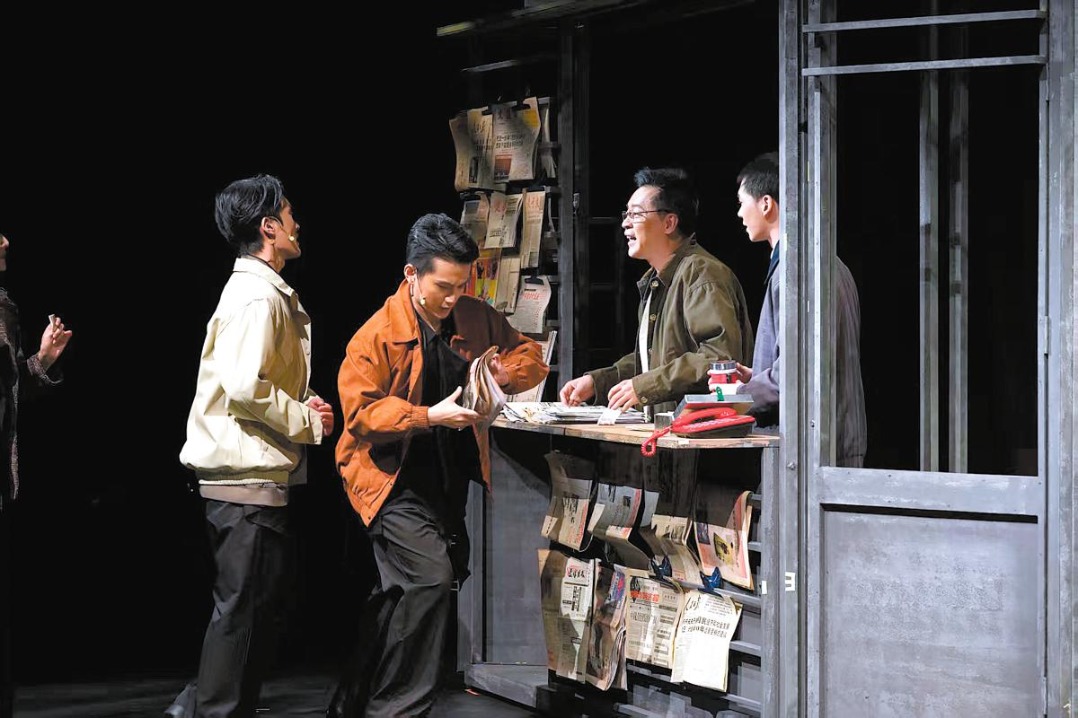
The National Theatre of China in Beijing witnessed an extraordinary theatrical event in January with the premiere of ‘The Last Newsstand,’ a production drawing inspiration from Shanghai’s final operating newsstand. The play captivated full-capacity audiences across two consecutive evenings, transforming a simple urban structure into a powerful symbol of cultural memory.
Central to the staging stood a deconstructed newsstand installation, surrounded by a suspended matrix of newspapers that visually compressed three decades into the intimate theatrical space. This innovative scenography served as the backdrop for a narrative journey beginning in 1995, tracing the newsstand keeper’s evolution from novice to thirty-year veteran against the sweeping transformation of information dissemination.
Audience members across generations discovered profound emotional connections to the production. The play’s emotional power emerged not through dramatic theatrics but through meticulous attention to mundane details—yellowing newspapers, curled magazine edges, and weathered accounting notes—that evoked collective memories of a fading era.
Former postal worker Yang, among the attendees, expressed how the performance resurrected personal nostalgia: ‘Operating a newsstand was once a coveted occupation during our golden years. Before I could realize that aspiration, these establishments began vanishing from our urban landscape. This theatrical recreation provided a deeply moving opportunity to revisit those memories.’
Playwright Chen Yinuo revealed her inspiration originated from journalistic coverage about Shanghai’s last newsstand operator, Jiang Jun, who has devoted 38 consecutive years to maintaining the establishment despite reaching retirement age, responding to loyal readers’ requests to continue his service.