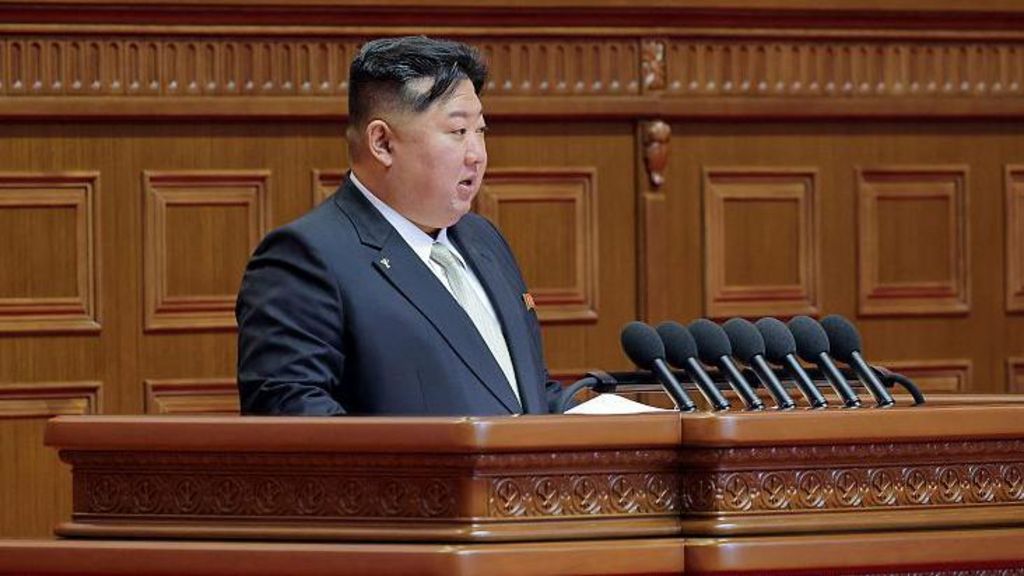
North Korea’s ruling Workers’ Party has unanimously reconfirmed Kim Jong Un as its General Secretary during the ongoing Ninth Party Congress, reinforcing his position at the helm of the authoritarian regime. The assembly, which commenced on February 19th and occurs quinquennially, brings together approximately 5,000 party delegates in a highly orchestrated display of political consolidation.
In his inaugural address, Chairman Kim emphasized dual national priorities: enhancing economic conditions and elevating living standards for citizens, while simultaneously advancing the country’s military capabilities. State media outlet KCNA reported significant improvements in national ‘war deterrence’ capacities, centering around nuclear development. However, the opaque nature of the regime makes independent verification of these claims virtually impossible.
The congress provides rare insight into North Korea’s political machinery, revealing substantial reshuffling within the presidium—the executive committee. Over half of its 39 members have been replaced since the previous convention in 2021, indicating possible strategic realignments or internal consolidation of power.
Anticipating potential announcements regarding the nuclear program, the regime recently showcased new nuclear-capable rocket launchers. These developments unfold against a backdrop of persistent international sanctions aimed at curbing Pyongyang’s weapons proliferation.
Attention also focuses on Kim Jong Un’s daughter, Ju Ae, whose repeated appearances at high-profile events—including military inspections and diplomatic functions—fuel speculation about her potential role as a political successor, as suggested by South Korean intelligence.