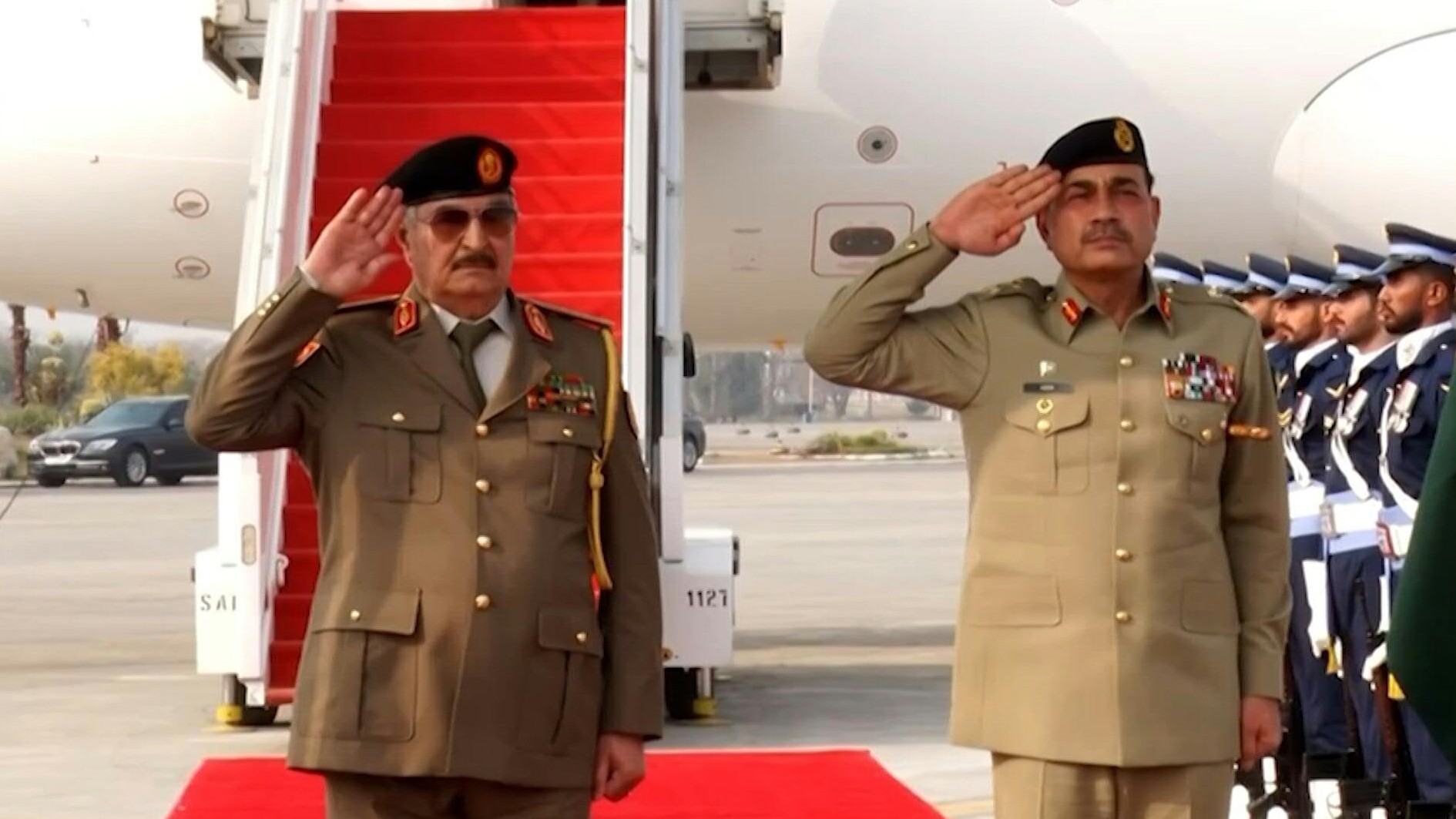
In a significant diplomatic development, Libyan Field Marshal Khalifa Haftar undertook an unusual visit to Pakistan this Monday, signaling a potential strategic realignment in regional security partnerships. The eastern Libyan leader, accompanied by his son Saddam Haftar—viewed as his likely successor—and Eastern Libyan Prime Minister Osama Saad Hamad, engaged in high-level talks with Pakistani military and civilian leadership.
The delegation met with Pakistan’s Army Chief Field Marshal Asim Munir at the General Headquarters in Rawalpindi, where both parties discussed mutual security interests and professional cooperation frameworks. This meeting followed reports by Reuters indicating a substantial $4 billion arms agreement between Haftar’s administration and Pakistan—potentially Islamabad’s largest defense contract—initiated during Munir’s December visit to Benghazi.
Subsequent discussions with Pakistani Prime Minister Shehbaz Sharif in Islamabad emphasized strengthening bilateral relations and enhancing cooperation in areas of common concern. Both governments expressed commitment to promoting regional peace, stability, and development through deepened partnership.
Haftar’s journey to South Asia marks a notable expansion of his diplomatic outreach beyond his regular visits to Egypt and Russia. The development occurs against the backdrop of Libya’s political division between the internationally recognized government in Tripoli led by Prime Minister Abdul Hamid Dbeibeh and Haftar’s eastern-based administration.
This emerging Pakistan-Libya security relationship introduces complex dynamics to regional alliances. Haftar maintains close ties with the UAE and has supported the Abu Dhabi-backed Rapid Support Forces in Sudan, creating tensions with Saudi Arabia and Egypt—both traditional Haftar supporters who now back the opposing Sudanese Armed Forces. Pakistan’s evolving position, balancing relationships with Riyadh, Abu Dhabi, and Ankara while pursuing new partnerships with Libyan factions, reflects the ongoing recalibration of Middle Eastern and North African security architectures.