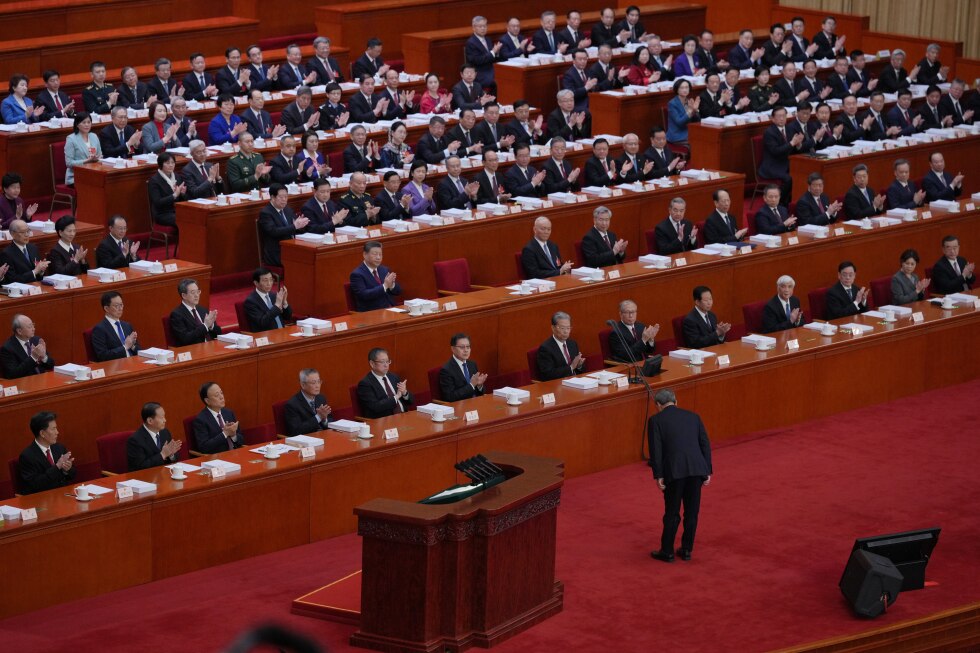
China has announced its most conservative annual economic growth target in over three decades, setting a benchmark of approximately 5% for 2026 during the opening session of the National People’s Congress. This calibrated approach reflects Beijing’s pragmatic response to persistent domestic challenges including a protracted property sector crisis, weakened consumer confidence, and demographic pressures.
Premier Li Qiang’s government work report acknowledged the “grave and complex” economic landscape while highlighting China’s achievement of meeting its 2025 growth target of 5%, largely propelled by a record trade surplus nearing $1.2 trillion. The economic strategy now prioritizes technological self-reliance, with substantial investments earmarked for artificial intelligence, robotics, semiconductors, and quantum technologies as part of the newly unveiled five-year plan extending to 2030.
The comprehensive policy blueprint outlines ambitious research and development objectives, targeting minimum annual growth of 7% in nationwide R&D expenditure. Concurrently, China will maintain robust defense spending with a 7% budget increase to approximately $270 billion, while slightly moderating environmental targets with a 17% reduction in carbon intensity over the next five years.
Addressing demographic concerns, officials pledged to create a “fertility-friendly society” through enhanced childcare, healthcare, and education support systems as the nation confronts a fourth consecutive year of population decline. The property market stabilization remains a priority, with commitments to regulate supply and reduce inventory amid ongoing housing market adjustments.