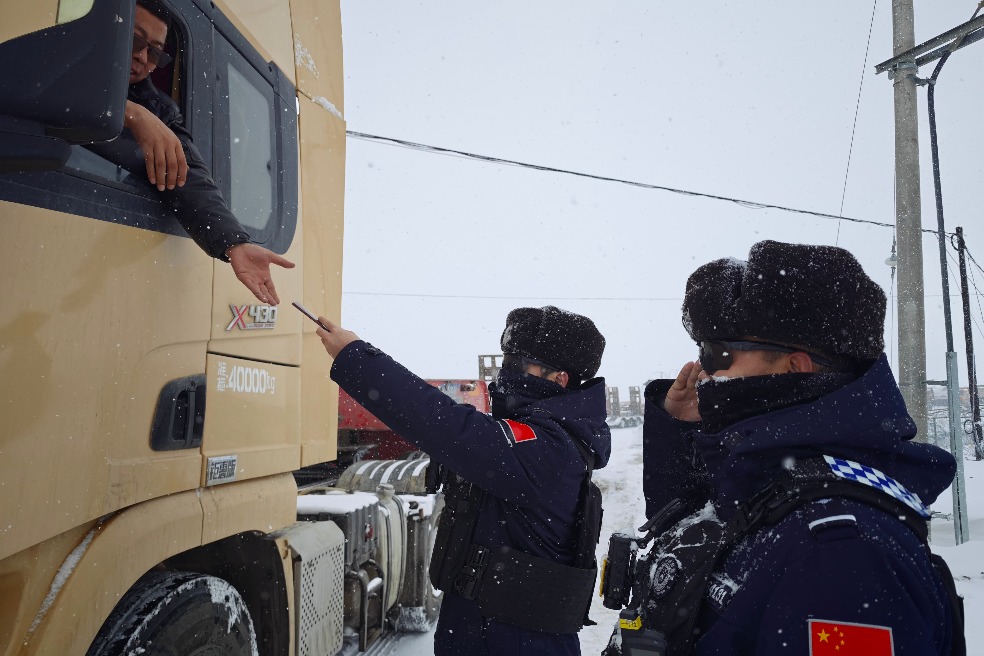
Nestled along the mountainous China-Tajikistan border in China’s Xinjiang Uygur Autonomous Region, Karasu Port, a key land gateway for bilateral trade and people-to-people connections, has delivered robust double-digit growth in both cross-border traveler volumes and cargo throughput in the first quarter of 2026, new official data shows. The strong expansion comes as bilateral exchanges between China and Tajikistan continue to deepen, overcoming challenging winter weather conditions that tested operational capacity at the high-altitude border checkpoint.
Official statistics from local border inspection and customs authorities reveal that between January and March, the port recorded more than 7,300 inbound and outbound traveler visits, marking a 23% year-on-year increase. Of this total, tourist visits alone surged by 58.1% to over 900, reflecting a sharp rebound in cross-border tourism demand after years of restricted movement. For trade activity, customs data puts total import and export cargo volume at 118,300 metric tons for the quarter, a 30% jump compared to the same period last year.
Wen Zhihua, director of the border inspection division at the Karasu Exit-Entry Border Inspection Station, outlined the two core drivers fueling this sustained growth. First, Tajikistan has ramped up large-scale infrastructure development in recent years, while a steady recovery in external demand has created strong momentum for bilateral trade expansion. Second, cross-border travel for non-trade purposes, including business trips, work engagements, and academic exchanges, has continued to climb steadily as connectivity between the two neighboring countries improves.
What makes this growth even more notable is that it was achieved against the backdrop of severe winter weather that created persistent operational challenges. Located in Tashikurgan Tajik Autonomous County, the port experienced 20 days of snowfall across the first quarter, bringing repeated disruptions to outdoor inspection work and overland access routes. The region also recorded extreme temperature swings, with a quarterly record low of -22.9°C and a high of just 9.1°C, alongside large day-night temperature differences that further complicated daily operations.
To mitigate the impact of adverse weather and keep clearance moving efficiently, local border authorities adjusted their operational framework proactively. The inspection station extended daily service hours, increased the frequency of safety patrols across port areas, and streamlined on-site inspection procedures to cut waiting times. These adjustments ensured that all inbound and outbound travelers and commercial vehicles could complete clearance processes quickly and without unnecessary delays, laying a solid foundation for the strong growth performance recorded in the first quarter.