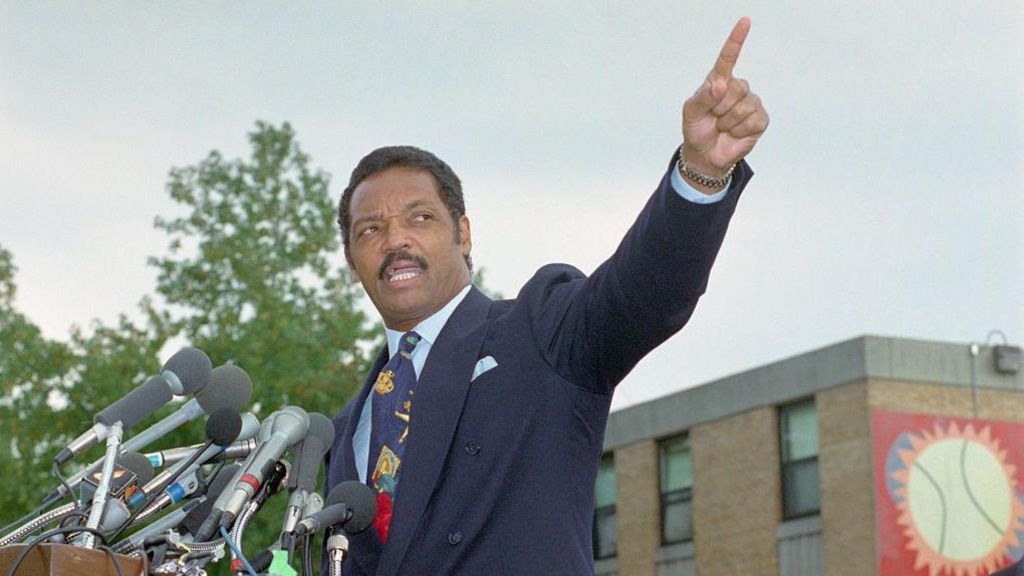
The United States mourns the passing of Reverend Jesse Louis Jackson, a monumental figure in the civil rights movement, who died at the age of 84. His death marks the conclusion of a profound legacy that bridged grassroots activism with national political influence.
Jackson’s journey began at the heart of the 1960s civil rights struggle. A historic photograph from 1965 captures him alongside Rosa Parks, the seamstress whose defiant act ignited the Montgomery Bus Boycott a decade earlier. His commitment was further cemented in his role as a key aide to Dr. Martin Luther King Jr., standing beside him on the balcony of the Lorraine Motel in Memphis on April 3, 1968, just one day before the leader’s assassination.
Following the tragedy, Jackson channeled his grief into action. In 1971, he founded Operation PUSH (People United to Serve Humanity), an organization dedicated to economic empowerment and educational advancement within Black communities, advocating for corporate diversity and inner-city programs.
His activism evolved into groundbreaking political ambition. Jackson shattered barriers by becoming the first African-American to mount a viable campaign for a major party’s presidential nomination, running in 1984 and again in 1988. His campaigns mobilized a diverse coalition and brought issues of social and economic justice to the national forefront.
Jackson’s influence extended globally. He was a vocal advocate against apartheid, joining Nelson Mandela at a 1993 rally in South Africa to promote voter education. His decades of service were formally recognized in 2000 when President Bill Clinton awarded him the Presidential Medal of Freedom, the nation’s highest civilian honor.
His life represented a throughline from the struggles of the 1960s to the political achievements of the 21st century. He was present at the moment of Barack Obama’s historic election in 2008, a symbolic passing of the torch. Even in his later years, Jackson remained on the front lines, traveling to Minneapolis following the murder of George Floyd in 2020 to demand justice. His final public appearance included a poignant moment on stage at the 2024 Democratic National Convention, a testament to his enduring presence in the fight for equality.