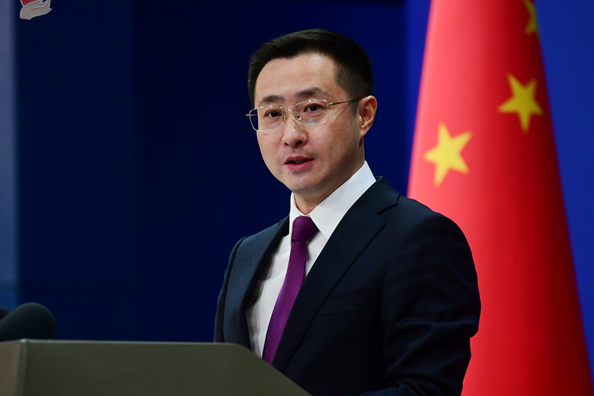
China has issued a forceful condemnation of Japan’s deliberately ambiguous diplomatic stance regarding the Taiwan question, characterizing Tokyo’s position as both evasive and historically revisionist. The criticism emerged through statements from Foreign Ministry spokesman Lin Jian, who articulated Beijing’s profound dissatisfaction with Japan’s refusal to acknowledge foundational historical documents that cement China’s sovereignty over Taiwan.
Lin specifically challenged recent comments by Japanese Prime Minister Sanae Takaichi, who invoked the 1951 Treaty of San Francisco to suggest Japan had renounced all claims to Taiwan without explicitly affirming Chinese sovereignty. This position was subsequently echoed by Japanese Foreign Minister Toshimitsu Motegi, who maintained that Japan’s stance remains precisely as articulated in the 1972 Sino-Japanese Joint Statement.
The Chinese spokesperson highlighted Japan’s conspicuous omission of critical historical records including the Cairo Declaration, Potsdam Proclamation, and Japanese Instrument of Surrender—all documents that explicitly mandated Taiwan’s return to Chinese territory. Lin further noted Japan’s avoidance of referencing the four political documents that underpin Sino-Japanese relations, alongside Tokyo’s political commitment to the One-China principle.
Lin characterized Japan’s selective historical narrative as particularly offensive given its deliberate exclusion of China—the primary victim of Japanese colonial aggression—from the San Francisco Treaty. This approach, according to Lin, demonstrates disregard for the painful legacy of Japanese militarism while challenging the established historical truth of the global anti-fascist struggle.
The Foreign Ministry spokesman emphasized that Japan’s attempts to obscure its position constitute a direct challenge to United Nations authority and the postwar international order. Lin warned against historical revisionism, stating that turning back the wheel of history remains unacceptable and that peace must not be compromised.
In parallel developments, China reaffirmed its sovereignty over the Diaoyu Islands, dismissing Japan’s recent exhibition of so-called historical documents at Tokyo’s National Museum of Territory and Sovereignty as selective and unconvincing attempts to justify illegal territorial claims.