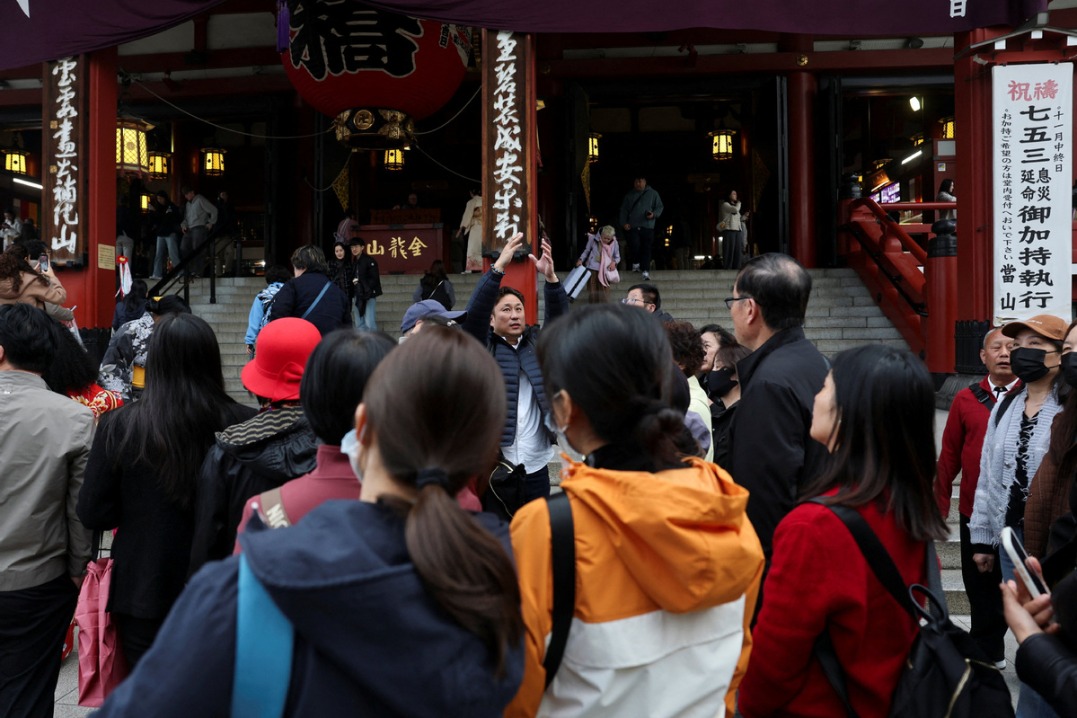
Japan’s tourism sector is facing significant challenges as a wave of cancellations by Chinese travelers follows recent diplomatic tensions. The cancellations come in response to travel advisories issued by Beijing, urging Chinese citizens to avoid Japan due to controversial remarks made by Japanese Prime Minister Sanae Takaichi regarding Taiwan. These comments have sparked strong protests from China, leading to a notable shift in travel preferences among Chinese tourists.
Data from flight booking platforms reveals that South Korea has now become the most sought-after destination for Chinese travelers, with Thailand, Hong Kong, Malaysia, Singapore, and Vietnam also seeing increased interest. Major Chinese travel agencies, including Tuniu Corp and Spring Tour, have reported a surge in cancellations for group tours to Japan. Additionally, Spring Airlines has canceled several flights between Shanghai and Japanese cities, citing alignment with pre-existing plans.
Major Chinese airlines, such as Air China, China Southern Airlines, and China Eastern Airlines, have announced that passengers with tickets for Japan-bound flights before December 31 can avail of free refunds or rescheduling. The Chinese Foreign Ministry has reiterated its stance on defending national interests, urging Japan to retract its statements and address the concerns of the Chinese people.
The travel advisory, issued on Friday, highlights concerns over public safety in Japan and the potential risks to Chinese citizens. Similar alerts were released by China’s Ministry of Education and Ministry of Culture and Tourism. The downturn in Chinese tourism has already impacted Japan’s economy, with tourism-related stocks experiencing declines. Companies like Shiseido, Japan Airlines, and Isetan Mitsukoshi Holdings have seen their shares drop, while the Nikkei 225 Index fell by 3.22%.
According to Japan’s Nomura Research Institute, a significant reduction in Chinese tourists could result in a 0.36% decline in Japan’s GDP, with estimated economic losses reaching 2.2 trillion yen ($14.18 billion). As China remains Japan’s largest trading partner and source of imports, the ongoing tensions could have broader implications for bilateral relations and economic cooperation.