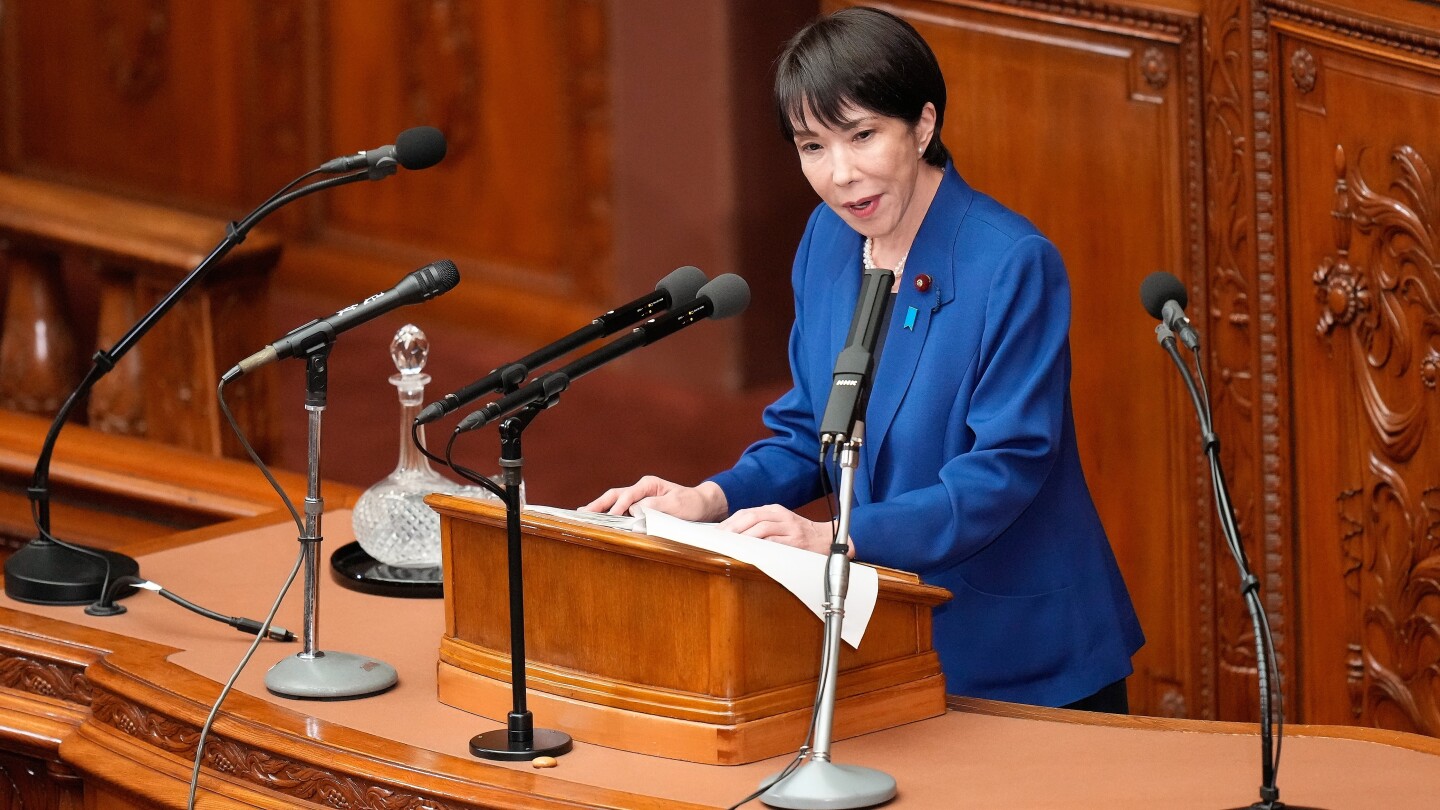
In her inaugural policy address, Japan’s newly elected Prime Minister Sanae Takaichi announced a significant acceleration of the nation’s military expansion and spending. Takaichi, who assumed office earlier this week as Japan’s first female leader, emphasized the urgent need to revise the country’s security strategy ahead of schedule, citing escalating tensions with China, North Korea, and Russia. She pledged to achieve an annual military expenditure target of 2% of GDP by March, moving up the original 2027 deadline. The revised security strategy, now slated for completion by the end of 2026, reflects Japan’s response to the rapidly changing global security landscape, including Russia’s invasion of Ukraine and ongoing Middle East conflicts. Takaichi highlighted the destabilization of the international order due to shifting power dynamics and intensifying geopolitical rivalries, particularly in Japan’s vicinity. She underscored the necessity of proactive defense measures to counter military activities by neighboring nations. Her administration also faces the challenge of balancing domestic economic issues, such as rising prices and stagnant wages, with the need to secure opposition support for her policies. Additionally, Takaichi’s hawkish stance and historical views, including her visits to the controversial Yasukuni Shrine, could strain Japan’s relations with China. Her government’s alignment with the right-wing Japan Innovation Party has further fueled concerns about Japan’s political shift to the right. On the economic front, Takaichi acknowledged the critical role of foreign workers in addressing Japan’s labor shortage but emphasized strict enforcement of regulations to address public concerns over unlawful activities by some foreigners. She tasked the Economic Security Minister with tightening regulations on foreign residents and studying potential restrictions on land purchases by non-Japanese nationals, particularly Chinese investors. This approach aligns with the growing populist sentiment in Japan, which has seen a surge in foreign workers amid a shrinking domestic workforce.
Japan’s new leader vows to further bolster defense buildup and spending as regional tensions rise