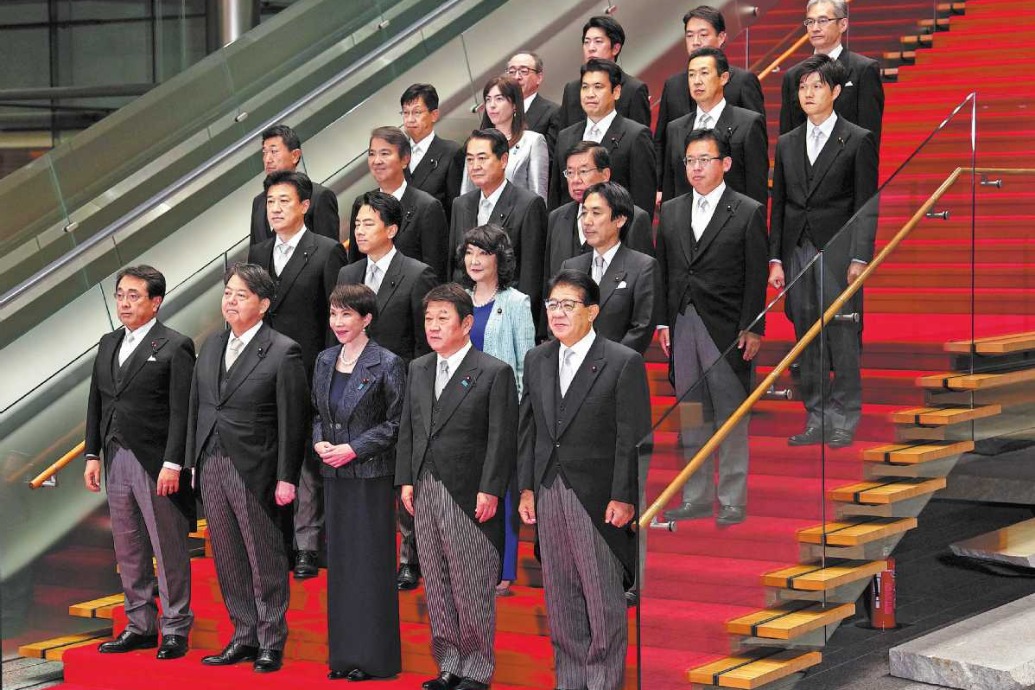
Japan’s political landscape has taken a decisive turn with the formation of Prime Minister Sanae Takaichi’s new Cabinet, marking a significant shift toward conservative policies. The alliance between Takaichi’s Liberal Democratic Party (LDP) and the Japan Innovation Party (JIP) underscores a shared focus on economic and security priorities, signaling a departure from the centrist stance of previous administrations.
At her inaugural press conference, Takaichi emphasized the coalition’s commitment to key policy areas, including cost-of-living measures, social security reform, and constitutional revision. Experts note that the LDP-JIP partnership is more right-leaning than the LDP’s previous coalition with the Komeito party, which withdrew earlier this month citing dissatisfaction with the LDP’s handling of a political funding scandal.
Kumiko Haba, a professor at Josai International University, highlighted that the dissolution of the LDP-Komeito alliance has freed Takaichi’s administration to pursue more conservative policies. This shift could have significant implications for Japan’s defense posture and its relations with China, particularly if Takaichi adopts a hard-line stance on historical issues.
Noriyuki Kawamura, an emeritus professor at Nagoya University of Foreign Studies, warned that the JIP’s advocacy for constitutional revision and stronger defense capabilities could act as an ‘accelerator,’ pushing the government further to the right. The Komeito, which previously served as a moderating force, is no longer in a position to restrain the LDP’s security policies.
Takaichi’s Cabinet appointments reflect a strategic effort to consolidate power and foster party unity. Key positions were assigned to her former leadership rivals, including Shinjiro Koizumi as defense minister and Toshimitsu Motegi as foreign minister. The absence of JIP members in the Cabinet aligns with the coalition agreement, which positions the JIP as an extra-cabinet partner rather than a formal coalition member.
While the LDP-JIP alliance strengthens Takaichi’s ability to advance conservative policies, it also introduces uncertainties. The JIP’s support for government legislation may vary depending on the issue, and the party has maintained a ‘disengagement strategy’ to distance itself from the LDP if policy differences arise.
As Japan’s new administration takes shape, its conservative orientation and potential for constitutional and military reforms are likely to shape the country’s domestic and international trajectory in the coming years.