Diplomatic tensions between South Korea and Japan have reignited after Tokyo approved a new batch of high school textbooks containing disputed territorial claims and whitewashed accounts of Japanese World War II imperial atrocities, drawing sharp condemnation from Seoul. In an official statement released March 24, South Korea’s Ministry of Education voiced deep regret over the decision by Japan’s Ministry of Education, Culture, Sports, Science and Technology to greenlight textbooks that advance what Seoul calls ‘historical distortions’ rooted in Tokyo’s self-serving national narrative, and issued a strong call for immediate rectification.
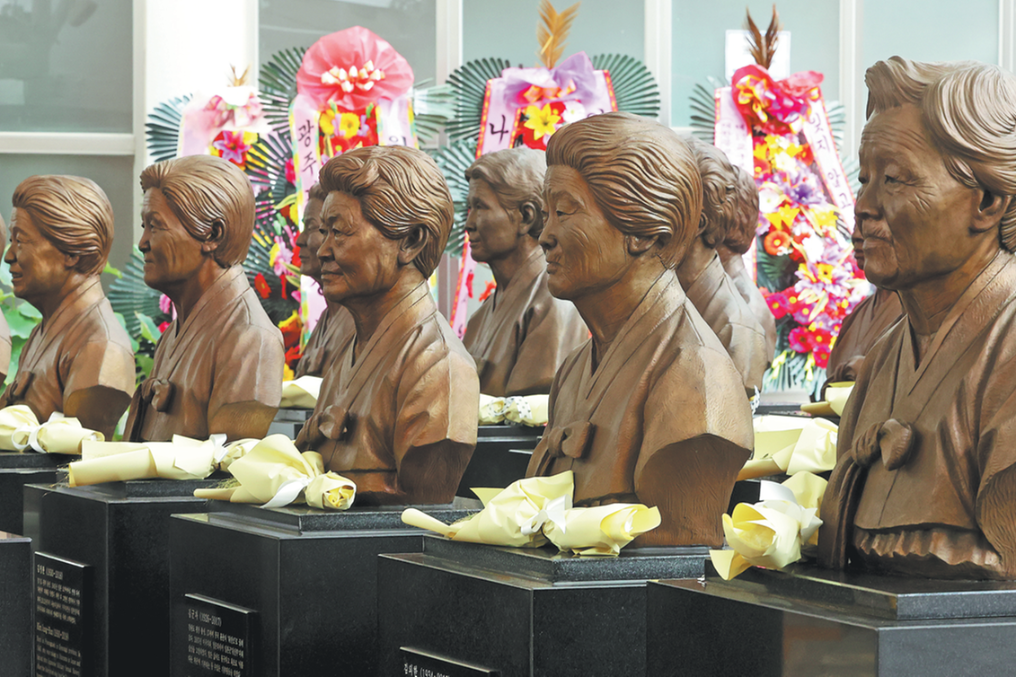
South Korean authorities specifically flagged two key categories of problematic content in the approved textbooks. First, the materials reiterate Japan’s long-disputed claim of full territorial sovereignty over the Dokdo islets, a group of small rocky outcrops in the Sea of Japan that have been under South Korean administrative control for decades, and falsely characterize South Korea’s presence as ‘illegal occupation’. Second, the texts systematically downplay or erase documented wartime crimes committed by Imperial Japan, including the systematic forced mobilization of Korean laborers and the institutionalized sexual enslavement of so-called ‘comfort women’ during WWII.
The condemnation extended beyond the education sector: South Korea’s Ministry of Foreign Affairs quickly summoned Hirotaka Matsuo, deputy chief of mission at the Japanese Embassy in Seoul, to formally register the country’s official protest against the textbook approval.
The approved textbooks are slated for introduction in Japanese high schools starting in the 2027 academic year, covering core subjects including Japanese history, world history, geography and civics. According to existing reports, the content of the new batch largely mirrors the controversial textbooks approved by Tokyo four years prior, which already included Japan’s territorial claim to Dokdo. For context, a 2021-approved textbook from major Japanese publisher Teikoku Shoin explicitly stated that ‘Takeshima’ — Japan’s name for Dokdo — is Japan’s inherent territory, claiming the islands were legally incorporated into Shimane Prefecture after a 1905 Japanese declaration, and repeated the false claim that South Korea occupies the territory illegally. When publisher Ninomiya Shoten submitted its new textbooks for official screening last year, it retained the same ‘illegal occupation’ language, and the Japanese screening panel raised no objections to the content.
Japanese domestic media has noted that descriptions aligning with the Japanese government’s official positions on both territorial disputes and modern historical narratives have become fully normalized in approved textbooks, with no need for additional screening adjustments from regulators. This systemic alignment is no accident: Tokyo has embedded its preferred narrative into the national education system through a three-layered content control system that starts with binding national curriculum guidelines — the highest governing principle for textbook content — followed by official commentary on the guidelines and a final centralized screening process.
Over the past decade, this system has increasingly enabled the erasure of accountability for wartime crimes. Textbook descriptions have gradually removed language acknowledging coercion in wartime labor mobilization and the sexual enslavement of comfort women. In a 2021 parliamentary written response, the Japanese government declared that terms such as ‘taken away’ or ‘forcibly taken away’ to describe the displacement of Korean forced laborers were inappropriate, and mandated the use of the neutral-sounding term ‘mobilized’ instead. Since that policy change, the explicit language acknowledging forced coercion has been entirely removed from approved Japanese high school textbooks.
In its statement, South Korea’s education ministry reaffirmed the country’s commitment to its long-term goal, as outlined by South Korea’s president in a speech marking the anniversary of the March 1 Independence Movement, of building ‘an amiable new world based on true understanding and empathy between the two countries’. The ministry added that building lasting peace and cooperation in Northeast Asia requires the Japanese government to adopt a responsible stance toward its historical legacy, a standard that Tokyo has yet to meet with the latest textbook approval.
This report, sourced from South Korea’s *The Korea Herald*, is part of a weekly Asia-focused collaboration from the Asia News Network, a regional grouping of 20 leading Asian media outlets including China Daily.