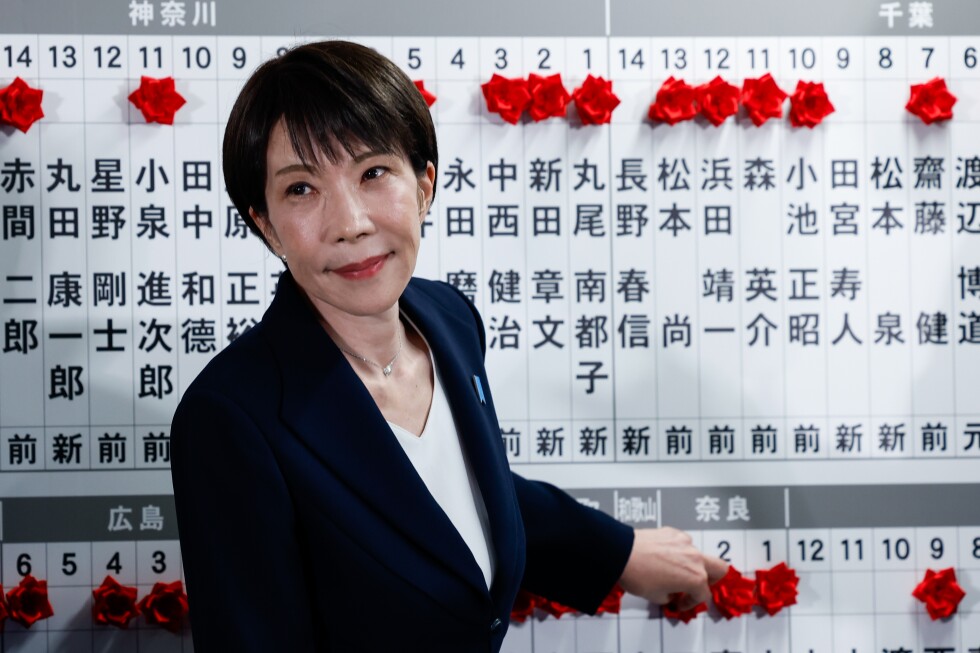
TOKYO — Prime Minister Sanae Takaichi has emerged from Japan’s parliamentary elections with an unprecedented mandate for conservative reform, securing a historic supermajority that positions her to reshape the nation’s security, economic, and immigration policies. Her Liberal Democratic Party (LDP) captured 316 seats in the 465-member lower house—the most powerful parliamentary chamber—marking the party’s strongest performance since its founding in 1955. Combined with the 36 seats won by coalition partner Japan Innovation Party, the ruling bloc now commands 352 seats, far exceeding the two-thirds majority required to advance constitutional amendments.
The resounding victory represents a remarkable political turnaround for Takaichi, who called the election after just three months in office to capitalize on her personal popularity amid party scandals. At LDP headquarters, a beaming Takaichi ceremoniously placed red ribbons beside winners’ names as party executives applauded—a visual testament to her successful gamble.
This electoral triumph provides Takaichi with substantial political capital to pursue her ambitious agenda, which includes bolstering Japan’s military capabilities, revising pacifist constitutional provisions, implementing stricter immigration controls, and addressing economic challenges through what she terms ‘crisis management investment and growth.’ The victory also strengthens her hand in managing relations with China while maintaining ties with the United States, which President Donald Trump acknowledged with congratulations for her ‘landslide victory.’
Despite concerns from analysts about prioritizing political survival over substantive policy outcomes, Takaichi now enjoys an extended governing window without another election required until 2028. Her first legislative priorities include reappointing her cabinet, passing a delayed budget bill, and securing her formal reelection as prime minister next week.