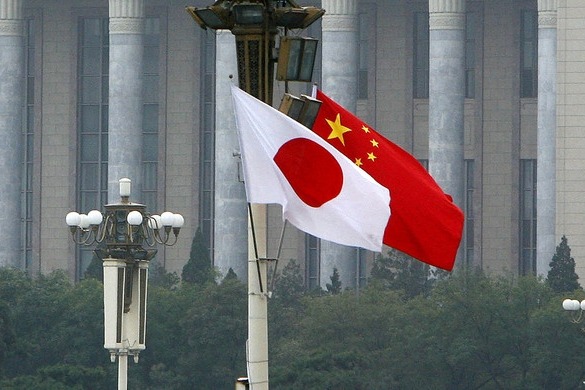
TOKYO—Mounting economic pressures are compelling Japanese business leaders and academics to urge their government to pursue diplomatic solutions with Beijing following China’s imposition of stringent export controls. The restrictions, targeting dual-use technologies and potentially expanding to rare earth minerals, threaten to severely disrupt Japan’s manufacturing supply chains and economic stability.
China’s Commerce Ministry implemented an immediate ban on exports of dual-use items—products with both civilian and military applications—to Japan on Tuesday. This decisive action came in direct response to controversial remarks by Japanese Prime Minister Sanae Takaichi suggesting potential military intervention in the Taiwan Strait. Chinese authorities characterized the export controls as “legitimate, reasonable and lawful” measures to counter what they perceive as Japan’s pursuit of remilitarization and nuclear capabilities.
The economic implications are particularly acute regarding rare earth elements, where China dominates global production with approximately 72% of Japan’s imports originating from Chinese sources as of 2024. Industry representatives warn that expanded restrictions would cripple Japan’s automotive, electronics, and renewable energy sectors—all heavily dependent on these critical materials.
Hiroshi Shiratori, Professor of Political Science at Hosei University, emphasized the interconnected nature of security and economic concerns: “This situation shouldn’t be viewed merely through the lens of short-term economic impact. It represents an opportunity for Japan to fundamentally reassess its policy approach.”
The corporate sector is already experiencing palpable anxiety. Himeji Denshi, a magnet manufacturer with six decades of operation, produces 70% of its products in Chinese factories. Company President Shigeaki Amijima revealed his enterprise could survive for only approximately two months if raw material supplies are disrupted, noting that “the most serious risk is not rising costs but the prospect of being unable to operate at all.”
Furniture conglomerate Nitori Holdings Chairman Akio Nitori similarly expressed concern about rare earths used in refrigerators, televisions, and washing machines. Economists warn that diversification efforts have proven insufficient, with alternative sourcing likely to drive significant cost increases throughout Japanese manufacturing.
With economic growth projections at risk and investment uncertainty growing in semiconductor, electronic component, and electric vehicle industries, Japanese experts agree that diplomatic resolution remains essential—though contingent on retracting the Prime Minister’s statements regarding Taiwan.