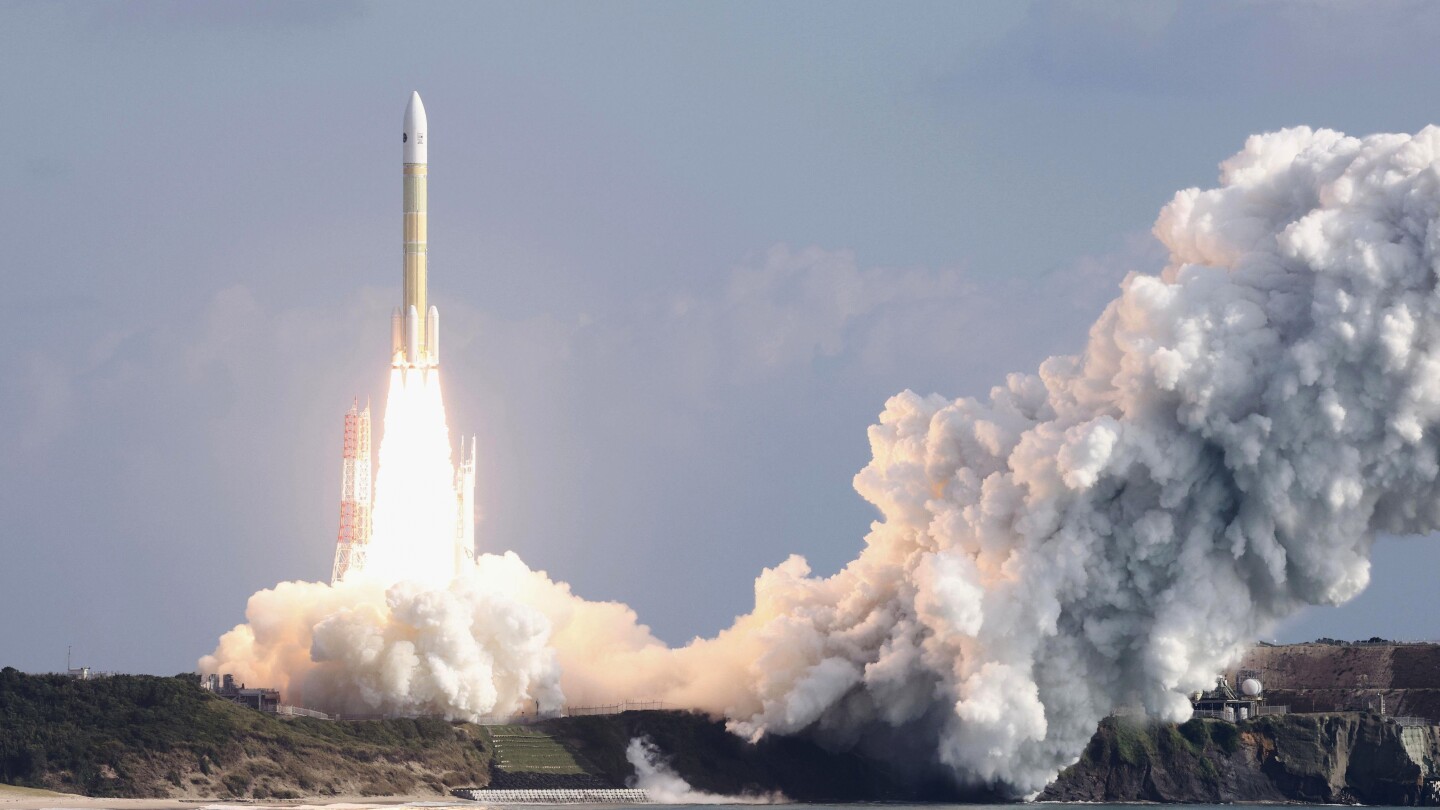
Japan’s space agency, JAXA, achieved a significant milestone on Sunday with the successful launch of its new flagship H3 rocket. The mission, which carried the unmanned HTV-X1 cargo spacecraft, marks Japan’s latest effort to deliver supplies to the International Space Station (ISS). The launch took place at the Tanegashima Space Center in southern Japan, where the HTV-X1 was successfully placed into its planned orbit. If all goes according to plan, the spacecraft is expected to dock with the ISS in a few days, with Japanese astronaut Kimiya Yui set to retrieve it using the station’s robotic arm. The HTV-X1 is the successor to JAXA’s H-II Transfer Vehicle, known as Kounotori, which completed nine missions to the ISS between 2009 and 2020. The new spacecraft boasts enhanced capabilities, including a larger payload capacity and the ability to supply power during flight, enabling the transport of sensitive lab samples requiring low-temperature storage. Additionally, the HTV-X1 can remain connected to the ISS for up to six months, delivering supplies and retrieving waste, before embarking on a three-month technical mission in orbit. The H3 rocket, which replaces the H-2A model, is designed to be more cost-competitive in the global space market, reflecting Japan’s commitment to establishing a stable and commercially viable space transport capability. Since its failed debut in 2023, the H3 has completed six consecutive successful flights, underscoring its reliability and potential for future missions.
Japan successfully launches new cargo spacecraft to deliver supplies to International Space Station