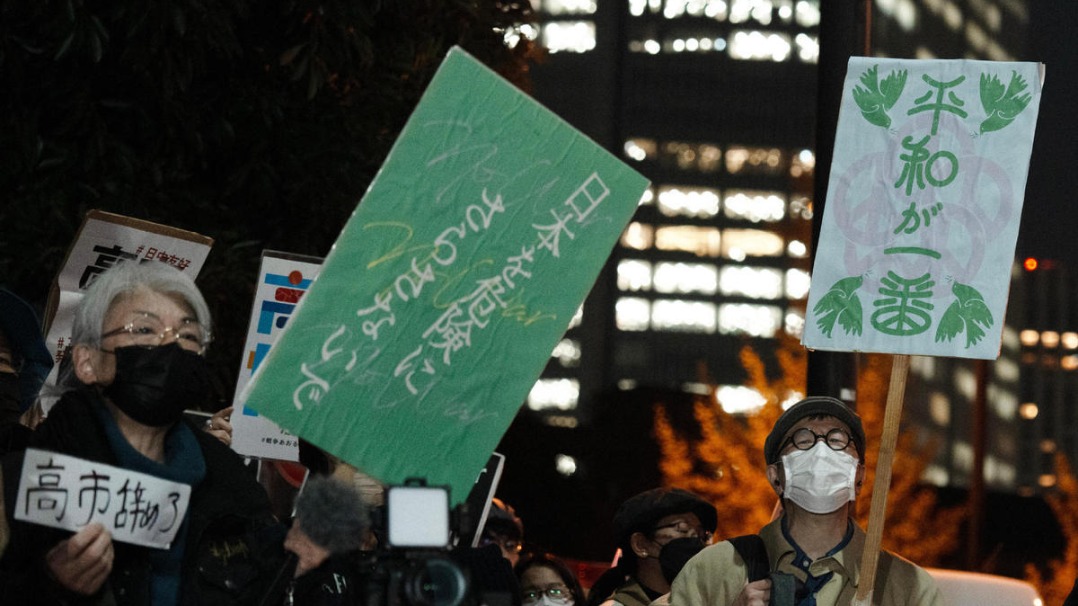
Japanese Prime Minister Sanae Takaichi’s recent remarks suggesting potential military intervention in the Taiwan Strait have ignited widespread condemnation and economic repercussions. Speaking in parliament earlier this month, Takaichi labeled any Chinese military action against Taiwan as a ‘survival-threatening situation’ for Japan, marking the first time a Japanese leader has publicly entertained such a possibility. Her comments, made during the 80th anniversary of the end of World War II, have drawn sharp criticism from U.S. peace activists and Chinese officials alike. Julie Tang, co-founder of Pivot to Peace and a retired judge, accused Takaichi of reviving militarism and fascism, stating, ‘She’s clearly not ready for the world stage.’ The backlash has already impacted Japan’s tourism sector, with major Chinese airlines offering full refunds for flights to Japan following Beijing’s advisory against travel to the country. Chinese tourists, a vital component of Japan’s tourism economy, have been urged to reconsider their plans. Economically, Japan is already grappling with a 1.8% contraction in third-quarter GDP and a staggering debt-to-GDP ratio of 230-260%, raising questions about the feasibility of Takaichi’s stance. Retired judge Lillian Sing, co-founder of the ‘Comfort Women’ Justice Coalition, criticized Takaichi’s judgment, noting Japan’s weak economic position and declining population. China’s permanent representative to the UN, Fu Cong, emphasized that any Japanese military involvement in the Taiwan Strait would be deemed an act of aggression. The timing of Takaichi’s remarks, coinciding with the 80th anniversary of the end of World War II, has intensified the backlash, with critics accusing her of ignorance about Japan’s wartime history and its implications for regional stability.