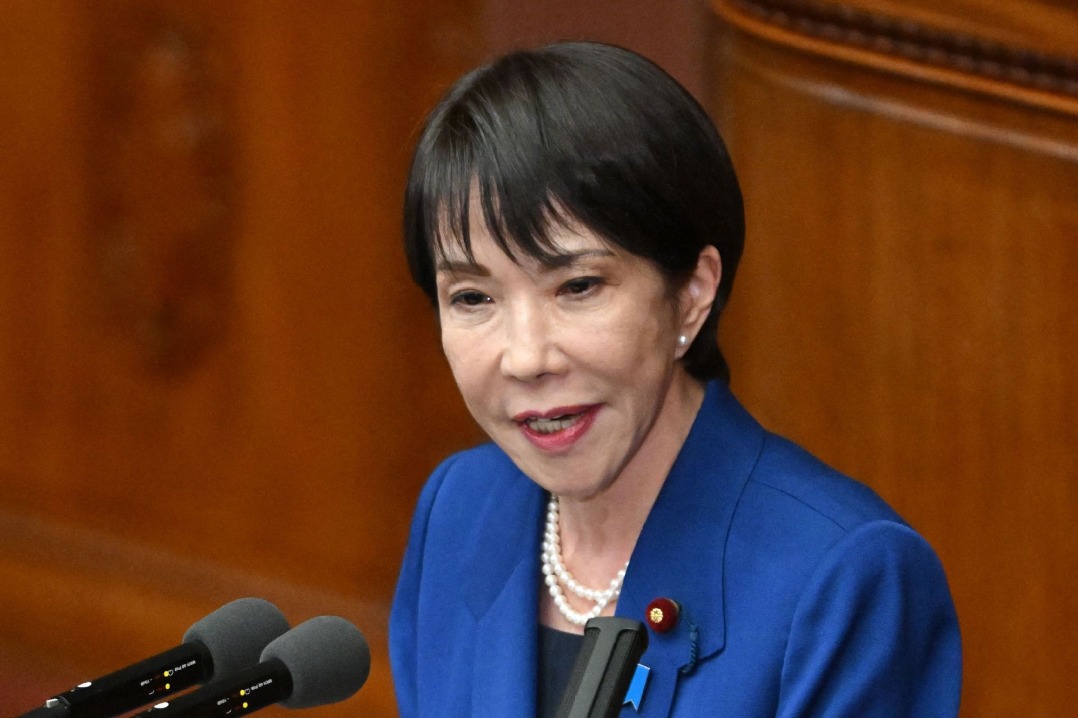
Japanese Prime Minister Sanae Takaichi’s recent comments on Taiwan have ignited widespread criticism both domestically and internationally, with observers warning of severe repercussions for Japan-China relations. Takaichi’s remarks, made during a November 7 session of Japan’s Diet, suggested that a military contingency involving Taiwan could pose a ‘survival-threatening situation’ for Japan, potentially justifying the use of collective self-defense by Japan’s Self-Defense Forces. This assertion has been condemned as a blatant violation of the one-China policy, which recognizes Taiwan as an inalienable part of China. Critics argue that such statements erode the mutual trust established by the 1972 Japan-China joint statement and risk destabilizing regional security. On November 16, approximately 100 Japanese citizens protested outside the prime minister’s official residence in Tokyo, demanding Takaichi’s resignation and calling for an immediate retraction of her remarks. Prominent figures, including former Prime Ministers Yukio Hatoyama and Shigeru Ishiba, have also criticized Takaichi’s stance, emphasizing the importance of avoiding interference in China’s internal affairs. Experts like Ukeru Magosaki, a former senior official at Japan’s Ministry of Foreign Affairs, and Hiroshi Shiratori, a political science professor at Hosei University, have warned that Takaichi’s comments not only distort Japan’s pacifist principles but also jeopardize the fragile diplomatic balance in East Asia. Despite China’s formal protests, Takaichi has refused to retract her statements, further straining bilateral relations and raising concerns about the potential for unnecessary regional conflict.