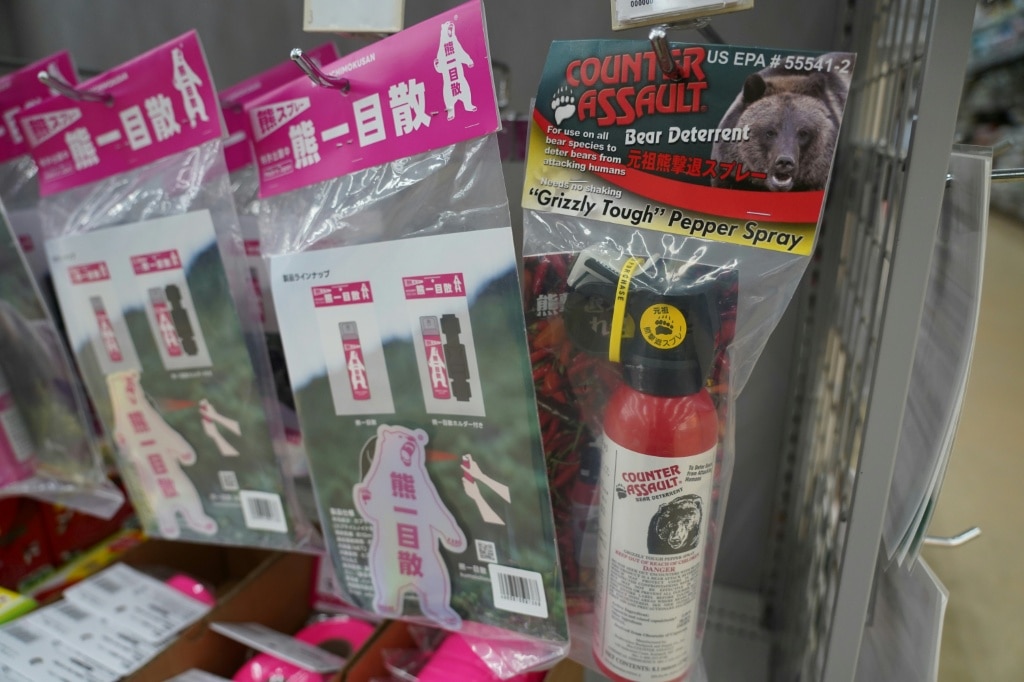
Just months after Japan recorded its deadliest year on record for human-bear conflicts, the East Asian nation has officially confirmed its first fatal bear attack of 2026, with two additional suspicious deaths under investigation that experts link to hungry bears emerging from winter hibernation. The 2025 crisis, which saw a staggering 13 fatal bear attacks and more than 200 injured people—more than double the previous annual record of six deaths—sparked national alarm, forcing the Japanese government to deploy military troops to assist with trapping and culling aggressive animals that wandered deep into human-populated areas. Incidents ranged from bears roaming near schools and breaking into residential homes to rampaging through supermarket aisles and wandering through popular hot spring resort districts, bringing the long-simmering human-wildlife conflict to the forefront of national public discourse.
According to Japan’s Ministry of the Environment, the first confirmed fatality of 2026 was a 55-year-old woman whose body was discovered on April 21 in Iwate Prefecture, a rural region in northern Japan’s Tohoku area. Police confirmed to AFP that two additional sets of human remains have been recovered this week: one found Thursday in another part of Iwate, and a second recovered Tuesday in a Yamagata Prefecture forest. While police have not officially ruled on the cause of death, local media and wildlife experts have linked both deaths to bear attacks.
Public broadcaster NHK identified one of the two deceased as 69-year-old Chiyoko Kumagai, who went missing after traveling to a mountain forest to harvest edible wild plants, a popular seasonal activity in rural Japan. After launching a large search operation Thursday around the forest where Kumagai’s parked car was found, rescuers located her body shortly after 8 a.m. local time. NHK reported that Kumagai suffered extensive claw injuries to her face and head consistent with a bear attack, and local officials confirmed that licensed hunters would begin increased patrols of the high-risk area starting Friday.
Wildlife scientists have traced the steady rise in bear conflicts across Japan to a combination of interconnected environmental and demographic shifts. A 2025 Japanese government survey found that the national brown bear population has doubled over the past 30 years to roughly 12,000 individuals, while the population of Asian black bears—responsible for the vast majority of attacks on humans, and common across most of Honshu, Japan’s largest main island—has grown to 42,000. Experts note that warming temperatures have boosted food supplies for bears, including acorns, deer, and wild boar, creating ideal conditions for population growth even as rural human populations decline.
This population boom has created what experts describe as “overcrowding” in Japan’s mountainous regions, which cover roughly 80 percent of the country’s total land area. Overcrowding forces younger, bolder bears to stray beyond mountain boundaries into rural villages and towns, where many quickly develop a taste for easy access to farmed crops and cultivated fruits such as persimmons. Compounding this issue, a poor acorn and nut harvest in 2025 pushed large numbers of bears out of the mountains and into populated areas in search of food, leading to last year’s record number of conflicts. Depopulation and population aging in rural Japan have also left large swathes of former farmland abandoned, creating extra habitat for bears and expanding their range closer to remaining human settlements.
While 2026 forecasts for natural bear food sources are more favorable, local media reports show that bear sightings this spring have already hit record levels as animals emerge hungry from hibernation. The Yomiuri Shimbun reported that the number of confirmed sightings in April across Miyagi, Akita, and Fukushima prefectures was roughly four times higher than the same period in 2025. Koji Yamazaki, one of Japan’s leading bear experts and director of the Ibaraki Nature Museum, warned that Tohoku region residents must remain vigilant through the spring, despite his prediction that 2026 will ultimately see fewer conflicts than 2025’s historic high.
“I’m not sure yet why we’re seeing this kind of unprecedented damage so early in the spring,” Yamazaki told AFP. “Given that all the incidents have occurred relatively close to settlements and the bodies have been severely damaged, I suspect a bear has eaten them.” Yamazaki added that the Tohoku region has one of the densest bear populations in the country, following 20 years of consistent population growth, and that abandoned land from depopulation and aging has only worsened the overlap between bear territory and human communities. For context, brown bears— which can grow to more than 500 kilograms and run faster than the average human—are limited almost exclusively to Hokkaido, Japan’s northernmost main island, while smaller black bears are widespread across Honshu and linked to most deadly attacks.