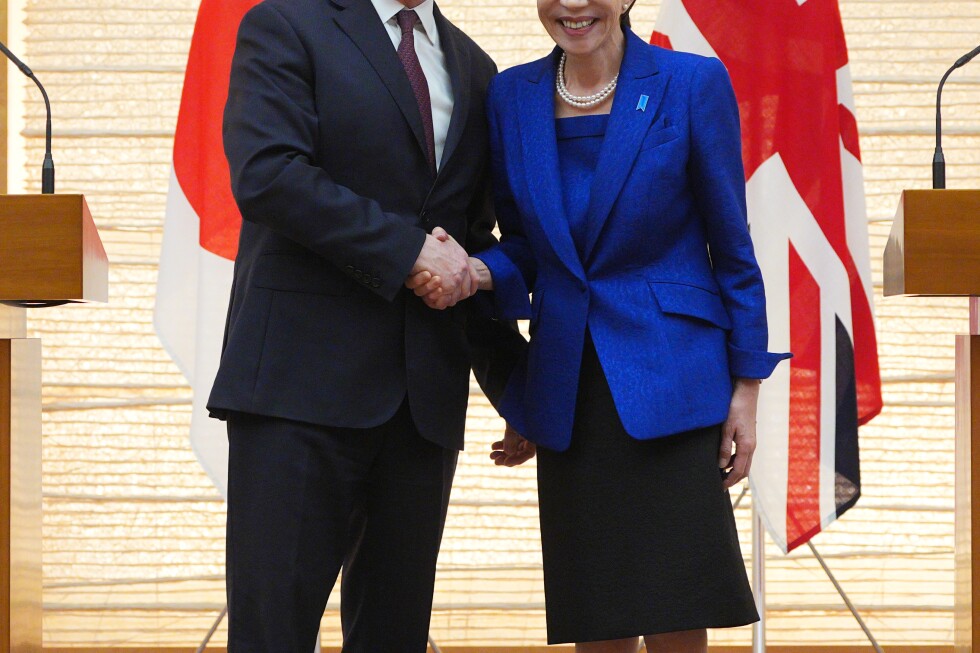
TOKYO — In a significant diplomatic move, Japan and the United Kingdom have committed to deepening their strategic cooperation on cybersecurity and securing supply chains for critical minerals. This agreement was reached during British Prime Minister Keir Starmer’s official visit to Tokyo on Saturday, highlighting a shared commitment to address growing geopolitical challenges in the Indo-Pacific region.
Prime Minister Starmer characterized his visit as occurring during an era of profound ‘geopolitical, economic and technological shocks’ that are fundamentally reshaping global dynamics. The discussions with Japanese leadership focused on strengthening collective security frameworks across both the Atlantic and Indo-Pacific regions while enhancing economic resilience against external pressures.
A cornerstone of the new partnership involves establishing a comprehensive cyber strategic initiative designed to bolster both nations’ defenses against digital threats. This cybersecurity collaboration comes amid increasing concerns about vulnerabilities in Japan’s digital infrastructure, particularly as the country accelerates its military modernization program and deepens security ties with the United States and other regional partners.
The bilateral talks also addressed urgent concerns regarding global export restrictions on critical minerals, which include rare earth elements and other materials vital for economic and military applications. Both nations acknowledged the pressing need for like-minded countries to collaborate in building more diversified and resilient supply chains, reducing dependence on single sources for these strategically important resources.
This strengthened partnership occurs against the backdrop of regional tensions, particularly regarding China’s growing influence and recent comments by Japanese officials concerning potential involvement in Taiwan-related scenarios. While Prime Minister Starmer recently pursued a ‘strategic partnership’ with China during his visit to Beijing, the UK-Japan agreement demonstrates a parallel effort to build security cooperation among democratic nations.
As Japan’s sole treaty ally remains the United States, the East Asian nation has been actively expanding its network of security partnerships with other friendly nations including Australia and Britain in response to uncertainties about Washington’s long-term security commitments in the region.
The two major trading and defense partners further agreed to collaborate in supporting institutions that maintain a free and predictable multilateral trade system, including potential expansion of the Comprehensive and Progressive Agreement for Trans-Pacific Partnership and enhanced cooperation with the European Union.
Japanese officials expressed optimism about the future of bilateral relations, with one representative stating, ‘I hope to elevate Japan-British relations even higher,’ signaling commitment to continued partnership development in facing shared challenges.