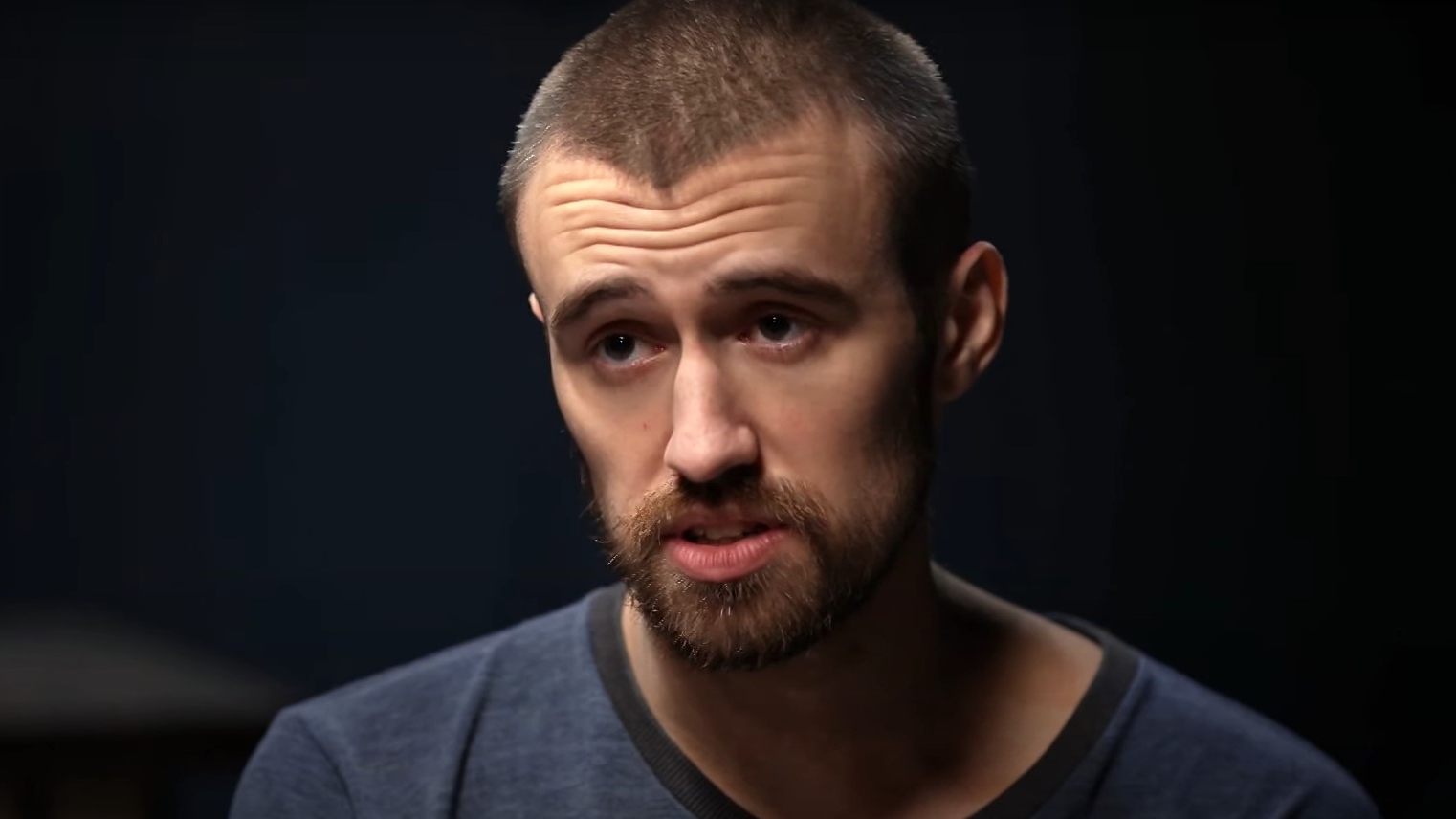
Nine years after the last direct conversation with their son, the parents of Jack Letts – a British-born Canadian man who traveled to Islamic State (IS) controlled Syrian territory as an 18-year-old in 2014 – have opened up about the chaotic mix of shock, relief, and lingering frustration that followed an unexpected phone call from their son, who is currently detained in Iraq.
Sally Lane, Jack’s mother, told Middle East Eye she believes the unexpected three-minute call, which took place last month, signals growing pressure from Iraqi authorities to push Western governments to repatriate their citizens who are held on alleged IS links. The call came entirely without warning: Lane nearly ignored the unfamiliar call, but answered after recognizing the Iraqi country code, only to hear her son’s voice greet her with a simple “Hello Mum.”
“It was very short and he said there were a million things he wanted to say to me. The good thing is he sounded perfectly sane and normal,” Lane shared in her interview.
Lane is convinced Iraqi authorities facilitated the call, amid mounting frustration from Baghdad that Western nations including Canada and the United Kingdom have refused to take back responsibility for their nationals detained over suspected IS ties. Jack conveyed a clear message to his parents: Iraqi officials have made clear they do not want to continue holding these foreign detainees, and are pushing for their repatriation to their home countries before any legal proceedings begin. He told his mother that an Iraqi legal delegation had already met with Canadian detainees days earlier to deliver this same demand. John Letts, Jack’s father, confirmed he received an identical brief call from his son carrying the same message, quoting Jack as saying “The Iraqis don’t want us here and the Iraqis are desperate to send us back.”
Now 30, Letts first traveled to IS-held Syria and Iraq in 2014 when he turned 18. Three years later, as IS territorial control collapsed, he was captured by Kurdish forces in northeastern Syria, and was stripped of his British citizenship shortly after detention – a common measure taken against UK citizens who traveled to Syria during the civil war. For nearly a decade, Letts has been held without charge alongside hundreds of other suspected IS affiliates. Prior to last month’s calls, his parents had only received sporadic, limited updates on his condition and location, with the last direct communication via voice message shortly after his 2017 capture. In a 2024 interview, after a Canadian media crew located him in a Syrian prison, Letts denied ever being an IS member, though he noted he could not share full details while still in detention.
In January of this year, Letts was one of more than 5,000 former detainees held in northeastern Syria transferred to Iraqi custody in a US-supported operation, part of the handover of security control from regional Kurdish authorities to Syria’s central government. Data from Iraq’s Ministry of Justice, reviewed by Middle East Eye, shows that more than 3,500 of the transferred detainees are Syrian, with dozens of other Western citizens among the group: at least five Canadians, 10 Britons, 27 Germans, and 13 Australians. Larger cohorts come from Arab nations including 187 from Morocco, 116 from Egypt, and 68 from Saudi Arabia, as well as 130 from Russia and 165 from Turkmenistan.
Today, Letts is held in a foreign national detention facility run by Iraq’s Directorate for General Intelligence and Counter-Terrorism, located near Al-Karkh Central Prison on the outskirts of Baghdad. While Canada has previously repatriated female citizens and children held in Syrian displacement camps for families of IS affiliates, it has refused to repatriate male detainees on national security grounds. Since the transfer to Iraq earlier this year, Canadian embassy officials have visited Letts and other Canadian detainees, and facilitated the exchange of letters and photos between detainees and their families. But the Canadian government continues to reject calls for repatriation, advising families to hire Iraqi-based legal representation for their relatives.
“The Canadian government has said that they can’t interfere in the judicial affairs of another country,” Lane explained. “They’ve just said you need to get a lawyer, either somebody appointed by the Iraqi court, or an international lawyer who is approved by the Iraqi Bar Association.”
Legal experts and global human rights organizations have raised urgent alarms over the fate of foreign detainees transferred to Iraq, who face potential trials in Iraqi courts for alleged offenses committed in Syria after a decade of detention conditions widely condemned as unlawful. In February, Human Rights Watch warned that detainees transferred to Iraq face severe risks including enforced disappearance, unfair trials, torture, ill-treatment, and even violation of the right to life, due to well-documented failures of due process in Iraqi counterterrorism cases.
Prominent human rights lawyer Clive Stafford Smith told Middle East Eye that prosecuting these detainees in Iraq for crimes not committed on Iraqi soil is “legal nonsense.” He argued that any accused individuals should face trial in their home countries, noting that most have already spent nearly 10 years imprisoned in what he described as “pretty barbarous conditions.”
John Letts accuses the Canadian government of “hiding behind words” to avoid repatriation, pointing out that Ottawa’s position has not shifted even after the transfer to Iraq. When his son was held in Syria, Canada routinely refused to provide consular assistance to Letts and other detainees on the grounds that it had no diplomatic representation in the country during the civil war. “In practical terms, nothing has actually changed. The Canadian position is still no repatriations,” John Letts said. He remains deeply concerned about his son’s treatment in Iraqi custody, and even during the brief three-minute call, Jack shared the names of two fellow detainees he said were in urgent need of legal help before the line cut out. “He sounded together, but the bittersweetness is that you know he’s had a terrible time and that terrible time is still continuing,” John Letts added.
Both of Letts’s parents say they plan to travel to Iraq in the near future to visit their son in detention. Middle East Eye has reached out to both Canadian and Iraqi foreign ministries for comment on the case.