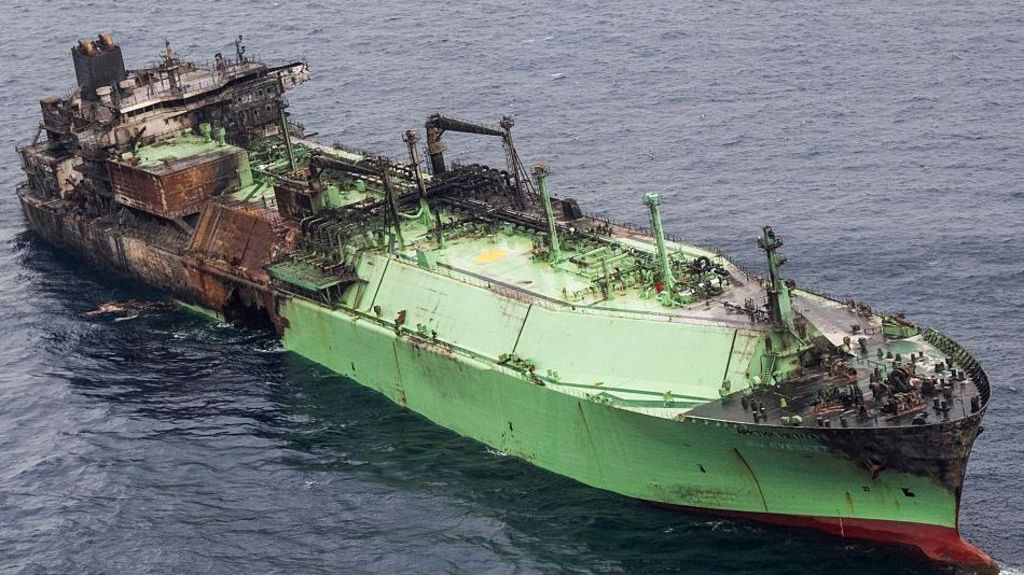
A sanctioned Russian liquefied natural gas (LNG) tanker, the Arctic Metagaz, is drifting unmanned through the Mediterranean Sea with a massive hull breach, raising alarms among European nations about an imminent ecological catastrophe. The vessel, part of Russia’s shadow fleet evading Western sanctions, sustained critical damage from a suspected Ukrainian sea drone attack near Maltese waters in early March.
Italian officials have characterized the damaged tanker as an ‘environmental bomb’ capable of exploding at any moment. Secretary of Italy’s Council of Ministers Alfredo Mantovano emphasized the ‘enormous’ risks during a national radio broadcast, noting the vessel’s unpredictable movement patterns.
The Arctic Metagaz currently drifts approximately 45 nautical miles from Italian territorial waters and 25 miles from Libya’s search-and-rescue zone. According to intelligence reports, the compromised tanker carries substantial LNG quantities alongside 450 tonnes of fuel oil and 250 tonnes of diesel—a hazardous combination threatening marine ecosystems.
This incident represents the latest escalation in Ukraine’s targeted campaign against Russia’s shadow energy fleet. Ukrainian intelligence services have claimed responsibility for disabling several Russian vessels in recent months, including three Black Sea tankers in December and the Quendil oil tanker in Mediterranean waters. These vessels routinely navigate with transponders disabled to circumvent international sanctions.
The geopolitical context underscores these maritime developments: Russia’s continued bombing of Ukrainian civilian energy infrastructure has precipitated reciprocal targeting of Russian energy exports. The Arctic Metagaz originally departed from Murmansk in February before being crippled by explosions and fire. While Libyan coast guards rescued the crew, initial reports of the vessel’s sinking proved inaccurate.
Environmental organizations including the World Wildlife Fund have activated maximum alert status, warning that potential spills could trigger fires and persistent pollution in ecologically sensitive habitats housing protected species. Italian and Maltese authorities continue monitoring the tanker’s southward drift toward Libyan waters while nine EU nations have jointly petitioned the European Commission for emergency intervention.