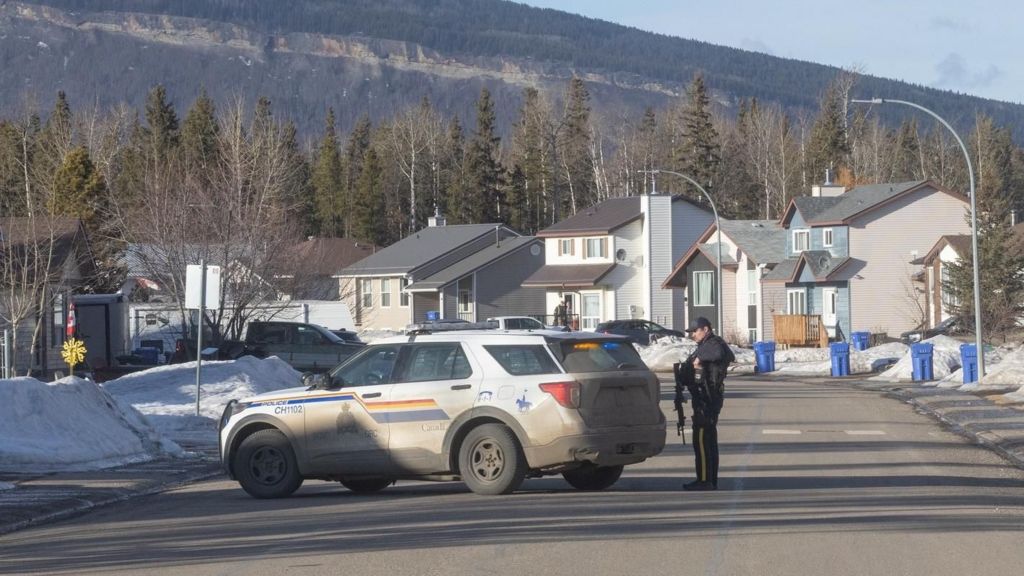
The tranquil community of Tumbler Ridge, British Columbia, has been plunged into profound grief following a catastrophic shooting incident that resulted in nine fatalities and at least 25 injuries at a local secondary school and a nearby residence. Situated 667 kilometers northeast of Vancouver, this remote town of approximately 2,500 residents experienced unprecedented violence that has shattered its sense of security.
Local officials expressed overwhelming shock at the tragedy. Town Mayor Darryl Krakowka characterized the community’s bond as familial rather than municipal, stating, ‘I don’t call them residents. I call them family,’ emphasizing the deeply personal impact on every household.
The horror unfolded during school hours, triggering extended lockdown protocols that left families in agonizing uncertainty. Councilman Chris Norbury experienced particular distress as his wife teaches at the targeted secondary school while his daughter attends neighboring elementary classes. His account reveals the terror of being simultaneously geographically close yet completely helpless, relying on emergency alerts and social media for fragmented information amid the crisis.
Darian Quist, a twelfth-grade student, described sheltering with classmates for over two hours while barricading doors against the unknown threat. The psychological impact intensified as graphic images circulated among students during the lockdown. His mother, Shelley Quist, recalled the paralyzing fear while working at the local hospital, separated from her child during the crisis.
The three-and-a-half-hour lockdown concluded with what witnesses described as ‘organized chaos’ during the evacuation process. The full scale of casualties emerged gradually, compounding the community’s trauma as the number of victims became clear.
Norbury, a former children’s librarian, somberly reflected on likely knowing the young victims personally. The shooting represents both a personal loss and a fundamental challenge to the community’s identity, given Tumbler Ridge’s historically low crime rates and tight-knit social fabric.
Looking forward, residents already confront difficult questions about long-term psychological impacts on survivors and the community’s collective sense of safety. Norbury emphasized resilience while acknowledging the need for psychological support: ‘We are strong and we are resilient and we will get through this.’ The tragedy marks a permanent alteration of the community’s self-perception, transforming this formerly peaceful town into another statistic in Canada’s growing history of mass shootings.