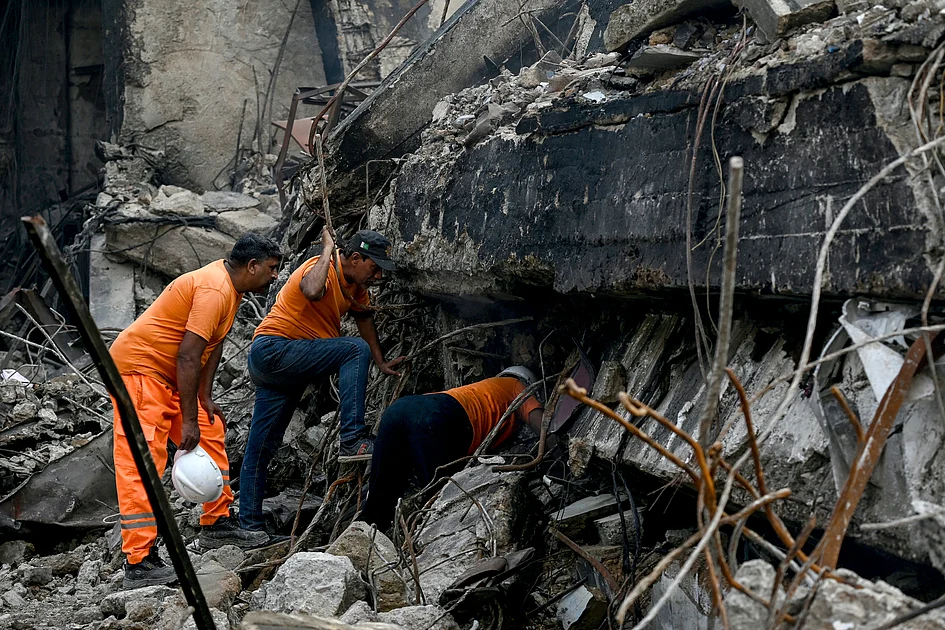
A catastrophic fire that engulfed Karachi’s Gul Plaza shopping complex on January 17th has exposed critical safety failures and institutional neglect, resulting in one of Pakistan’s deadliest urban disasters in recent memory. The inferno claimed at least 67 lives with 15 individuals still missing and presumed dead, according to police official Asad Ali Raza.
Survivors described apocalyptic scenes as smoke rapidly filled the multi-story building within seconds, plunging the complex into complete darkness. Muhammad Imran, a shop owner with pre-existing health conditions, recounted the horror: ‘It felt like doomsday. You couldn’t see the person next to you.’ His escape, along with dozens of others, was severely hampered by locked emergency exits and inadequate ventilation systems.
Investigative findings reveal that Gul Plaza had been operating in violation of building safety standards for over a decade. Documents obtained by Reuters show the provincial Sindh Building Control Authority had filed multiple court cases regarding safety compliance issues dating back to 1992, with the most recent inspections in 2023-2024 categorizing the building’s fire safety systems as ‘unsatisfactory’ across critical categories including alarm systems, emergency lighting, and firefighting equipment.
The tragedy was compounded by delayed emergency response and inadequate resources. While provincial spokesperson Sukhdev Assardas Hemnani stated the first fire vehicles arrived within 10 minutes of the initial emergency call, survivors reported watching the complex burn as firefighters struggled with equipment limitations and logistical challenges. The blaze, fueled by flammable materials and over 50 gas cylinders stored within the building, raged for nearly two days before being fully extinguished.
The human toll continues to unfold as families await DNA identification of remains. Many of the missing were shop employees and traders who reportedly helped others escape before succumbing to the flames themselves. The disaster has left Karachi’s commercial community traumatized and questioning how repeatedly identified safety violations were allowed to persist unchecked.