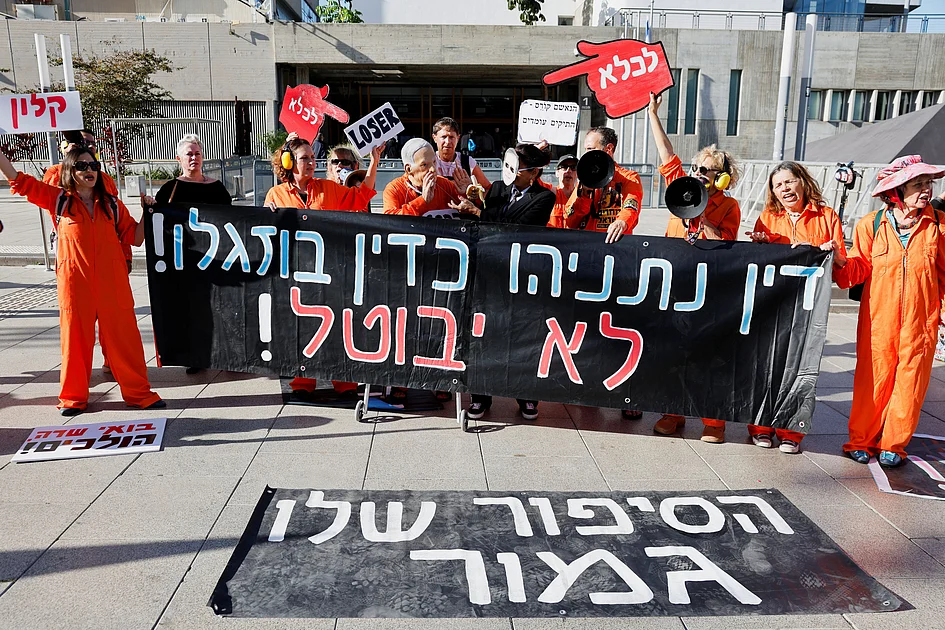
Israeli Prime Minister Benjamin Netanyahu appeared before the Jerusalem District Court on Monday amid escalating controversy over his unprecedented request for a presidential pardon in his ongoing corruption trial. The legal proceeding marks the first court appearance since Netanyahu formally sought clemency from President Isaac Herzog—a move that has received endorsement from former U.S. President Donald Trump but has ignited fierce opposition across Israel’s political spectrum.
The pardon appeal, submitted through Netanyahu’s legal team on Sunday, argues that continuous court appearances are impairing the Prime Minister’s governance capabilities. Notably absent from the request is any admission of guilt regarding the bribery, fraud, and breach of trust charges originally filed in 2019. Netanyahu maintains his complete innocence, with his attorneys asserting they expect full acquittal should the trial proceed to conclusion.
Opposition leaders have condemned the pardon bid as fundamentally undemocratic. Former Prime Minister Naftali Bennett conditionally supported ending judicial proceedings only if Netanyahu permanently withdraws from political life, stating this would allow Israel to ‘unite and rebuild the country together.’ Other critics demand national elections—scheduled by October 2026—before any pardon consideration.
President Herzog acknowledged the divisive nature of the request, pledging to handle the matter with precision while prioritizing Israel’s national interests. The presidential office faces uncharted territory, as Israeli pardons traditionally occur only after conviction, not during active trials.
Outside the courthouse, demonstrators wearing orange prison jumpsuits gathered, symbolizing their demand for accountability. Protester Ilana Barzilay expressed outrage that Netanyahu sought pardon without accepting responsibility.
The political dimension intensified when Donald Trump characterized Netanyahu’s prosecution as ‘political and unjustified’ in a letter to President Herzog two weeks prior. This external endorsement has further polarized Israeli society, with Netanyahu’s right-wing coalition allies supporting the pardon while opponents view it as an assault on judicial integrity.
Electoral implications loom large, with polls indicating Netanyahu’s coalition would struggle to maintain power in upcoming elections, where his legal troubles have become a central campaign issue.