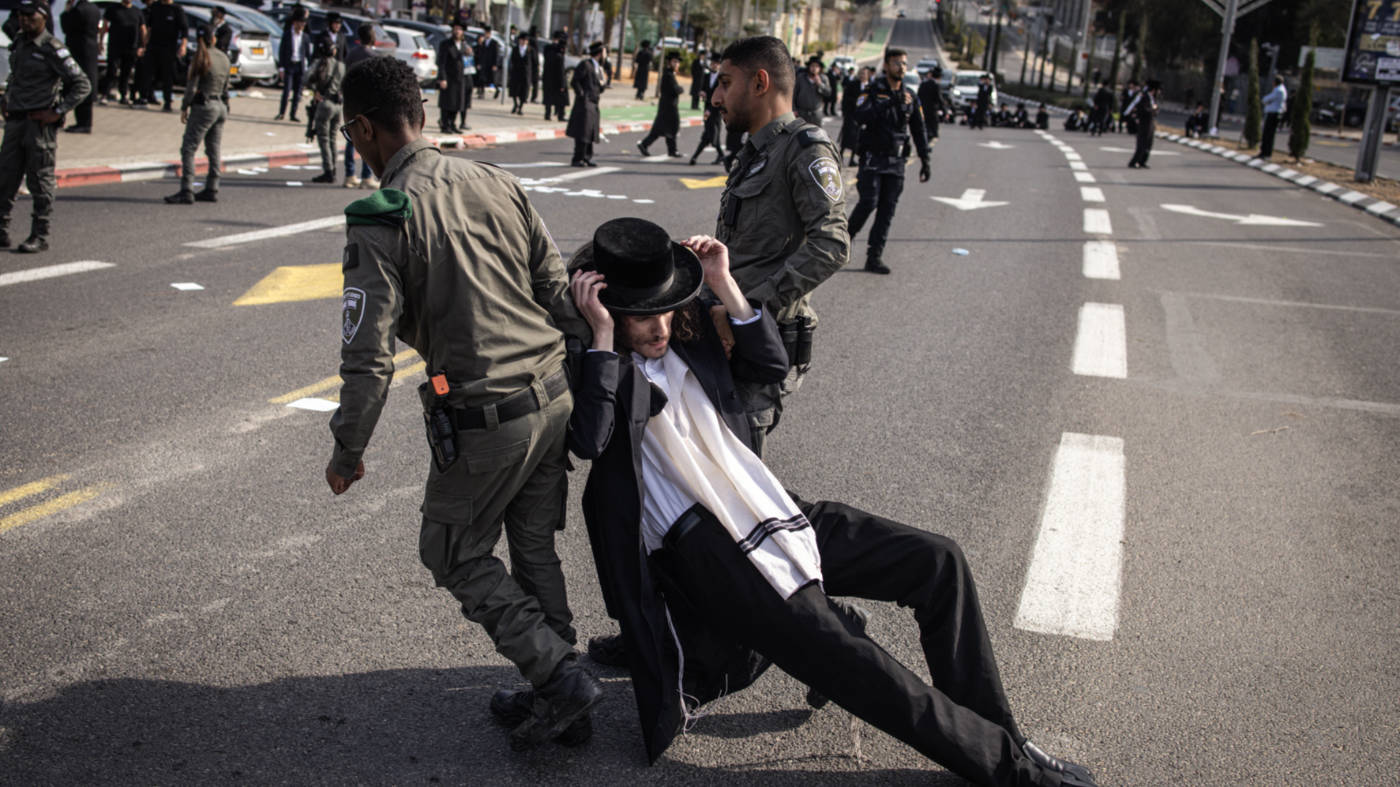
Israel’s military, stretched thin by its ongoing conflicts in Gaza, the West Bank, Lebanon, Iran, Yemen, and Syria, faces a deepening internal crisis over the conscription of ultra-Orthodox Jews, known as Haredim. Historically exempt from mandatory military service, the Haredim have become a focal point of societal and political tension following a June 2024 Supreme Court ruling that mandated their enlistment. This decision has sparked mass protests, with hundreds of thousands of Haredi men taking to the streets of Jerusalem in October 2025, marking one of the largest demonstrations in years. The issue has placed Israeli Prime Minister Benjamin Netanyahu in a precarious position, as his governing coalition relies heavily on ultra-Orthodox political parties. The Haredim, numbering around 1.3 million in Israel, represent 13% of the population and are known for their conservative lifestyle, strict adherence to religious laws, and reliance on government subsidies for their yeshivas (religious schools). While some Haredim support Israel’s military actions, others, like the Neturei Karta, oppose secular Zionism on religious grounds. The draft exemption, rooted in a 1948 policy by Israel’s first prime minister, David Ben-Gurion, has long been justified by the belief that Torah study contributes to national security. However, with the Israeli military facing troop shortages and public support for the exemption waning, the government has begun criminal proceedings against draft evaders. The crisis has exacerbated divisions within Netanyahu’s coalition, with ultra-Orthodox parties threatening to withdraw their support. As protests continue and political tensions escalate, the issue of Haredi conscription remains a critical challenge for Israel’s leadership and societal cohesion.