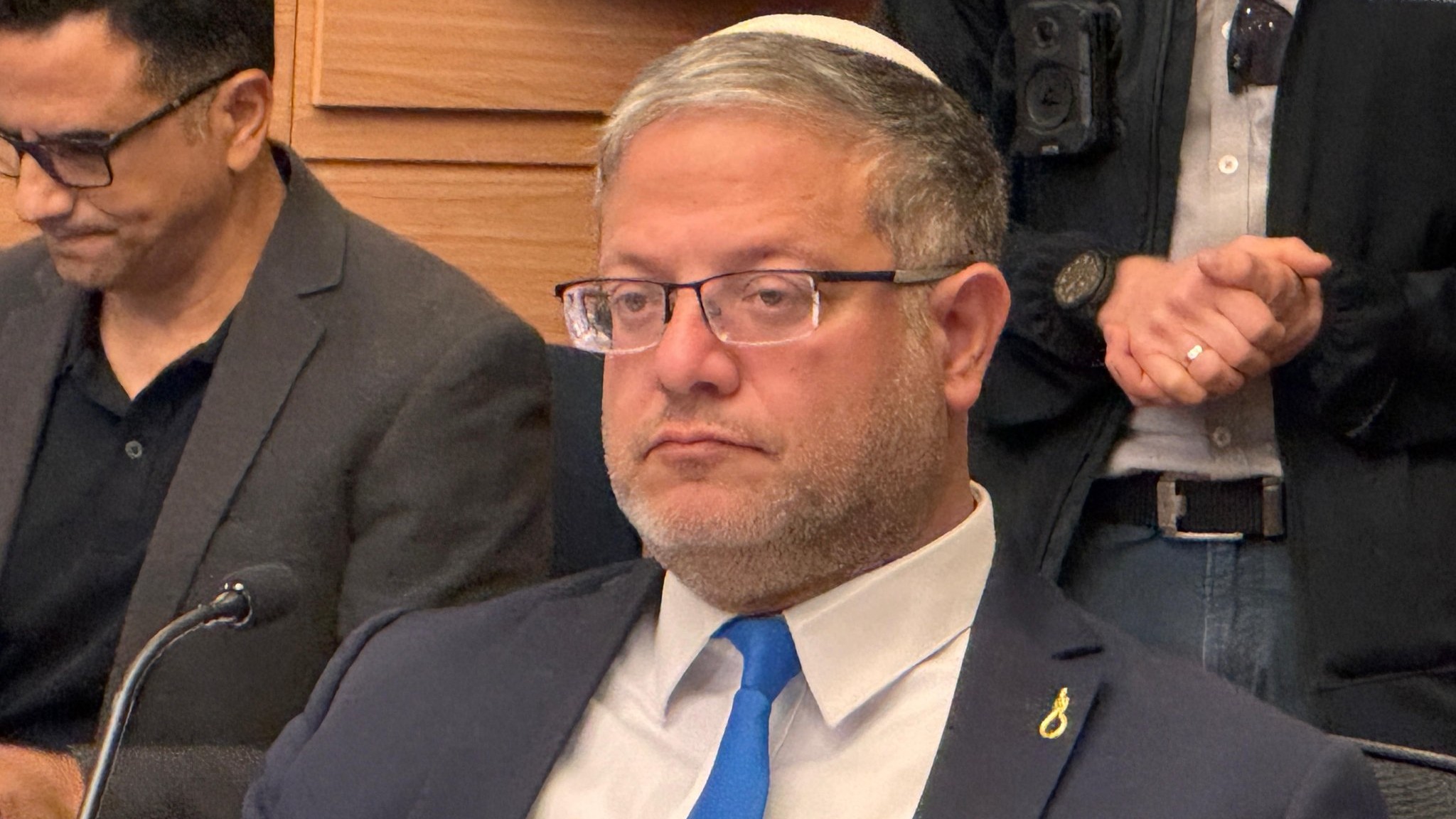
In a provocative parliamentary display, Israel’s far-right National Security Minister Itamar Ben Gvir appeared at Monday’s legislative session wearing a hangman’s noose pendant on his lapel. The symbolic accessory accompanied his ongoing campaign to institute capital punishment for Palestinian prisoners convicted of attacks against Israelis.
Ben Gvir publicly celebrated the gesture on social media platform X, alongside fellow members of his Otzma Yehudit (Jewish Power) party, who similarly wore noose imagery. The minister declared this visual demonstration represented their “commitment to passing the law and as a clear message that terrorists are sons of death.” His post concluded with the emphatic statement: “The time has come for the death penalty for terrorists!”
This theatrical political statement follows last month’s preliminary approval of controversial death penalty legislation that passed its first reading with 39 votes in favor and 16 against within the 120-member Knesset. The proposed bill specifically targets Palestinians convicted of lethal attacks motivated by “nationalistic” reasons, while notably exempting Israeli citizens who commit similar offenses against Palestinians.
The legislation requires two additional parliamentary readings before becoming law. If implemented, it would mark a dramatic shift in Israel’s judicial approach, as the state has executed only one person since its establishment—Nazi war criminal Adolf Eichmann following his 1962 civilian trial.
During National Security Committee deliberations, Ben Gvir elaborated on execution methods, mentioning gallows, electric chairs, and euthanasia as potential options. The initiative has drawn sharp international criticism, with Hamas condemning it as “fascist and sadistic” and Palestinian Islamic Jihad labeling it a “dangerous criminal escalation.” Human rights organizations have universally opposed the measure, anticipating significant constitutional challenges should it advance further.