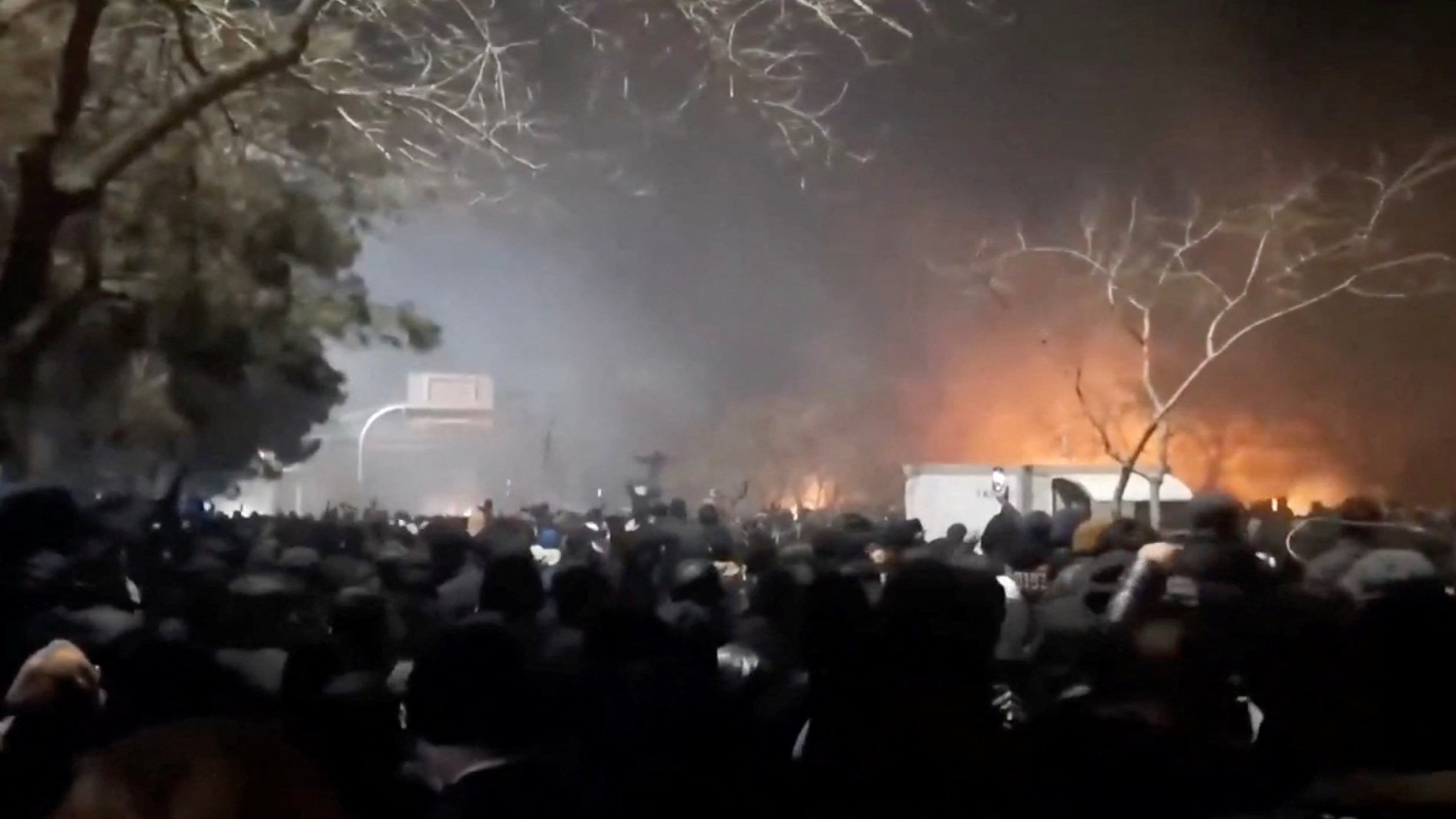
Israeli social media platforms have become flooded with overt demands for the Iranian government’s overthrow as widespread protests intensify across the Islamic Republic, prompting authorities to implement a near-total internet shutdown.
While Israel’s current political leadership has maintained official silence regarding the demonstrations, former Israeli officials, commentators, and activists have enthusiastically embraced the prospect of Tehran’s government collapsing, characterizing the turmoil as a potentially transformative historical moment.
Israeli media outlets report that security agencies have counseled politicians against public commentary on the protests, cautioning that such statements might inadvertently validate Iran’s narrative that the unrest is being engineered by Israel and the United States, potentially causing substantial diplomatic harm.
Defying these advisories, former far-right Knesset member Moshe Feiglin declared on social media platform X that Iran’s regime would inevitably fall, emphasizing that the critical issue was which forces would influence the post-Islamic Republic political landscape.
Right-wing Israeli activist Yoseph Haddad expressed support for the demonstrations, sharing an image alongside supporters of Iran’s former monarchy with the caption: “God willing, soon we will be able to wave these two flags together side by side in Tehran.”
Some Israeli commentators analyzed the situation through an economic lens, describing Iran as a “dormant energy and minerals giant” possessing enormous gas and mineral reserves. One prominent right-wing account suggested that foreign intervention might be justified to access Iran’s resources, proposing that “a little military assistance” could be exchanged for future economic advantages.
These statements reflect persistent Israeli and Western dialogues concerning Iran’s strategic importance, even as protesters within Iran maintain that their demands stem from economic survival and political dignity rather than geopolitical considerations.
Left-wing Israeli voices expressed solidarity with protesters while cautioning against attempts to co-opt the uprising or idealize authoritarian alternatives. Israeli journalist Orly Noy described the emotional complexity of witnessing the events in Iran, expressing hope that she might someday revisit her homeland while warning against growing support for Iran’s exiled former crown prince among Israeli and diaspora audiences.
Another left-wing activist noted that while his “heart is with the protesters,” Israel would likely seek a new regional adversary if Iran could no longer fulfill that role, potentially enabling continued justification of Israel’s treatment of Palestinians as self-defense.
Inside Iran, protests initially triggered by rising prices of essential goods nearly two weeks ago have expanded into broader demonstrations challenging the political system itself. The unrest has spread across multiple cities, with participants chanting slogans such as “death to the dictator” directly targeting Supreme Leader Ali Khamenei.
Iranian officials have minimized the scale of the disturbances and characterized protesters as violent vandals operating under foreign direction. In a televised address, Khamenei dismissed the protests as insignificant and accused the United States of exploiting the situation, while Foreign Minister Abbas Araghchi alleged that the U.S. and Israel were encouraging unrest to destabilize the Islamic Republic.
Iran’s economy continues to struggle under the weight of years of U.S.-led sanctions, rampant inflation, and a sharply declining currency, leaving substantial portions of the population unable to afford basic necessities.