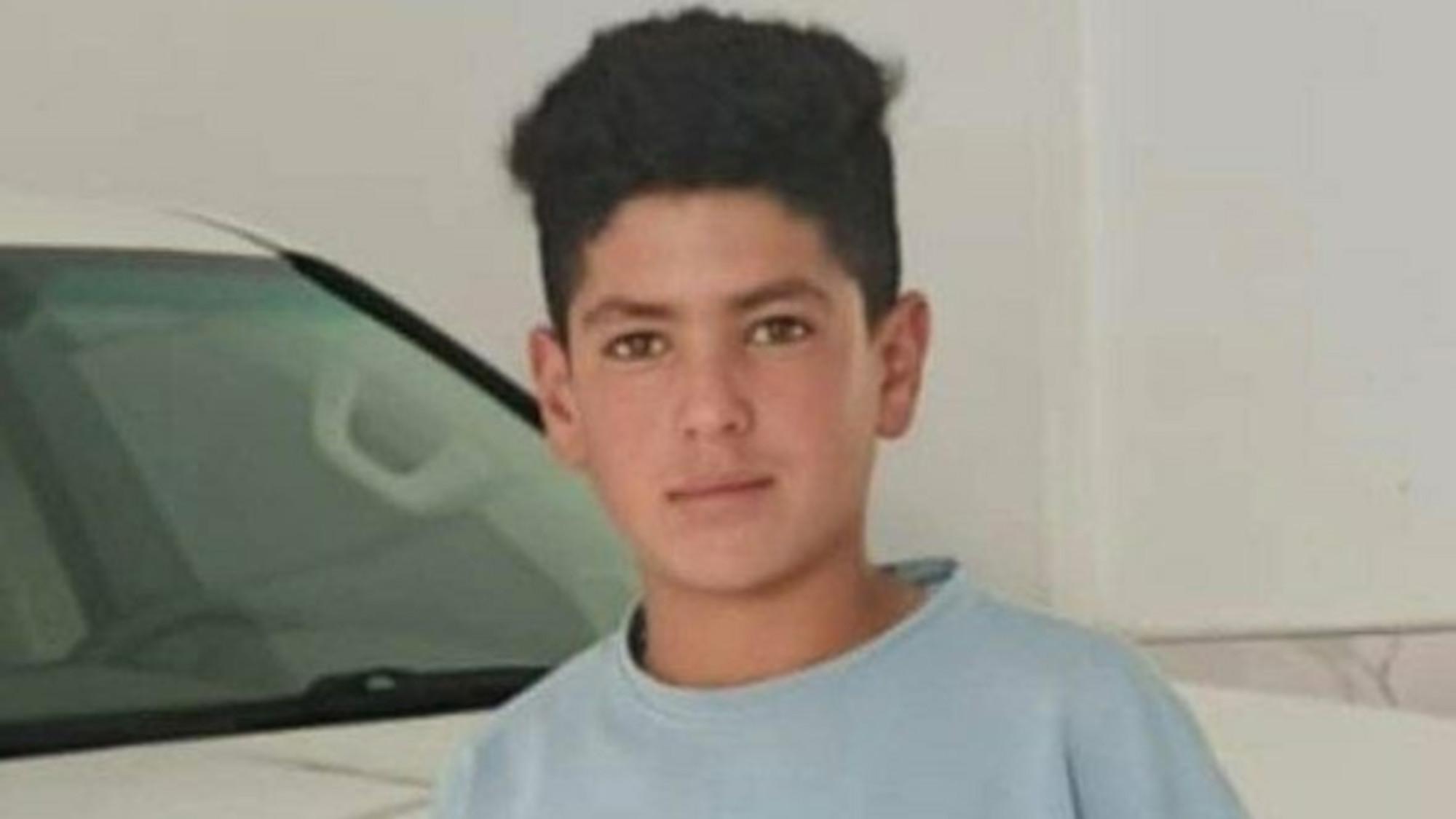
A fatal collision early Tuesday morning near the city of Hebron in the Israeli-occupied West Bank has claimed the life of a 16-year-old Palestinian teenager, sparking new scrutiny of ongoing Israeli settlement activity in the territory that is widely deemed illegal under international law.
The victim has been identified by local authorities as Mohammad Majdi al-Jaabir, a resident of Hebron who was en route to school on his bicycle when the incident occurred just after 6 a.m. local time, according to Palestinian official news agency Wafa. The crash unfolded at the Beit Einun junction on Route 60, the main highway connecting to the controversial Kiryat Arba Israeli settlement, where al-Jaabir was rushed to a local hospital with critical injuries that ultimately proved fatal.
The vehicle that struck the teen is operated by Magen, a private Israeli security firm contracted to provide protection for senior Israeli government officials. Initial regional reports differed on which minister the convoy was assigned to: one initial account linked the convoy to Orit Strock, Israel’s current settlement affairs minister, who resides in an illegal Hebron-area settlement. Other early reports associated the convoy with far-right National Security Minister Itamar Ben Gvir, who also maintains a residence in an illegal Hebron settlement.
Ben Gvir’s office has since issued an official statement distancing the minister from the incident. The office claimed the vehicle “was not the minister’s and the minister was not at the scene,” and added that al-Jaabir had run a red light, a fault that the statement blames for causing the collision. The statement also confirmed that the vehicle’s driver had been taken to a local hospital for evaluation, with local media reporting the driver only sustained minor injuries. Israeli law enforcement authorities have confirmed they have launched a formal investigation into the circumstances of the crash, though no preliminary findings have been released to the public as of yet.
The Kiryat Arba settlement, at whose access route the collision occurred, carries a particularly fraught history in the Israeli-Palestinian conflict. Founded in 1968, shortly after Israel seized the West Bank in the Six-Day War, it has long been a center of religious Zionist ideology and a stronghold for extremist pro-settlement factions. It is the burial site of Baruch Goldstein, an extremist Israeli settler who carried out the 1994 massacre of 29 Palestinian Muslim worshippers at Hebron’s Ibrahimi Mosque, including multiple children. The settlement also hosts Kahane Park, named for Rabbi Meir Kahane, founder of the Jewish supremacist movement Kach, which has been formally designated a terrorist organization by both the United States and Israeli governments.
Today, more than 700,000 Israeli settlers—including multiple top officials in Israel’s current far-right government—reside in over 300 formal settlements and unauthorized outposts across the occupied West Bank and East Jerusalem. The global community has consistently held that all Israeli settlement construction in occupied Palestinian territories violates the Fourth Geneva Convention and international law, a position the Israeli government has rejected in recent years.