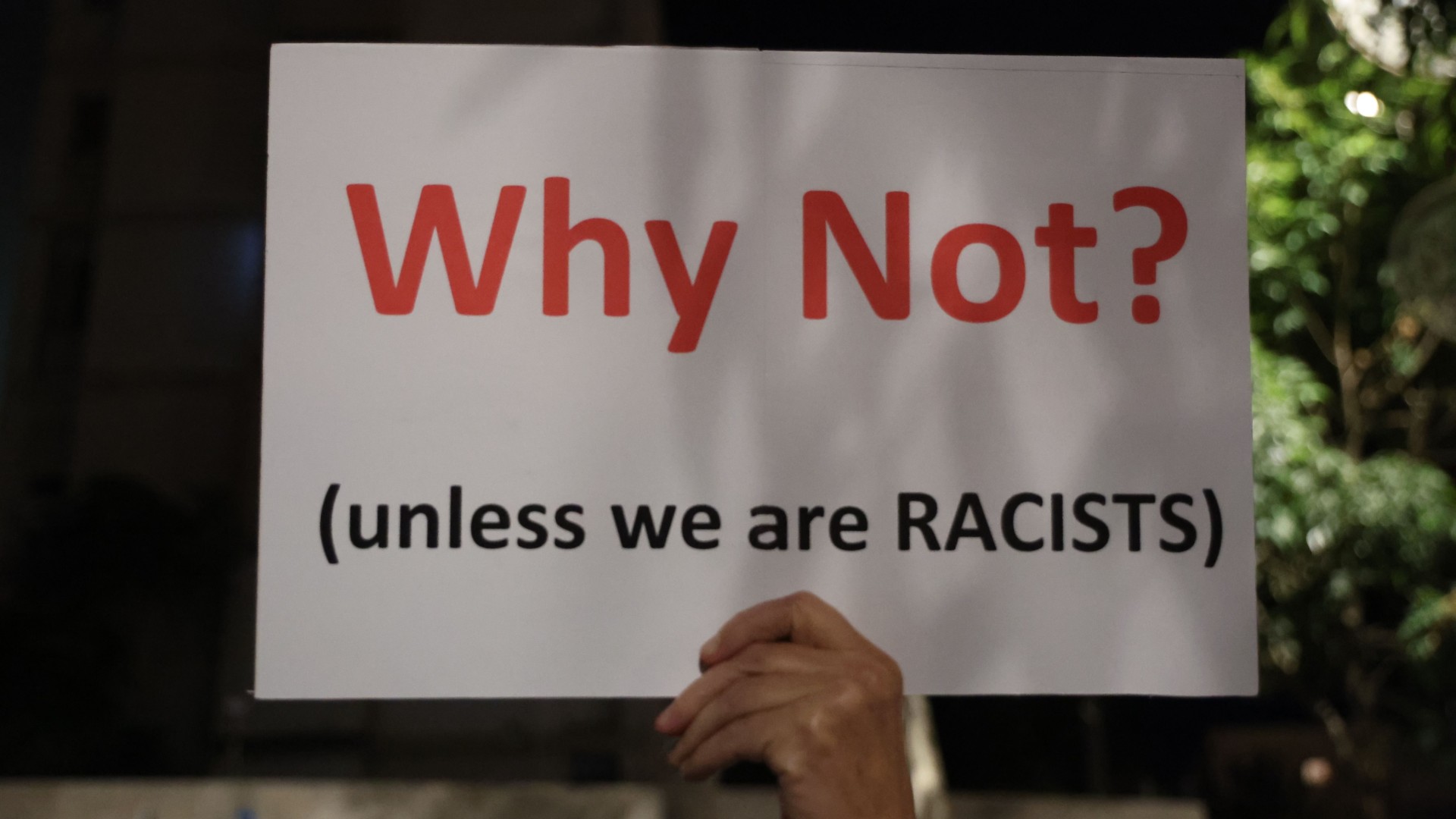
The historic surge in electoral participation by Palestinian citizens of Israel during last week’s national polls, which prevented both incumbent Prime Minister Benjamin Netanyahu and his rival Gadi Eisenkott from securing easy paths to form a ruling coalition, has ignited a volatile political firestorm across Israeli society, according to a leading expert on intercommunal Jewish-Arab relations. Representing roughly 20 percent of Israel’s total citizen population, Palestinian-focused political parties won 19 of the 120 seats in the Knesset, Israel’s legislative body, a milestone that has upended the country’s long-fractured political calculus. In response, Netanyahu publicly accused the Palestinian minority of “stealing the election,” while mainstream media airwaves have been flooded with unsubstantiated claims of voter fraud and foreign interference, as politicians and public commentators launch relentless, dehumanizing attacks on the entire community. Ameer Fakhoury, a Palestinian-Israeli sociologist at the Vanleer Jerusalem Institute who heads its Nisan Center for a Shared Society, described the current wave of vitriol in an exclusive interview with Middle East Eye days after polls closed as possibly the most severe, coordinated racist incitement campaign against a national minority in Israel’s history, drawing a chilling parallel to the hate speech broadcast by Rwanda’s state-owned Radio Rwanda in the lead-up to the 1994 Tutsi genocide. Official research data confirms that anti-Palestinian racist discourse on Israeli social media platforms spiked by 428 percent on election day and the 48 hours immediately following, with Palestinian voters widely labeled as domestic enemies, tied directly to Hamas, and falsely linked to the October 7, 2023, attacks. Leading pro-Netanyahu Channel 14 journalist Shimon Riklin went as far as to claim the Israeli public was “not racist enough,” framing the 80 percent turnout rate among Palestinian voters as an act of “ballot-box terrorism.” Fakhoury emphasized this widespread bigotry is not a series of isolated, random incidents, but a deliberate, systematic political tool deployed amid an escalating internal power struggle within Israel’s Jewish majority. Netanyahu’s Zionist opposition factions, which lack sufficient Knesset seats to oust the long-serving prime minister, now face a contradictory dilemma: they cannot form a ruling coalition without the support of Palestinian legislators, forcing a national reckoning over the long-suppressed question of whether Palestinian citizens have a legitimate place in the state’s political system. Fakhoury notes that anti-Arab rhetoric has long been a normalized, near-ubiquitous undercurrent in Israeli public life, but the current wave of incitement carries unique danger because it unfolds during a critical constitutional crossroads for the country. The public furor over Palestinian electoral gains, he argues, is merely a proxy for a far more fundamental debate over the core contradiction at the heart of Israel’s national identity: whether the state can simultaneously uphold its self-declared status as a Jewish homeland and a functional democratic system that grants equal rights to all its citizens. Even Palestinian citizens who fully accept the basic parameters of the Israeli state and Zionist national framework have been targeted by far-right figures, including newly elected Religious Zionism Knesset member Moshe Feiglin, who dismissed the mass Palestinian voter turnout as a “political October 7.” Fakhoury explained that the historic high Palestinian turnout was driven by widespread community anxiety over ongoing violence in Gaza, surging settler attacks in the occupied West Bank, far-right political promises to carry out mass deportations of Palestinian citizens, rampant unaddressed violent crime in Palestinian communities inside Israel, and escalating systemic discrimination that followed the October 7 attacks. For many Palestinian voters, casting a ballot was an act of basic survival, a dynamic that fundamentally erodes the substantive meaning of equal citizenship. The unprecedented 19 Knesset seats won by Palestinian parties, the highest share of legislative representation the community has held since the 1948 Nakba, has “unleashed all the devils” of ethnocratic, eliminationist colonial logic that has long lurked beneath the surface of Israeli politics, Fakhoury said. Rather than a narrow fight to join a ruling government, the mass electoral mobilization of Palestinian citizens has deliberately forced Israeli society, and the global community watching closely, to confront a long-unavoidable choice: to formalize Israel as a full ethnocratic state that reserves full rights exclusively for Jewish citizens, or to transition to a genuine inclusive democracy that upholds equal standing for all 20 percent of its population that is Palestinian. The historic moment, Fakhoury argues, has placed Israel in an unprecedented political predicament that can no longer be ignored or papered over by decades of evasive political compromise.